Most people will be able to survive for around three days without water. This will be dependent on things like your physical state, environmental conditions and physical exertion. Because water is so essential to any survival situation, it’s important to always drink to maintain minimum levels of hydration. Aim to consume at least two or three litres each day.
Monitor your hydration levels. Is your urine dark yellow and does it smell? Do you feel thirsty or have a headache? These are all signs that you are feeling the effects of dehydration. Recognise the symptoms early and find water, otherwise your ability to make sound decision and address other survival needs will be compromised.
The key indicators for water are converging animal tracks, low-lying areas and lush green vegetation.
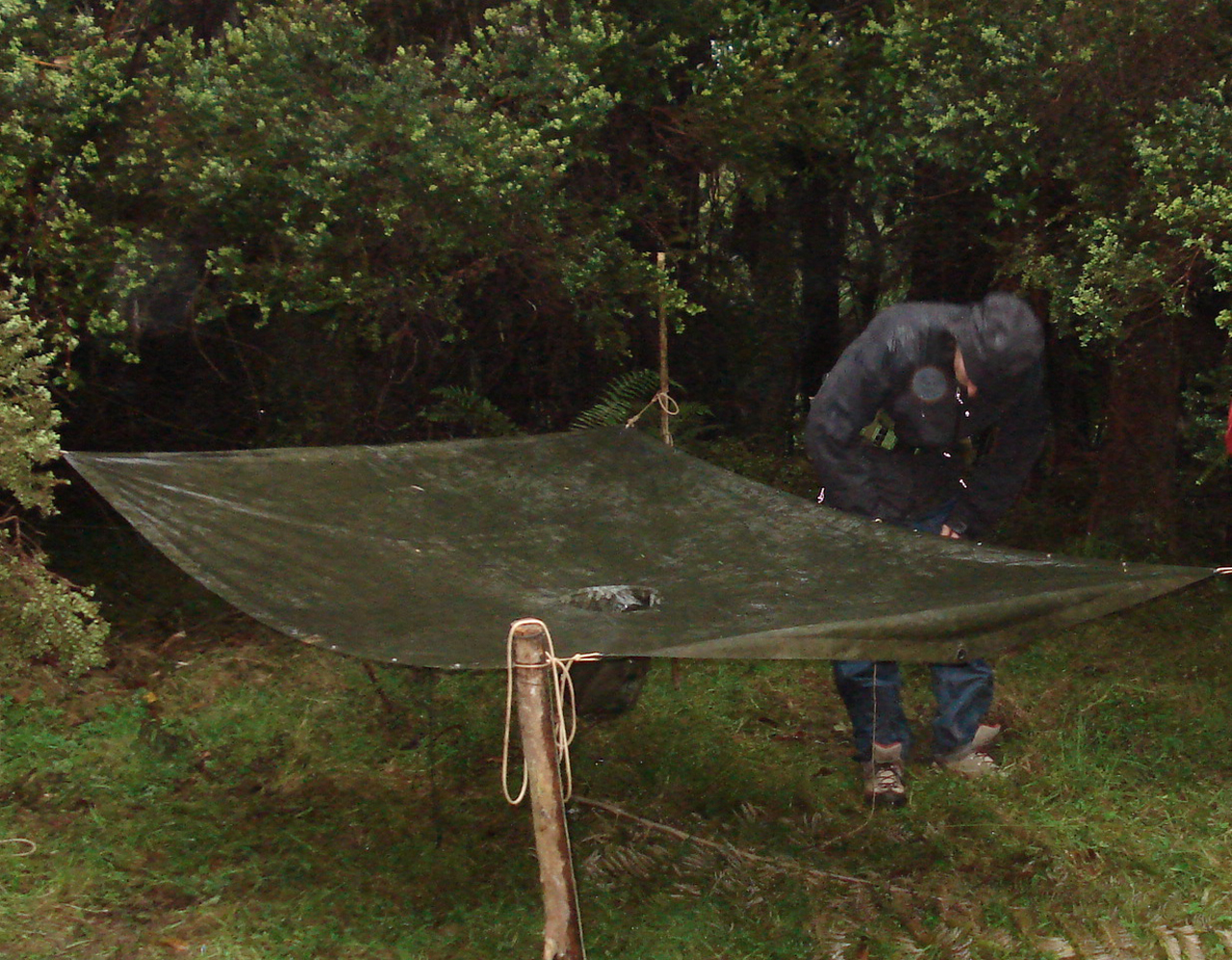
Collecting water Catch rain water using a plastic sheet, tarpaulin or raincoat tied to sturdy sticks. A shirt or bandage wrapped around a tree trunk will absorb water that flows down the tree when it rains.
Filter water Filter water through multiple layers of clothing or construct a three-stage filter system (grass, moss and charcoal).
Sterilising water Treat all water as a potential danger (the only exception to this rule is rainwater). Sterilising water is best done by boiling. Alternative ways to treat water before drinking include a portable filter straw, potable aqua tabs, iodine from a first aid kit or exposing a plastic bottle filled with water to direct sunlight. The sun’s rays interfere directly with the metabolism, and destroy cell structures, of bacteria that cause common water-borne diseases.
Procuring water There are two simple ways to procure your own water:
Solar still Dig a hole in the ground, place a container in the middle with a plastic sheet over the top. Secure the outside edges with dirt and place a small weight in the middle. The sun’s heat will evaporate the moisture from the soil, which will condense on the underside of the plastic and drip into the container. To yield more water from the process add into the hole, but not the container, green vegetation, urine, saltwater and undrinkable water.

Absorb water Wipe dew from surfaces or tie absorbent material around your ankles and walk through the dew-covered long grass in the early morning and late evening and then wring the water into a container or directly into your mouth.

– Stu Gilbert is a former Air Force survival instructor now running SOS Survival Training

34 years of inspiring New Zealanders to explore the outdoors. Don’t miss out — subscribe today.

Questions? Contact us