I was in Tongariro National Park in late September when heavy rain hit. The day before had been stunning weather where crystal clear streams burbled softly down the mountain and allowed my daughter and I to bend down and splash water on our faces. You would not have been advised to do that the day the rain came. The rivers and streams turned into dark and frightening torrents. Standing on a bridge, watching the maelstrom pass beneath was mesmerising, but I couldn’t help but imagine the ghastly repercussions of falling in.
Trampers wade across rivers in New Zealand all the time. Most times, they are successful – whether by design or luck. But sadly, since 2008 a total of 21 trampers have lost their lives while trying to cross a river. According to the Mountain Safety Council, which has studied the events surrounding each accident, all these deaths were avoidable.
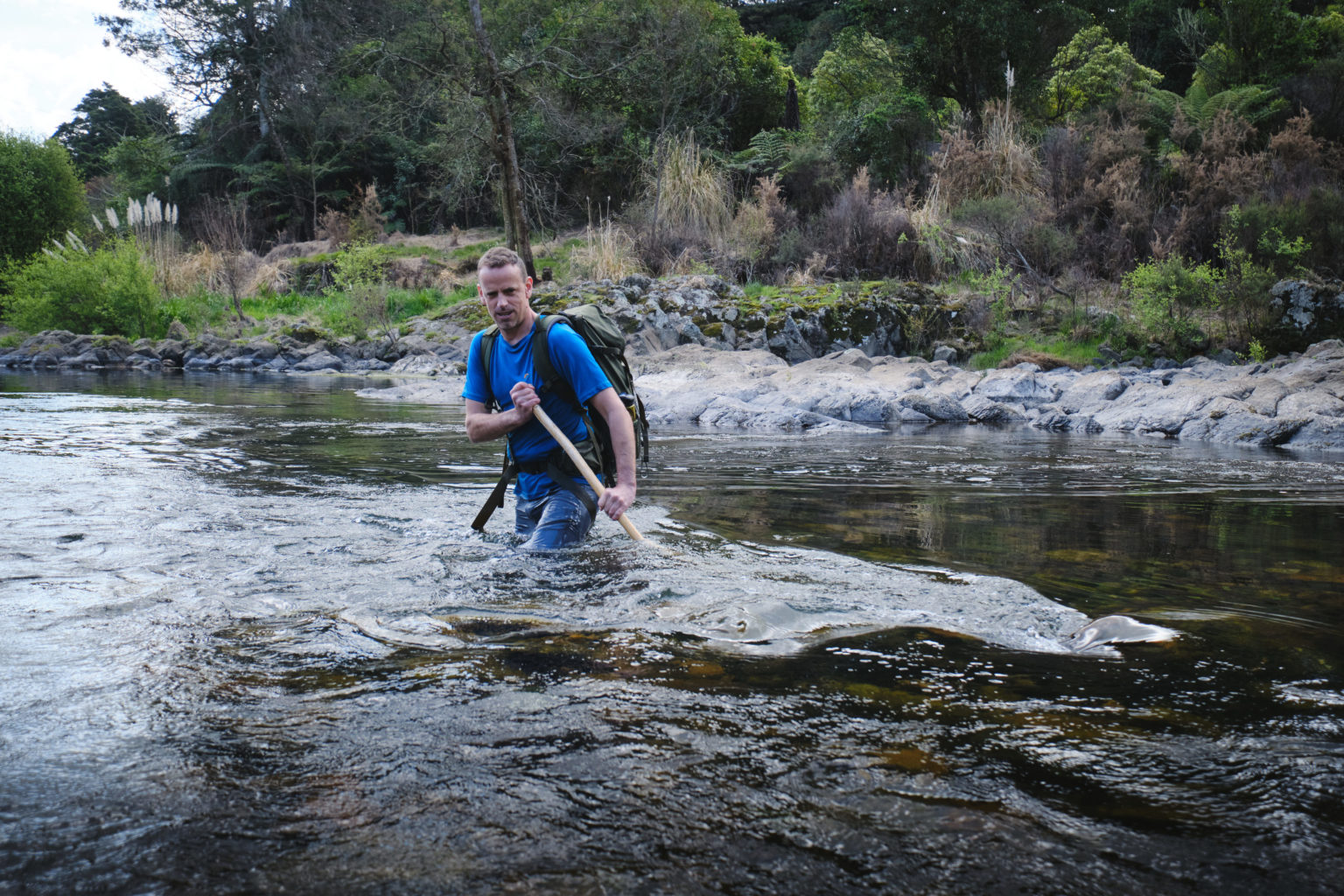
I attended a river safety course with my colleague Matthew to gain first-hand experience of river crossing techniques for the feature story ‘Over troubled waters’. During the one-day course, we learned how to assess a river to determine if it was safe to cross and how to consider alternative plans if it wasn’t. We were taught the best method for crossing as a group and solo. We also experienced pack floating where, even in this controlled environment and despite my readiness to enter the water, it was so cold it took my breath away and I had trouble speaking. Imagine how much worse it would be taking an unexpected swim where your gasp reflex may inadvertently fill your lungs with water.
Afterwards, I trembled on the river in wet clothes and my one dry top as I tried to rewarm. In the wild, I may have developed hypothermia (in fact, I undoubtedly would have because I later discovered I had failed to properly close my pack liner and all my gear had become soaked).
A few of us tried a submersion exercise, where we lay face down in the water, two instructors either side to offer assistance, and tried squirming out of our packs which were caught on an imaginary obstacle. It’s the kind of exercise that is scary even in a controlled environment.
It was a fun day and it demonstrated how little I previously knew about river safety.
In Tongariro, I could tell the flooded rivers were obviously too dangerous to go near. But I suspect it’s the rivers in between this state and their usual flow, and where the pressure to get across scrambles the decision-making process, where most people come unstuck.
That’s why I would encourage every tramper to attend a river safety course. I feel so much better now about assessing a river and making the decision to cross or not – it was truly one of the most important, confidence-boosting outdoor exercises I have done.