It’s one thing to navigate your way through alpine terrain in fine weather, but when the cloud layer settles on the snow surface everything becomes an undistinguishable blend of whiteness. Such conditions, known as a white-out, can affect our perception of which way is up and down.
The best thing to do is sit tight until the cloud lifts or clears enough to give you a glimpse of something to take a bearing off.
But if you really have to keep moving, the following tips should help with your navigation.
Be prepared Being, and remaining, aware of changing conditions is vital. Even if it looks like generally clear weather, you should note down compass bearings and altimeter readings on an ascent, especially at changes in direction and hazards like cliff bands and crevasses
Markers Placing marker wands as you travel can provide an escape path to follow
Up or down? In a complete white-out, where there is no apparent up or down, a strong sense of vertigo can be felt and changes in slope angle such as cliff bands can be notoriously difficult to see. Rolling snowballs or rocks ahead of you can provide some depth perception and indicate slope angle and direction. Another trick is to fill a small bag with snow, tie it to a rope and throw it out ahead of you.
Dead reckoning The fundamental navigational skill of ‘dead reckoning’ (navigating with just a map and compass and no visible landmarks) is your greatest asset. It requires you to know your current position and be able to travel following a compass bearing.
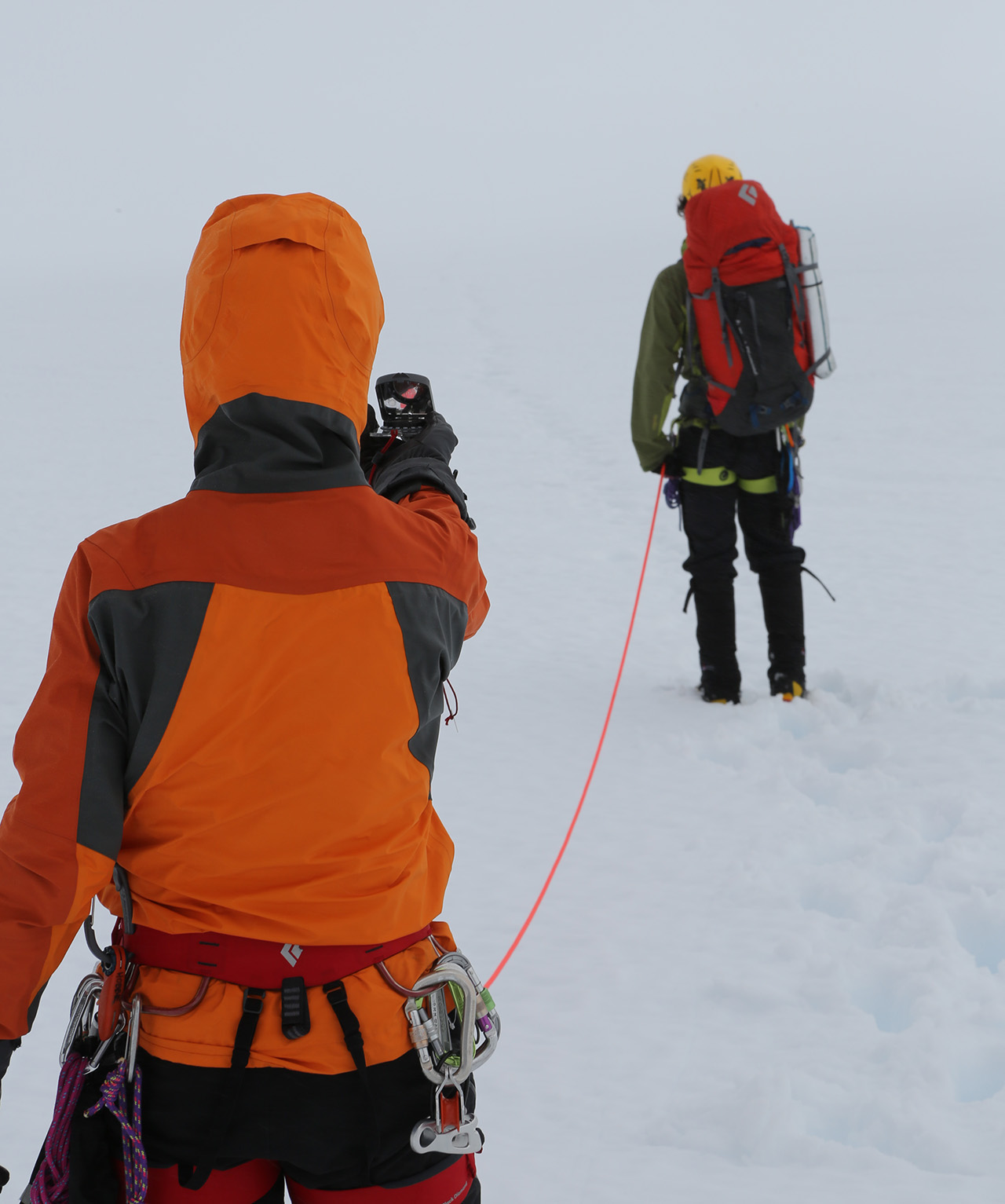
Going round in circles? On flat terrain, most people will travel round in circles. To combat this, travel in single file with the last person carrying the compass and the first person acting as a reference point. Regularly check the compass bearing against the leading person and adjust their direction left or right as required. In angled terrain, travel will naturally head down-hill making it difficult to hold altitude while traversing a slope.
– Andrew Hobman is the former avalanche and alpine programme manager for the Mountain Safety Council

34 years of inspiring New Zealanders to explore the outdoors. Don’t miss out — subscribe today.

Questions? Contact us