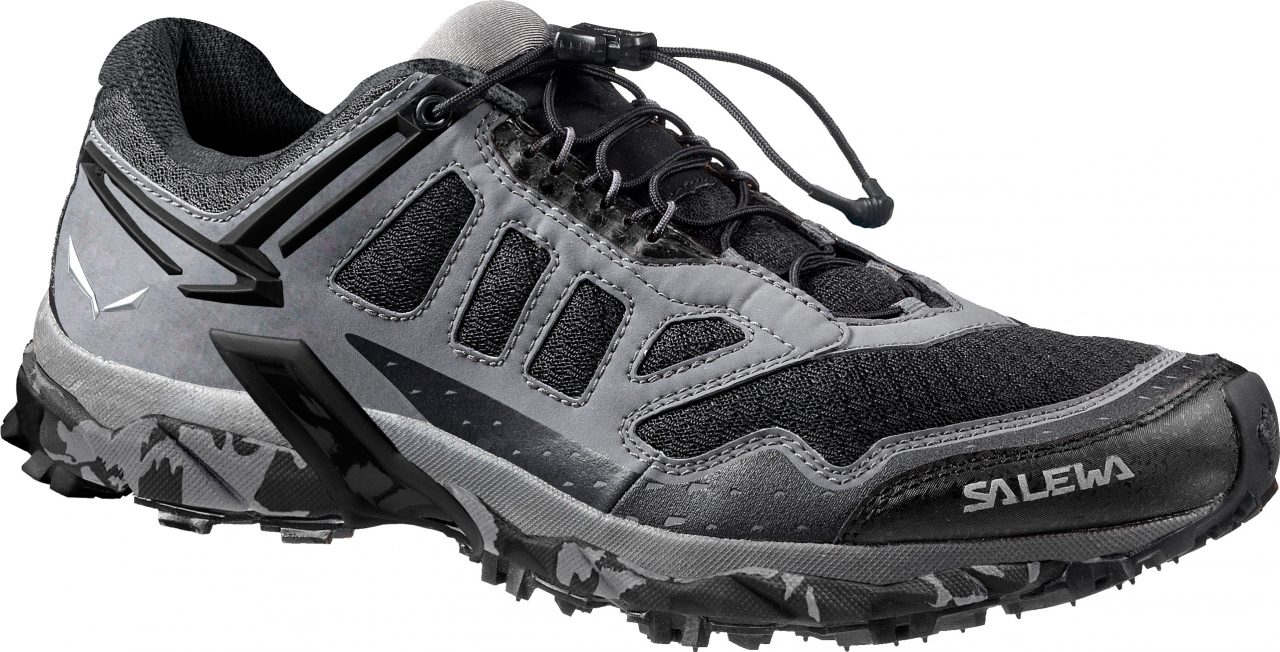
Upper
Most often made from super light synthetic materials and featuring mesh panels or a breathable lining so feet don’t get too hot.
Toe box
Trail shoes require a sturdy toe box to protect against rocks and roots.
Midsole
This cushions the foot on landing.
Heel to toe drop
This is the height difference between the heel and toe. Heel drop can be anywhere from 15mm-0mm. Generally, the less heel drop, the more minimalist the shoe will be and those unused to them will need time to adapt.
Fit
Look for comfort straight out of the box. Some shoes will stretch and soften once they are broken in, but a shoe that is too small, too big, or is uncomfortable to start with will stay that way and could cause blisters or injury. A good fit is also vital to help keep your foot stable over uneven terrain.
Outsole
Wide-spaced, dirt-shedding lugs are common. But don’t just look for shoes with the most lugs – manufacturers use a variety of rubber compounds to provide traction while also offering a long-wearing tread.
Which pair?
Don’t just buy what your coach or friend recommends. Their foot shape might be completely different to yours. A good rule of thumb is to get a trail shoe half a size larger than your regular shoes and if you plan on doing ultra distances, think about getting at least one pair that is a full size larger – feet can swell up to two sizes over longer distances.
Now you know what to look for, it’s time to choose a shoe…

Hoka One One Speedgoat 2 $299 |

Salewa Ultra Train $299 |

Salomon Sense Ride $299 |

The North Face Endurus TR $270 |

The North Face Ultra Endurance $270 |

Merrell Agility Peak Flex $259 |

Inov-8 Roclite 290 $229.99
|

Merrell Trail Glove 4 $219 |

34 years of inspiring New Zealanders to explore the outdoors. Don’t miss out — subscribe today.

Questions? Contact us