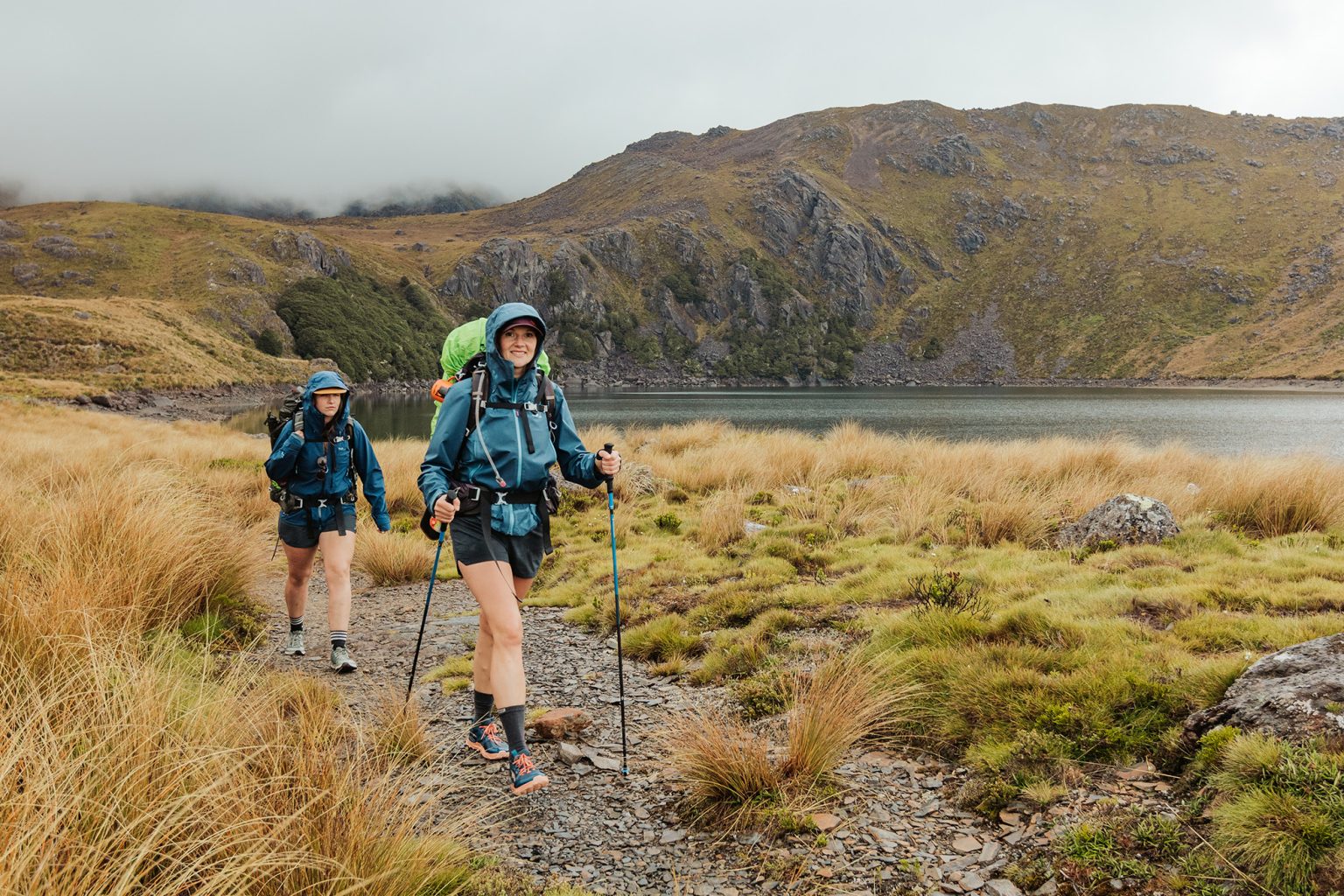
A revolution in outdoor gear is underway and affects how you care for your valuable waterproof jacket.
Chances are that your waterproof jacket, at some stage in its life – and probably sooner than expected – has ceased to be waterproof. Water no longer beads on the outer fabric; it soaks in.
Is that the end of the line for the jacket? Absolutely not. Just like cars, boats and appliances, waterproof jackets (and most other tramping equipment) need to be serviced and maintained. And probably more often than you think.
If you use your waterproof clothing frequently, it will need to be washed and reproofed several times each year. But with changes in its manufacture – described by some brands as one of the most significant upheavals in the history of outdoor gear – waterproof gear may need reproofing every few months, even if infrequently used.
This is due to the elimination of PFAS (often called ‘forever chemicals’) from outdoor gear. Traditionally, both the waterproof membrane and the durable water-repellent (or DWR) have repelled water, thanks to the use of PFAS. However, these chemicals are now recognised as hazardous and outdoor brands are phasing out their use. This change will affect the water-resistant performance of everything from rain jackets to tents and packs.
“We’re undergoing an evolution,” says Neil Stichbury from Outfitters, the New Zealand distributor of Rab and Lowe Alpine. He says PFAS-free options will improve in time, but at the moment the alternatives being used require more frequent reproofing.
To understand why a waterproof jacket requires reproofing, it’s useful to know how a waterproof fabric works. While the fabrics vary somewhat between two and three-layer systems, the fundamental approach is the same: a porous membrane, which blocks water droplets but allows moisture vapour to escape, sits behind an outer fabric that is treated with a DWR.
Many outdoor brands have their own waterproof membrane designs, but the best known is Gore-Tex, which many brands use. Over time the membrane becomes less effective as it gets clogged with sweat and dirt. Meanwhile, the DWR, which is applied to the outer material using a wash-in process, inevitably wears off. The result is a jacket that no longer repels water and ‘wets out’. Clogged pores in the membrane can also inhibit a jacket’s ability to move moisture vapour – sweat – away from a wearer’s body. This causes moisture buildup from the inside, often giving the impression that water is leaking through.
The remedy is simple: wash and reproof your jacket. This can be done with specific outdoor gear cleaning and reproofing products. Nikwax and Grangers dominate this space but some outdoor brands produce their own.
Stichbury says many people are “blissfully unaware” of the need to care for their jacket. All trampers need to get into the habit of washing and reproofing their waterproof gear regularly – a necessity of which many seem unaware.
The concept of servicing outdoor gear is not helped by the fast fashion industry, which has conditioned consumers to think of clothing as disposable. In fact, we can get many years of weather protection from our waterproofs. We just need to use those washing and reproofing products.