Cloud can descend at any time of the year and quickly turn the world grey. Your survival depends on knowing what to do in limited visibility.
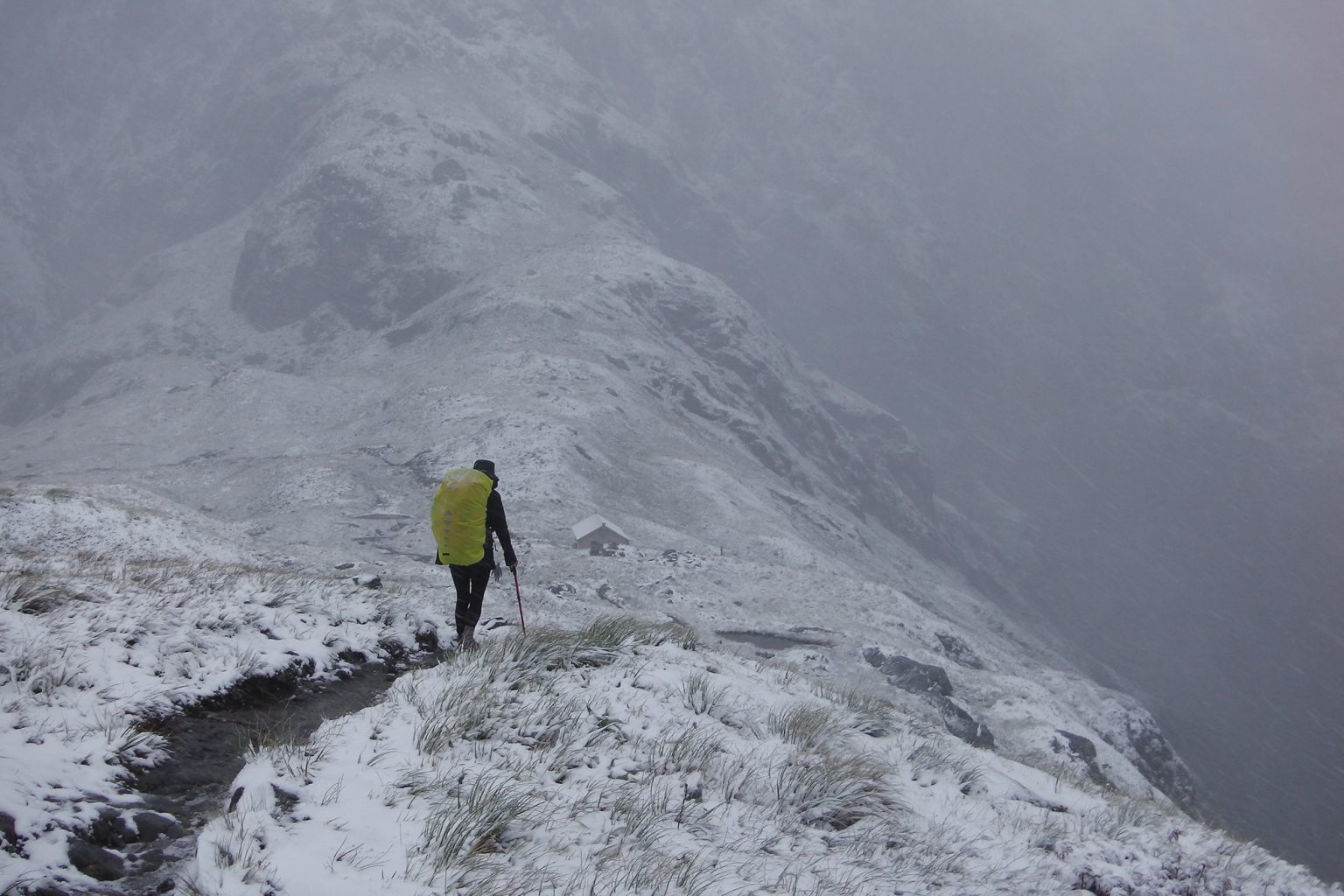
If you are planning to tramp the tops, it’s vital to be able to respond to white-out or grey-out conditions. I have seen a clear blue sky turn to a grey-out with barely 20m visibility in 15 minutes. White-out conditions occur whencloud merges with snow until everything looks the same. It’s very disorienting. Even the perception of up and down is distorted.
Plan: Planning is everything. Carry warm clothes and an emergency shelter, check the weather forecast and study the map. Do you have the gear and experience to be safe in these sections if the weather turns? If not, go somewhere else.
Weather forecast: Consider the weather forecast and what effect this will have over exposed sections. Think about how to respond if the weather closes in early, is delayed or worse than expected, or the trip is delayed.
Back-up routes: Have a plan B in mind for weather changes. On the map identify when to turn back if the weather turns bad. Identify hazards such as cliffs and scree slopes. Look for spurs and other ridges that may lead the wrong way. Before leaving home, have a good image of the area in your mind’s eye and know what you will do if visibility is lost.
Keep tabs on progress: While conditions are good, carefully track where you are and how far you have gone. Then when the world goes grey you will know where you are on the map. Even though visibility is restricted, the map’s contour lines will give you a good understanding of the shape of the ground being travelled.
In the grey-out: When a grey-out hits, stop and consider the plan and the condition of the group. Is this time to go back or take an alternative route down? Is it safe to keep moving? If in doubt, stop, take shelter, and wait until it is safe to go on.
Time yourself: These conditions also distort perceptions of time and distance. Pacing steps and timing travel are key tools in measuring distance. Take special care to note changes in route direction.
Leapfrog: It is easy to stray off track due to terrain or directional bias. While you still know where you are, and before going off track, a bearing (compass direction) needs to be followed. Leapfrogging is a technique that helps keep on a bearing. One person guides another person in front to ensure the bearing is followed. The back person tells the front person to step left or right until they are directly in line. Stay in sight! The back person then catches up and the process is repeated. Using a guide rope will ensure you stay together.
In a white-out: It’s possible to feel dizzy in a white-out on snow. All sense of which way the slope goes, or where a cliff edge lies, may be lost. Roll snow or stones in front to determine the slope. A light rope can be used to show the lay of the land. It’ll show bluffs and slope directions. Toss it out in front and gather it in while walking on, then repeat.
Finding shelter: You may need to leave the track to seek shelter. Find a way to mark where you left the track and take note of time, distance and direction needed to get to shelter.
Think twice before heading across the tops in winter. Do you have the equipment and skills for this? If so, plan and prepare, but never be afraid to postpone a trip or turn back.
Heather Grady is an instructor with Outdoor Training New Zealand