A wrap of the biggest stories and best writing about the outdoors from New Zealand and around the world.
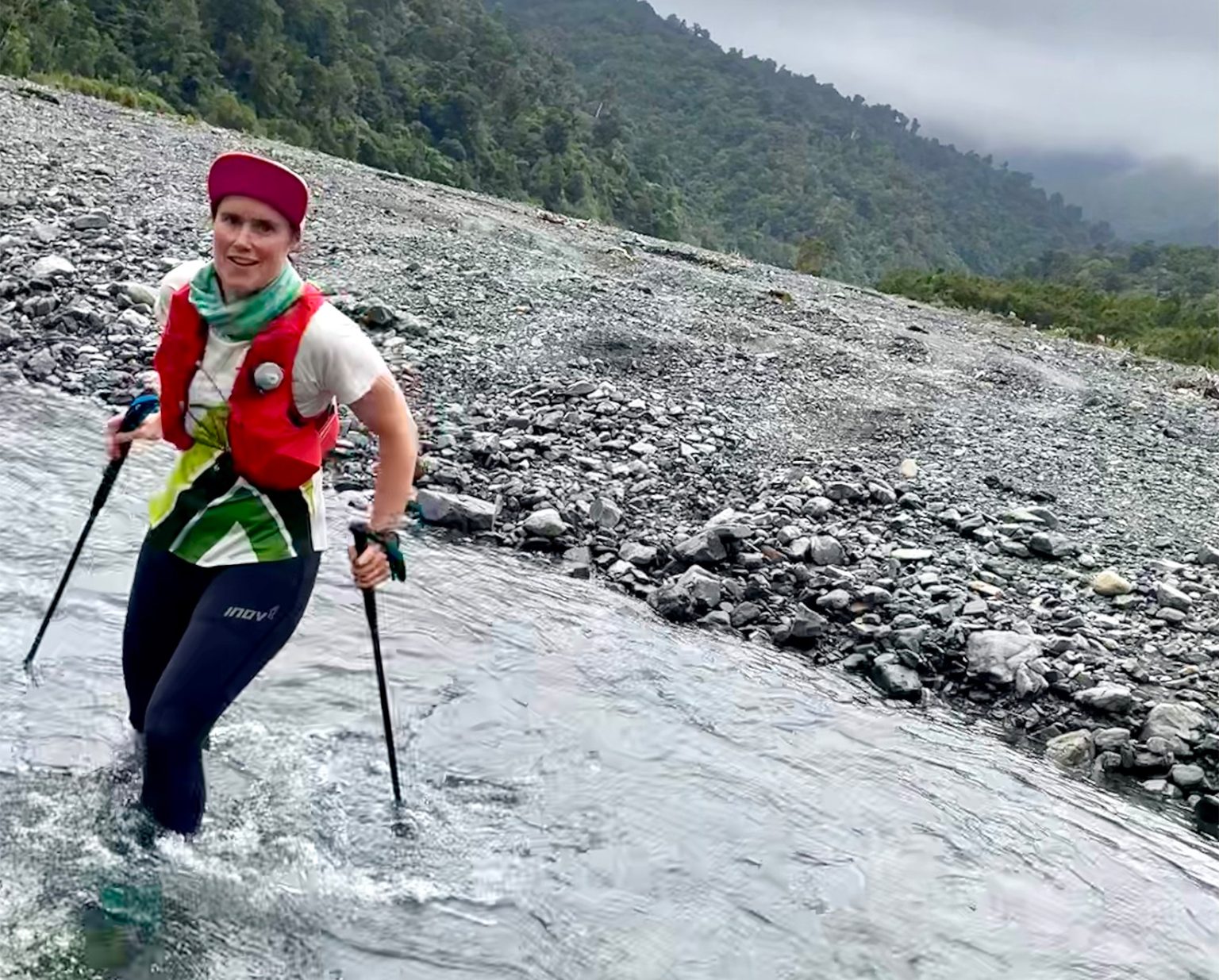
Bridget Johnson ticked off all 11 of New Zealand’s Great Walks in just 11 days. “There were little moments every day that just sort of made me go, ‘Oh my God, I’m getting to do this. I’m so lucky to get this opportunity,” she told 1News.
Johnson trained for 25 hours a week in preparation. She was supported by a crew of 20 to help with transitions and nutrition. “I have an alarm on my watch that goes off once every 30 minutes and just says ‘eat’.”
Johnson’s journey began in the north at Lake Waikaremoana – sometimes running into the night – before finishing at the very southern end of the country, on Rakiura.
“It wasn’t really until the plane to Stewart Island touched down that I really had this feeling of, ‘oh, we might just pull this off’, like ‘this is pretty cool and I think we’re going to be able to do it’,” she said.
She hoped her achievement encouraged others to embark on an adventure as she planned her next mission. Read the full story and watch the interview at 1News.
Endurance athlete attempting New Zealand’s 100-peak challenge in a single season
In 1991, the NZ Alpine Club published a 100-peak challenge for its centennial year. Only one person, Kiwi climber Don French, has completed it – and it took him 30 years.
American Nathan Longhurst is trying to complete it in just one season. As of earlier this week, he’s completed 85 summits.
To achieve the feat, he’s using a combination of mountain and rock climbing, paragliding and ultrarunning. Paragliding has enabled him to climb Mount Tutoko, Fiordland’s highest peak, and fly off the summit, cutting what takes most climbers three days into a 12-hour trip.
“The wing is like adding a portal where all you need is the vertical elevation to burn. ‘If I’m higher here than I am here, then I can teleport myself from here to here’.”
The flying not only saved oodles of time, but enabled him to avoid terrain so dangerous he wouldn’t dare try it on foot by himself: steep, unstable icefalls above the Tasman Glacier.
The 100-peak mission so far has been mostly smooth sailing, thanks in no small part to how good the weather has been in the Southern Alps this summer. Read the full story from The NZ Herald.
Canadian filmmaker first to conquer world’s longest hiking trail
Dianne Whelan, 59, is an award-winning Canadian documentary filmmaker and author. In 2015, with little hiking experience, she set off from St John’s, Newfoundland, to walk, bike and canoe the Trans Canada Trail, which stretches some 24,00km across the country as the longest trail network in the world.
For most of her six-year journey she travelled solo, filming for her latest independent documentary, 500 Days in the Wild.
The end of her 13-year marriage provided a unique opportunity to do the trail. She gave up her home, sold her car, paid off her bills and set off. The trip was supposed to last 500 days but ended up taking six years.
She said adventuring had inspired her from a young age. At just 12, she was carrying a photo of mountaineers Edmund Hillary and Tenzing Norgay in her copy of The Hobbit, one of the first books she ever read. Read the full interview from National Geographic.
Questions after kiwi found dead in trap
The Department of Conservation is considering whether it needs to revise trap standards after a “determined” kiwi was killed when its bill was caught in a pest trap. The dead North Island brown kiwi was found in Northland’s Puketi-Omahuta Forest, west of the Bay of Islands.
Kiwi Recovery Group technical advisor Emily King said the trap in question, a DOC200 housed in a wooden box, had been examined and was found to comply with best practice.
Despite that, a determined kiwi managed to make its way in and had its beak trapped. King said the Puketi kiwi was the 17th known to have been killed in a DOC-series trap since 2008.
“These traps present a very low risk to native species given the benefits predator control provides to wider populations … While an individual kiwi death is upsetting for all of us, if it weren’t for this kind of trapping, we wouldn’t have the growing kiwi populations we have today.”
Without trapping, only 6 percent of kiwi chicks survived to adulthood, but with proper predator control that figure could be increased to 60 percent, King said. Read the full story from RNZ.
Cost of hiking Pacific Crest Trail skyrockets
Halfway Anywhere, a blog run by long-distance athlete Tyler Fox, compiles the annual PCT survey looking at a host of metrics – including cost. This year the survey found it cost more than USD 10,000 (NZD 17,500) to hike the 4,300km trail. That’s an increase of 55% in US dollars over the last five years. With the weaker NZD the cost to Kiwis hoping to walk the trail has increased even more.
These results are similar to findings on other American long-distance trails like the Appalachian Trail and the Continental Divide Trail. One encouraging statistic is that the percentage of female thru-hikers rose 3.5% from last year to 40% of the total. When the survey began in 2013, 35% of the hikers were female.
This year, 764 thru-hikers completed the survey. That’s about 9.5% of the 8,000 long-distance permits issued. Read the full story from Gear Junkie.