Purifiers
Purifiers kill the much smaller viral and bacterial organisms. UV light is the most common and effective form of purification, but does not remove heavy metals or sediment.
Filters
Filters are the first line of defence against larger-than-a-virus protozoa and cryptosporidia such as Giardia and parvum. They remove sediments and organisms down to 0.4-0.1 microns.
The full system
Some systems use both a filter and purifier. The filter – or series of filters depending on the system – removes large particles down to 0.2 or 0.1 micron and the purifier deals with anything smaller. Unless the removal or treatment of water is at least 99.9%, there is a risk of infection.
Water- borne hazards
Despite New Zealand backcountry streams being reasonably healthy, there is still a risk that water-borne illnesses can be picked up – Giardia Lamblia, campylobacter, salmonella and E. coli for instance. The risk increases after a disaster like an earthquake or when travelling to developing nations, where many viruses and bacteria pervade waterways.
Flow rates
The usual flow (or purification) rate is one to two litres per minute. This can drop off as filters become clogged with sediment.
CleaningCleaning
Filters on high-end models can be cleaned to ensure long life whereas filters on bottles tend to need replacing after around 1000-litres.
Where to filter
Always check – if possible – what’s in the water upstream to avoid contamination. Giardia slowly sinks to the bottom after tumbling over rapids, so draw your water where the flow is slow moving, away from the bank. Avoid muddy water as it quickly clogs filters, making them hard to pump. Use pre-filters to remove as much sediment as possible.
Now you know what to look for, it’s time to choose a model.
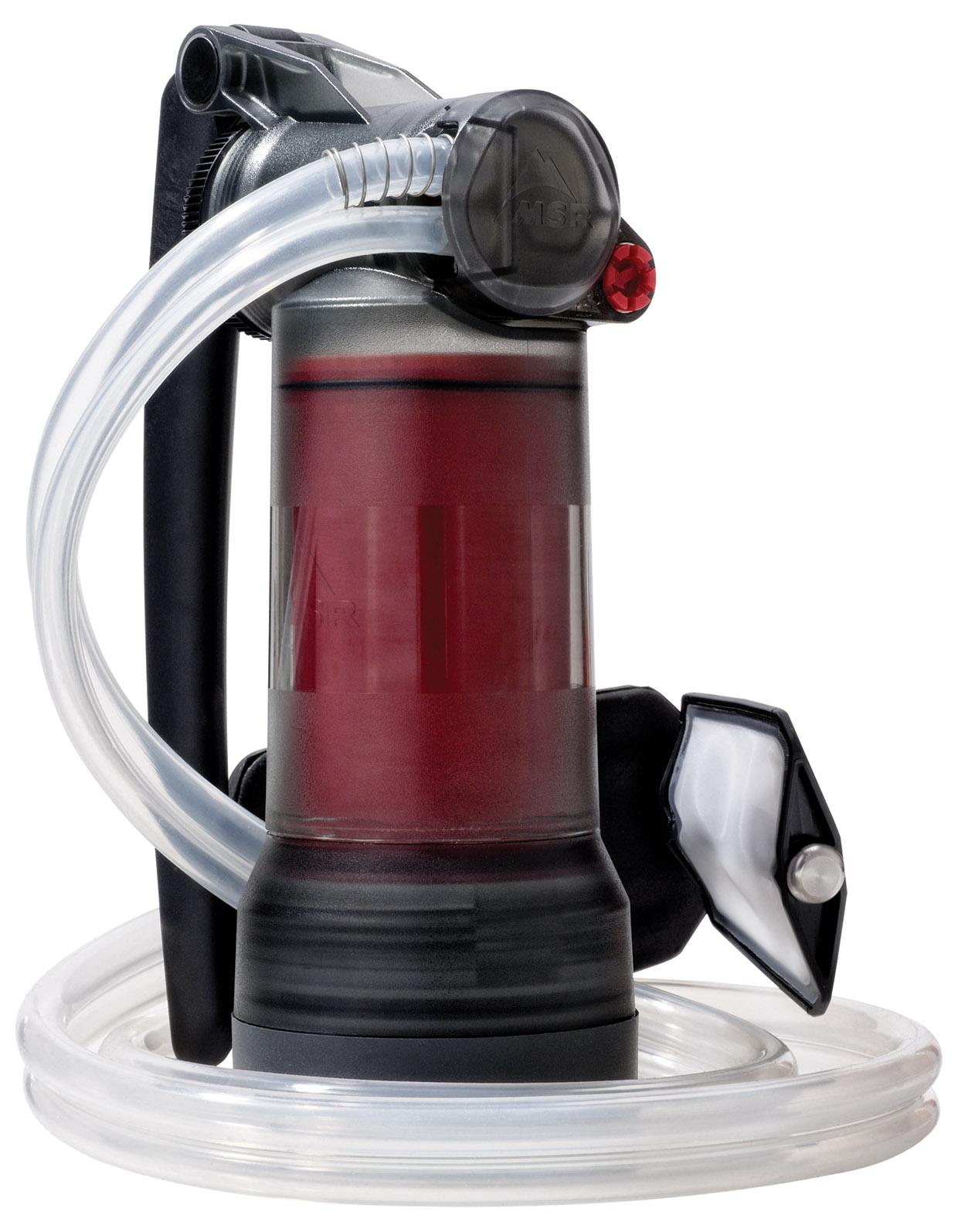
 MSR Guardian Purifier $699.99 MSR Guardian Purifier $699.99Pump purifier offering viral protection for travellers, disaster preparedness and backcountry trips. Advanced hollow fibre filter treats filthy water and removes viruses, bacteria, protozoa and particulate. Self-cleaning, impact resistant, withstands freezing. Flow rate 2.5-litre/min Cartridge life 10,000+litres Weight 490g.  |

SteriPEN Adventurer Opti $219.95
|

SteriPEN Classic 3 $169.95
|

SteriPEN Pure + $169.95
|

MSR TrailShot MicroFilter $129.99
|

Platypus 1L Meta Bottle with Filter $119.99
|

Lifestraw Go Bottle $69.99
|
 Fill2Pure Extreme Filter Bottle 600ml $59.99 Fill2Pure Extreme Filter Bottle 600ml $59.99Features a 0.2 micron absolute replaceable filter that does not expire, filter clogs to indicate replacement, purifies and filters as you drink, removes 99.99% of Giardia, cryptosporidium, E-coli, heavy metals, pesticides, DDT, bacteria and viruses. Non-leaching BPA-free plastic. Cartridge life Minimum 400 litres (600+ refills) Flow rate One litre in 40 seconds Weight 150g. |