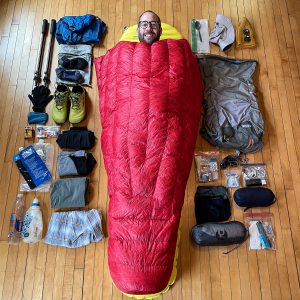
This minimalist mindset can help anyone find more enjoyment in the outdoors. By Cody Howell
Who doesn’t want a lighter pack? But maybe you’re hesitant about ultralight gear, and you’ve heard that cutting weight is the fastest way to end up in a rescue chopper.
Ultralight tramping isn’t about using the priciest gear or shaving off every gram; it’s about enhancing your tramping experience by focusing on essentials and leaving the comforts of home, at home. More importantly, it’s a philosophy that can benefit trampers by improving energy efficiency, comfort and safety, no matter their pack weight. And it’s as simple as picking the lightest essential gear for each adventure.
Ultralight tramping is a philosophy
I tinker with my tramping kit like a petrolhead tinkers with a car – always tuning, tweaking and testing. Thru-hiking quickly showed me the importance of weight efficiency as 20+km days stacked up. At first I fixated on every gram, but I soon adopted an approach that emphasised minimalism and simplicity.
Less clutter in my pack meant less weight on my mind.
As Belden C. Lane, in Backpacking with the Saints, wisely notes, ‘Packing for the trip is an exercise in values clarification.’ Personally, I value walking long distances without the stress and strain that can linger for days. As ultralighters and parents, my wife and I value packing all our gear into a single frameless pack that weighs less than our toddler. I’m sure you also value doing what you love, but maybe traditional kit is wearing on your back and knees.
Although a 4.5kg base weight is the ultralight cut-off, if you’re just starting out, consider it a guideline for making informed packing decisions. The ultralight philosophy is a journey rather than a destination; every step is in the name of progress.
How can I start reducing pack weight?
Most trampers understand lightweight principles: use modern gear, cut redundancies and luxuries. But how do you choose what gear to put in? By almost every measure, modern ultralight gear outperforms heavier, traditional gear. For example, compared to a standard 1kg sleeping bag, a quilt is warmer at about half the weight due to its superior design. This can be applied to the rest of your kit when you consider modern designs and materials.
Here are some practical tips:
1) Use a gear list like LighterPack.com to get a full understanding of your kit. Shape it into the lightest, most functional gear you can personally acquire over time.
2) Focus on your Big Three: shelter, sleep system, and pack. These are typically the heaviest; lighter versions make a significant difference. Keep each under 1kg.
3) Consider consumables: choose calorie-dense foods, carry a water filter instead of excess water, and use minimalist containers of toiletries.
4) If you haven’t used gear in recent trips, ditch it and see how much it matters.
5) A PLB is always essential kit. Likewise, you should always carry a shelter even when sleeping in huts.
Your embrace of minimalism should evolve in tandem with your overall experience. Learn what your essentials are and shed the rest.
Address your safety concerns with knowledge
Heavier gear doesn’t keep you safe outdoors; knowledge and skills do. In fact, a lighter pack improves safety by saving energy, improving balance and keeping your body in better condition.
It’s often said that we ‘pack our fears’. Let’s tackle some common fears you may be packing:
Footwear options: Studies by the US military show boots cause more strain and energy use than shoes, while injury rates remain unchanged. Energy efficiency keeps the body fresh and focused. Wear trail shoes; save the boots for snow.
Getting cold: Dress in layers like wool or fleece that still insulate when wet. Pack a max of one backup set.
Wet down and sleeping gear: Use down for insulation – it’s superior in warmth and longevity, and a waterproof shell will keep it dry. Campsite selection is also important for staying dry and warm. Carry a tarp or single-walled tent and choose sheltered locations to reduce wind and condensation.
What’s next?
Ultralight tramping is more than a weight category: it’s a minimalist mindset, and every tramper can benefit from that. Start by bringing less, keeping it light, and spending more of your energy enjoying nature.
The next step is to find a like-minded community for a gear ‘shakedown’. Be prepared for tough feedback, the payoff is worth it.
– Cody Howell is co-founder of the ultralight gear manufacturer Kiwi Ultralight.