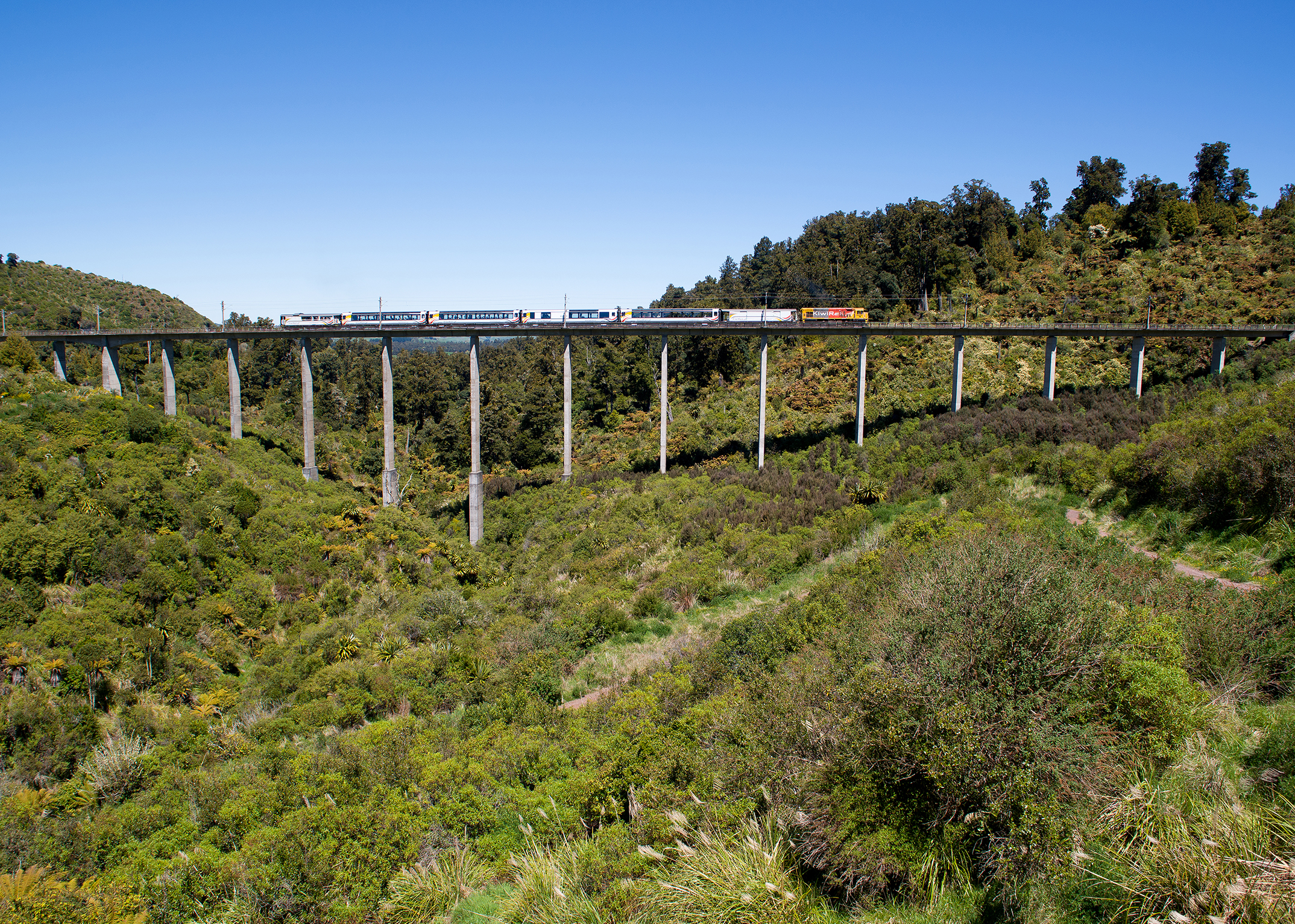
Before the age of mass automobiles, it was common to go everywhere by train, including on tramping trips. People from Auckland or Wellington would take the train to Ohakune and National Park village to go walking or skiing.
Christchurch Tramping Club’s 50th jubilee journal, published in 1982, describes a series of railway trips in the 1930s facilitated by the Railways Department. A hearty-sounding trip up the Avoca Valley in the Craigieburns was remarkably affordable: four shillings (about $30 in today’s money) for six people. The report notes that the train even supplied hot water for trampers to cook their lunch.
As rail services decreased in frequency and increased in price, that changed. “The demise of bus and railcar trips came in the mid-seventies; since then, trips have utilised the private car,” reads an entry in the Christchurch Tramping Club (CTC) journal. “Club members were happy to take advantage of the greater flexibility and convenience provided by the car. This was at the expense of much conviviality and perhaps a little club spirit … [and] was followed by a slight drop in numbers on club trips.”
Prebble sometimes feels that he didn’t appreciate the availability of trains enough: “It was great not having to worry about the safety of my vehicle – whether it was a kea eating the wiper blades or someone trying to break in when it was parked in a remote area. I took it for granted.”
Today it’s rare – although not impossible – to use public transport to get to or from a tramping trip. Passenger rail services are few and far between. “Trains are hideously expensive and very restricted,” says CTC memberships officer John Kerkhofs.
Where public transport does work is for short club trips around the Port Hills and Banks Peninsula. “You can do an end-to-end trip where you finish 10km from where you started and it’s not a problem,” says Kerkhofs. This also saves the logistical juggle of carpooling and finding parking, and there’s room for everyone on a public bus.
“I started looking into public transport when I was close to retirement and realised I couldn’t afford to drive all over the place on the pension,” Kerkhofs says. He also finds the environmental benefits of public transport appealing.
In general, public transport in New Zealand focuses on getting people to school, work or shopping centres rather than accessing the outdoors. That said, there are some excellent trips accessible from most major New Zealand cities. Wellington, with its nearby hills and a regional train system, is particularly blessed. Local trips are good for teenagers wanting to embark on their first unsupervised tramp, uni students on a budget, people without cars or those who can’t drive. It can also be a great way to get to know your own backyard.
Costs are listed where services are not part of standard council-run public transport.
Rangitoto/Motutapu: Travel via Fullers360 ferry ($58 return; family deals available). Overnight stay available at Motutapu Island Campsite or book a private Rangitoto bach.
Waiheke Island: Travel via Fullers 360 ferry ($59 return; cheaper off-peak). Walks on the Te Ara Hura network of tracks; buses on the island can get you most of the way to Whakanewha Regional Park. Overnight stays at Poukaraka Flats Campground.
Shakespear Regional Park: Take NX1 + 982 bus, or Gulf Harbour ferry.
Red Rocks Walk: Take No.17 bus to Brooklyn, walk up to Brooklyn wind turbine. Alternatively, take No. 2 bus to the Zealandia fenceline track then walk up to the turbine. Follow tracks to Red Rocks. Return via No.29 bus from Ōwhiro Bay or No. 2 bus from Island Bay.
Paekākāriki Escarpment Track via Kāpiti train line: From Pukerua Bay to Paekākāriki train stations; can be done in either direction.
Belmont Regional Park: Access by crossing the road from Petone Station; Hutt Valley Line or No. 83 bus. Overnight stay option at Dry Creek campsite, opposite Manor Park train station.
Orongorongo Valley: Access via No.83 bus then transfer to No.170 bus to Wainuiomata. East Whakanui trip into Orongorongo Valley. Overnight options: camp in the valley or stay in a hut (lots to choose from).
Cone Hut/Tutuwai Hut: Take the Wairarapa train line to Woodside or Matarawa Station. Access to Cone Saddle tracks via Waiohine River. (A few kilometres of road walking required; more from Matarawa, but it’s easier to be on the other side of the river.)
Mt Herbert Walkway: Access via No.8 bus and Diamond Harbour ferry. Overnight camping option in Orton Bradley Park.
Purple Peak/Hinewai: Use Akaroa French Connection bus, $70 return; extra charge for bikes. Overnight stays available in Hinewai.
Rangiora to Waikuku Beach track: Take No.1 bus to Rangiora. Dunedin
Silverpeaks Scenic Reserve: Take No.3 bus to base of Pineapple Track. Overnight stay in Jubilee Hut (standard, bookings required).
Tracks on Otago Peninsula: Take No.18 bus to Portobello. Overnight stay option in Portobello Village Tourist Park.