Mt Ruapehu, Tongariro National Park
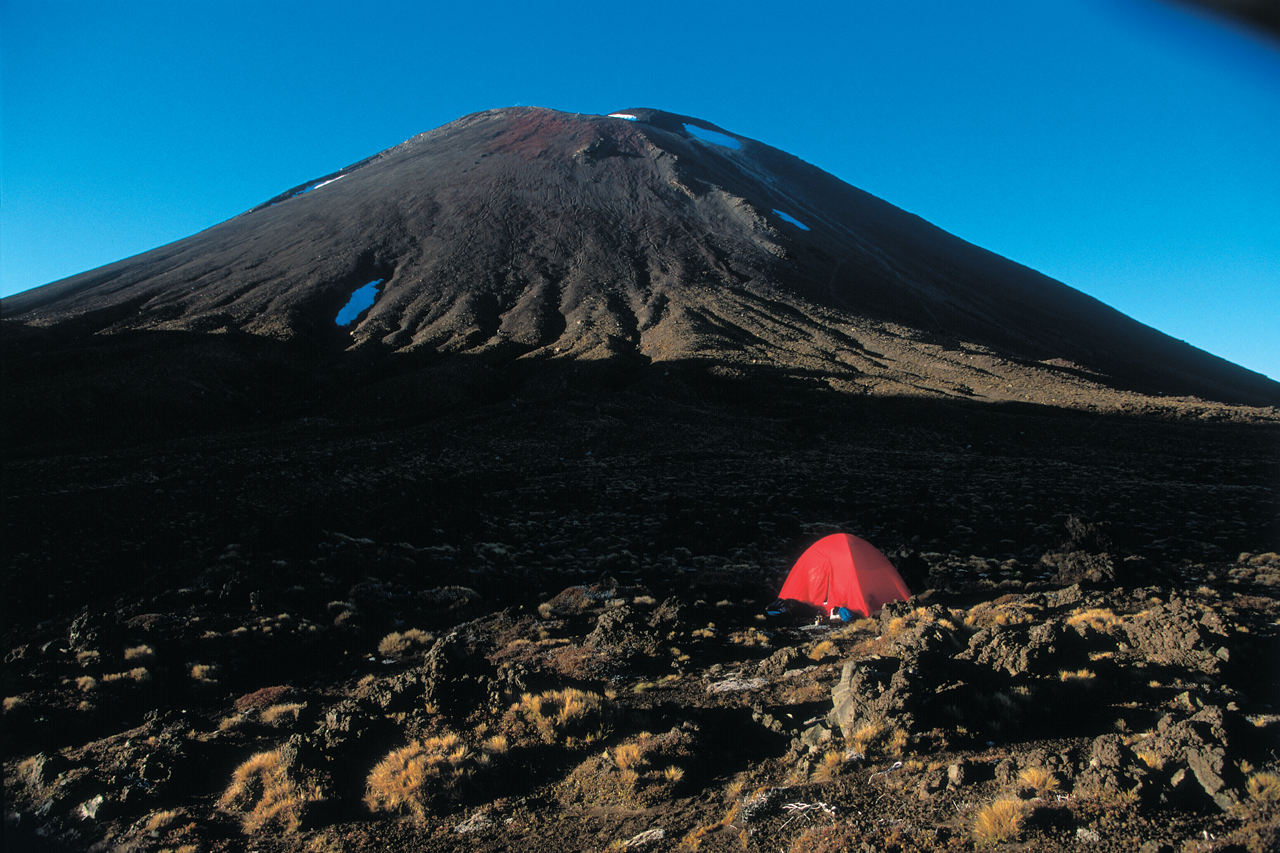
The largest of Tongariro National Park’s triumvirate of andesitic volcanoes, Mt Ruapehu towers a lofty 2797m above sea level. Its multi-faceted shape offers a glimpse into its violent history and Crater Lake has experienced several lahar-inducing eruptions since it burst back into life on September 23, 1995.
There are more than 200 routes on this mountain with Tukino Ski Field providing access to the southern and eastern approaches, Turoa to the western and southern routes and Whakapapa the northern and western routes. The two most popular routes on the Whakapapa side both travel up known lahar paths. If a siren sounds, head immediately for higher ground.
The most common route in summer is to catch the Rockgarden and Waterfall Express chairlifts to Knoll Ridge Café. Head up the left-hand side of the Knoll Ridge T-bar pylons and drop into a large, wide valley and then climb onto a ridge behind Glacier Knob. From here, traverse the ridge along a narrow track to Dome Ridge. Dome Ridge is narrow with steep drops on each side – ice can make this section treacherous even in summer.
Ruapehu has many glaciers that hold snow and ice all year around – travel beyond Dome Ridge must be taken with extreme care – an ice axe, crampons and the skill to use them are essential. Skilled ice climbers will find some interesting features around Crater Lake.
Mt Taranaki, Egmont National Park, Taranaki
The 2518m-high Mt Taranaki last erupted in 1854 – just yesterday in a geological timeframe.
Thankfully, the nine seismographs keeping an eye on this giant haven’t shown any major rumbling within its bowels recently, but even without any volcanic activity it’s still a peak that commands respect.
Winter climbs are best done by those with alpine skills, crampons, ice axes and ropes. In summer, it’s a bit more accessible. The easiest route is from North Egmont Visitor Centre. The Summit Track, which begins as a 4WD track, runs from the car park to Tahurangi Lodge (1492m). Alternatively, The Razorback Track will take you there. Allow about two hours to reach the lodge at a leisurely pace.
From Tahurangi Lodge, the final 1000-vertical-metre push to the summit will take about four hours with the whole trip possible in 8-10hr.
The trail picks up a poled route that ascends through the rocky gut of Hongi Valley. A section of steps lead out of the valley and onto a steep scoria slope and then a rocky spine known as the Lizard (2314m) until finally the summit is reached.
Mt Ngauruhoe, Tongariro National Park
At around 2500 years old, Ngauruhoe is so young it still forms a perfect cone. The 2287m mountain is still very much active with its last major eruption in 1973 when it spewed blocks of molten lava up to 3km away and belched a column of ash and gases 13km into the air. The column collapsed and showered the cone in an avalanche of scoria and ash.
It is that same scoria fallout that makes the return journey scree-run such an adrenaline rush – definitely making up for the infuriating two steps forward, one step backwards ascent.
Ngauruhoe can be climbed as a side-trip from the Tongariro Crossing or Northern Circuit or as an out and back from the Mangatepopo road end. The trail begins as a gentle gradient, skirting old lava flows as it climbs towards Soda Springs. From here the track climbs steeply up the once feared Devil’s Staircase to the Mangatepopo Saddle. It will take most trampers two hours from car park to saddle.
From South Crater, the summit of Ngauruhoe is a further two-hour, 600-vertical-metre climb away.
Near the crater rim, the scoria gives way to firmer steam-drenched terrain – unnervingly set to a hissing roar from the vents in the crater. The magnificent views stretch in all directions, but it’s not a place to linger. The descent to the saddle will take about 30-40 minutes if you run – highly recommended.
34 years of inspiring New Zealanders to explore the outdoors. Don’t miss out — subscribe today.

Questions? Contact us