

In the neighbourhood
Alternative track: Ruapehu’s Round the Mountain Track is a 66km loop best tackled over 4-6 days. The northern section incorporates the Northern Circuit, but the majority is spent on the slopes of Ruapehu.
Since you’re already here: Silica Rapids Walk is a 7km loop track which explores the Silica Rapid terraces. The track starts near the Chateau Tongariro and can be completed in 2.5hr.
Just got a weekend? From Whakapapa, take in the Taranaki Falls and Tama lakes on a trip to Waihohonu Hut – the best hut in the park.
Where to stay: National Park Village has options and the Chateau Tongariro is minutes from the start of the track.
Where to stock up: National Park Four Square is the nearest supermarket, and gear hire is available at The Alpine Centre.

Walking the Tongariro Northern Circuit
The three-four day Tongariro Northern Circuit is best done in a clockwise direction.
Whakapapa Village to Mangatepopo Hut
8.5km, 3hr
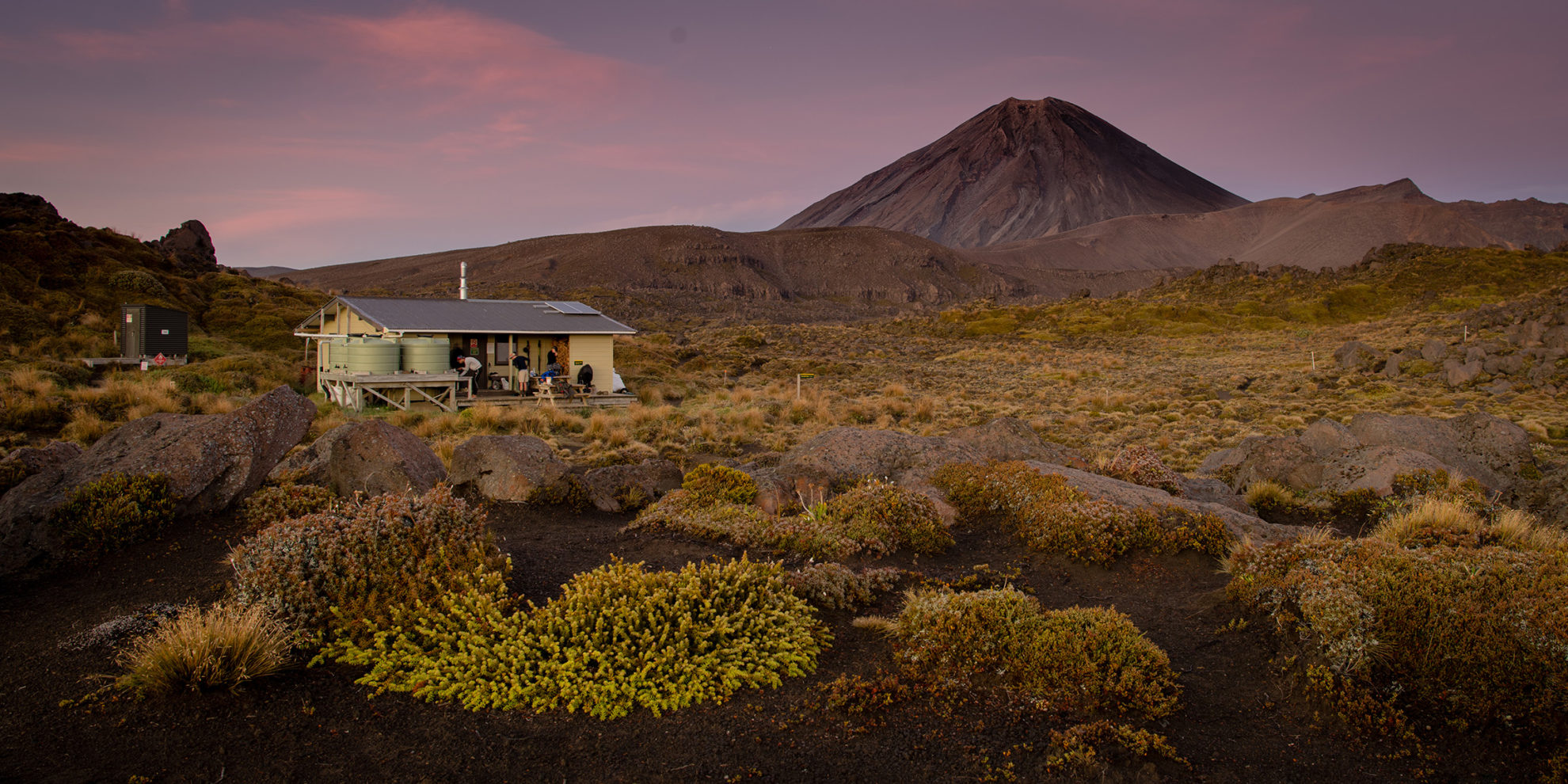
From Whakapapa Village, head north on the heavily eroded Mangatepopo Track. It’s harder work than the distance and time imply: the trail drops into and climbs out of more streams than you can count and, compared to other sections of the track, it’s in poor condition. But towering Ngāuruhoe and smaller Pukekaikiore serve as constant reminders that you are walking in a World Heritage Area. Regardless, you’ll be pleased to reach the hut.
Mangatepopo Hut to Oturere Hut
13km, 4-5hr
Now the fun begins. This section, on the Tongariro Alpine Crossing, is undoubtedly a highlight, though you may wish to rise early to avoid the day-trippers who will be crowding the trail as far as Emerald Lakes.
The boardwalk trail to the Devils Staircase is quickly dispensed with and though the climb to South Crater will get you puffing, you’ll have plenty of time to recover your breath on the flat 1km march across the crater – Mts Ngāuruhoe and Tongariro on either side.
The steep climb to Red Crater brings you to the exposed 1868m highpoint of the walk. The weather here can be extreme at any time of year, but if conditions are good it’s worth pausing here to admire the view of the park’s three major volcanoes.
It’s then all downhill, first to spark-ling Emerald Lakes and then beside Oturere Stream to
Oturere Hut. Oturere Hut to Waihohonu Hut
7.5km, 3hr
The track now swings to the south, around Ngāuruhoe, and is mostly flat and easy walking. Above the treeline for most of the walk, unobstructed views can be had in all directions – particularly good is the view east to the Kaimanawa Mountains. There’s a sting in the tail to this section, though: a steep climb through forest and then one final descent to the hut.
Waihohonu Hut to Whakapapa Village
14.3km, 5hr
Get started early on this section to make the most of three side trips. First up, just 15-minutes from the hut is the historic Old Waihohonu Hut, built by the Tourist Department in 1903-04. It’s a far cry from the luxury of the new hut.
The trail is again mostly flat and passes through a wide-open valley that separates Ngāuruhoe and Mt Ruapehu. It climbs gently to the track junction with the Tama Lakes Track, where a trail leads north to offer a vantage of both Lower Tama (20min return) and Upper Tama (90min return). It’s well worth the detour to see these lakes which have formed in old explosion craters.
The track then weaves its way towards Whakapapa Village, with one more detour to the 20m Taranaki Falls – the best-known and most spectacular waterfall in the park.



