

Three years ago, the Department of Conservation advised visitors to no longer climb mountains in Tongariro National Park because they are sacred to local iwi. For many Māori, the mountains are their ancestors and the peaks are their ancestor’s heads – so to summit a mountain is to stand on the head.
In other parts of the country, climbers and trampers are asked simply to not stand on a mountain’s peak, while in parts of Northland there are very few restrictions on how and where to climb.
The closure of Australia’s Uluru to climbers in 2019 prompted a wide variety of reactions – but New Zealand’s outdoors community might have just as many mixed opinions on the topic.
Federated Mountain Clubs president Jan Finlayson says the discussion around standing on the summit is not just a cultural issue, but is about being generally respectful of nature, which goes “hand-in-hand” with the Leave No Trace ethos.
“It’s easy to stand off a few metres [from the summit],’’ she says. “I usually stand off to the side . . . [it] seems like the right thing to do.’’
New Zealand Alpine Club general manager Karen Leacock agrees, saying climbers are “fairly respectful” of iwi wishes.
New Zealand Mountain Guides’ Association (NZMGA) president Jane Morris says while climbing Aoraki/Mt Cook is often a long-standing goal for alpinists, standing on the summit is often not even possible.
“In general, climbers don’t stand on the tippy top of Aoraki,” she says. “[It] is often very corniced and overhangs the East Face. It is not somewhere that one would try and stand on, so the mountain has its own protection mechanism in place that seems to be a happy balance for everyone.”
The “wider issue” according to Morris, is cultural differences – notably, many Pākehā climbers and trampers see getting to “the summit” as part of their cultural experience.
“We [all] engage differently with the mountains,” Morris says. “They are sacred places to Pākehā also. This is, for many people, their church on Sunday.”
She believes there can be a “balance” between recognising the significance to Māori of mountains like Aoraki, as well as taking into account other cultural heritage, particularly Pākehā mountaineering history.
“I think both can co-exist with understanding and respect.”
NZ Māori Council member Matthew Tukaki says it is a “fair comment”, adding, however, that the role of Māori kaitiaki, or guardians, existed long before European settlers and other cultures established themselves in New Zealand.
This is why Māori have such a connection with the whenua (land), he says.
Everyone, however, can and should have an interest in conservation and protection of New Zealand’s outdoors, he says: “It’s not an us/them debate – this is all of us.”
For Tiaki Coates, who has a background in “cultural adventure”, the sacredness of the mountains and bush where he works inspires him to share that with people on his trips.
The Raglan-based guide of Ngāi Tahu descent leads groups of overseas visitors, locals and young iwi on “rites of passage” trips to learn about the history and culture of the area.
He says many of his clients are American tourists who take a strong interest in New Zealand’s indigenous history and culture, often as a way to begin engaging with their country’s history with Native Americans – but without having “baggage” or “skin in the game”.
That “baggage” of guilt or hurt, a lack of understanding or fear of getting things wrong, is often what can stop New Zealanders from engaging with Māori history and protocol in the outdoors as well, Coates says.
“I feel most New Zealanders are cheated out of learning a deeper understanding of things like rahui and tapu through our education system,” he says. “We bring more baggage to the conversation.”
Department of Conservation Tongariro operations manager Connie Norgate says staff have noticed a “significant” drop in people attempting to summit the mountains of Tongariro National Park since the 2017 advisory was issued.
The advisory also asked tourist operators to remove all references to summit side trips or ascending peaks in the park, remove any images of people touching or swimming in sacred lakes and to stop referring to Mt Ngāuruhoe as Mt Doom (as it was in the Lord of the Rings films).
It is not a blanket ban on going into the mountains, however. The popular Tongariro Alpine Crossing (TAC) attracts thousands of tourists each year, and Tongariro iwi, Ngāti Rangi, runs a ski academy on Mt Ruapehu.
To Norgate, working with DOC’s Treaty partners (notably local iwi Ngāti Rangi and Ngāti Tūwharetoa), putting rangers on the tracks to advise tourists, and updating tourism providers about the advisory have all been “essential” to the success of the change.
She believes visitors to the park now have a better understanding of tapu (sacredness) and tikanga (protocol) due to the range of initiatives implemented since the advisory.
Tongariro Guided Walks founder Terry Blumhardt says the 2017 change had little effect on the company, as its concessions to host guided walking tours in the national park (issued by DOC) had already barred them from “side trips” up the mountains.
Blumhardt believes foreign trampers have been more accepting of the move than locals, however. “New Zealanders find it challenging to accept any restrictions on their access into the outdoors,” he says.
He references the tendency of some Kiwi outdoor adventurers to debate restrictions, noting one incident several years ago where the road to Mt Ruapehu had been shut following fears of a volcanic eruption. While most foreigners turned around at the ’Road Closed’ sign, some Kiwis took it upon themselves to fight it, he says.
“The New Zealanders felt the need to argue the point,” Blumhardt says.
He believes, however, that the issuing of the 2017 advisory shows that the country’s hiking culture is “evolving”.
But from Matthew Tukaki’s experience, Kiwis are more respectful than tourists when it comes to leaving no trace. They are more aware of things like taking rubbish away and being safe and prepared – something visitors in search of a photo may not always be.
Respecting DOC advice, such as signage installed on the TAC about whether the weather is suitable for walking, is also part of respecting the natural environment, he says.
In the west of the North Island, the conversation around tikanga and mountains is growing broader than just the physical history of a place.
Last December, the Government and Ngā Iwi o Taranaki (the collective title for all iwi in the Taranaki area) announced Mt Taranaki would be renamed Taranaki Maunga, rather than the interchangeable Mt Taranaki / Mt Egmont option that has been in place since the 1980s.
Egmont National Park has also been renamed Te Papakura o Taranaki, removing the references to John Perceval, the Earl of Egmont – a supporter of Captain James Cook.
Te Rūnanga o Ngāti Ruanui chief executive Debbie Ngarewa-Packer told RNZ she was proud to see the maunga reclaim its history.
‘It’s been an aspiration for us here to have our own history or our name put to our own environment,’ she said.
The mountain has been the focus of several headlines in the past due to “culturally insensitive” actions, including a group taking a barbecue to the summit, people graffiting rocks, and others depositing ashes on the track.
The 2011 barbecue incident prompted an outcry from many, including then-Taranaki DOC boss Phil Mohi.
‘The act of cooking over an ancestor is tapu – it’s something that you just don’t do,’ he told the Taranaki Daily News.
Emily Shrosbree, president of the Wellington Tramping and Mountaineering Club, says she has learned a bit about tikanga Māori in relation to tramping from other club members and several club night talks.
This included one evening where a te reo Māori teacher helped club members improve their pronunciation of places to where the club commonly runs trips.
“I think awareness is always a good thing,” Shrosbree says.
She says the club did take notice when iwi asked climbers not to stand on summits.
“There isn’t a specific WTMC club policy about it, but the club does have an ethos of being respectful to both people and the environment, and, for me, understanding and respecting te ao Māori is part of that.
“For me, there’s challenge, reward and enjoyment in the whole journey – and that’s the same regardless of whether I’ve stood on the very summit of a mountain.”
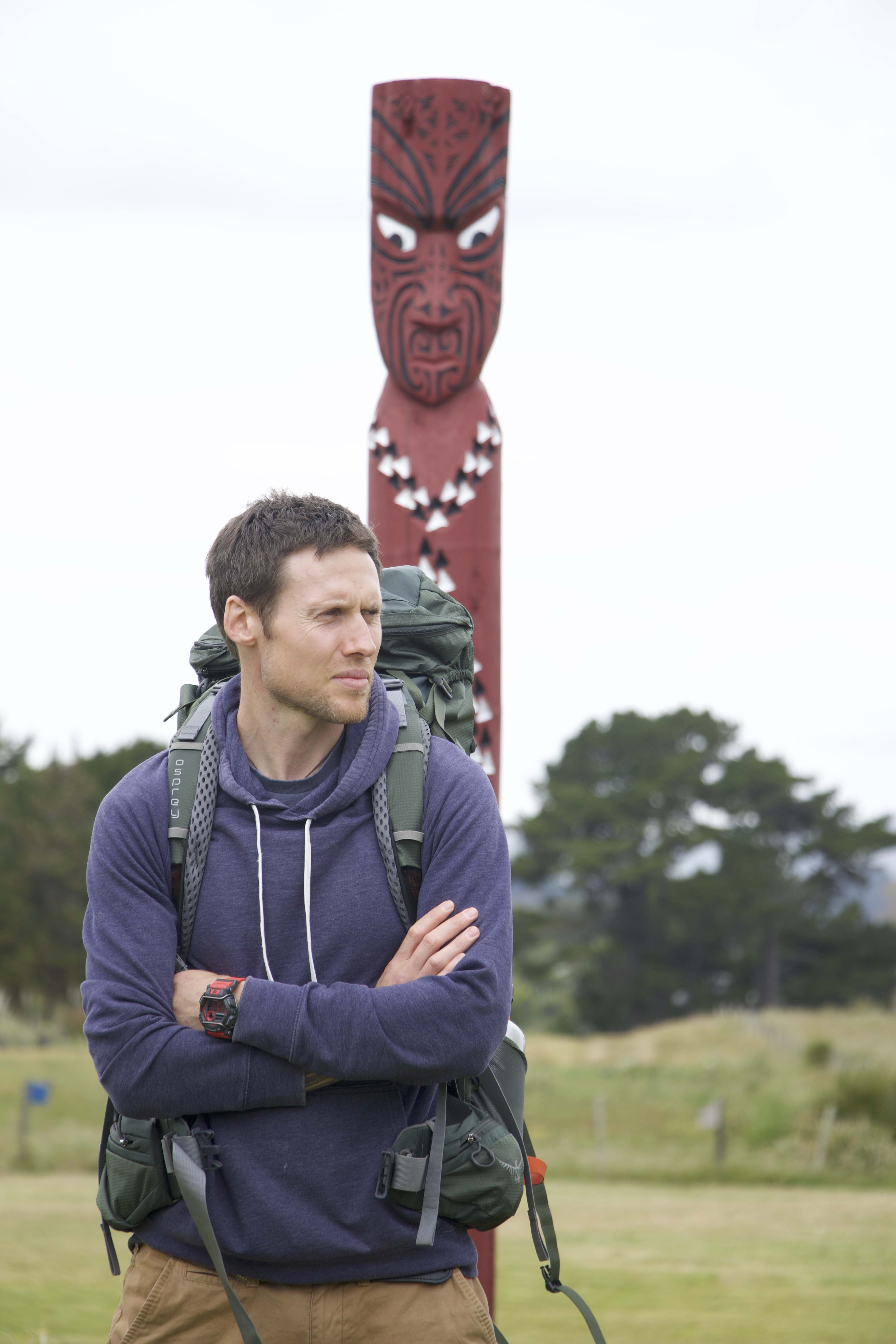
Tiaki Coates says the growing awareness for Māori culture can be seen in the respect for rāhui, the temporary cultural prohibition to an area or resource usually put in place following a death or for environmental reasons.
Most North Island iwi will issue rāhui, as can happen from time-to-time on popular tracks like the TAC, but South Island-based iwi Ngāi Tahu, whose representatives declined to speak to Wilderness, do not usually.
Rāhui have been temporarily put in place in parts of Auckland’s Waitākere Ranges to prevent the spread of kauri dieback, while others are more long term – including not swimming or diving in the sacred waters of Te Waikoropupū Springs near Nelson, or going beyond barriers that protect important spiritual pathways at Te Rerenga Wairua (Cape Reinga).
That people take notice when one is put in place shows Māori are now being listened to, Coates says.
NZMGA’s Jane Morris says there has been a “huge shift” over the past 10-20 years around Māori names, stories and the history being used when discussing a place, including the adoption of these by tour operators.
She also mentions past work with Aoraki Bound (a Ngāi Tahu/Outward Bound collaboration for young iwi members), as well as a more-recent trip taking a Ngai Tahu group over Ball Pass in Aoraki/Mt Cook National Park, where they all stood on top of Kaitiaki Peak.
“We had some good discussions around this stuff.”
Tiaki Coates, who has also led Aoraki Bound groups, says the iwi’s involvement in the outdoors around Aoraki had prompted several changes by guides in the park, including highly-respected Alpine Recreation guide, the late Gottlieb Braun-Elwert.
He says Braun-Elwert, who passed away in 2008, got to know several other guides of Ngāi Tahu descent and slowly shifted his entire approach to how he climbed in the mountains, due to his growing understanding of tikanga Māori.
He notes that while it may be difficult for individuals to engage with iwi on a one-to-one basis, linking in through a tramping club is often a good way to start the conversation.
It is also important, he says, that much like the different beliefs around summits, there is not one understanding of tikanga in the outdoors – so climbers should check before venturing somewhere.
DOC’s heritage advice manager Raewyn Hutching says there are many sites that have importance to different iwi, including the peaks of some mountains, pā and battle sites, and some springs.
But, as she notes, there is no “one size fits all” for the way such places are viewed by iwi.
“The message is really to treat each one as a separate case – seek out the cultural perspective and behave as is appropriate.”
34 years of inspiring New Zealanders to explore the outdoors. Don’t miss out — subscribe today.

Questions? Contact us



