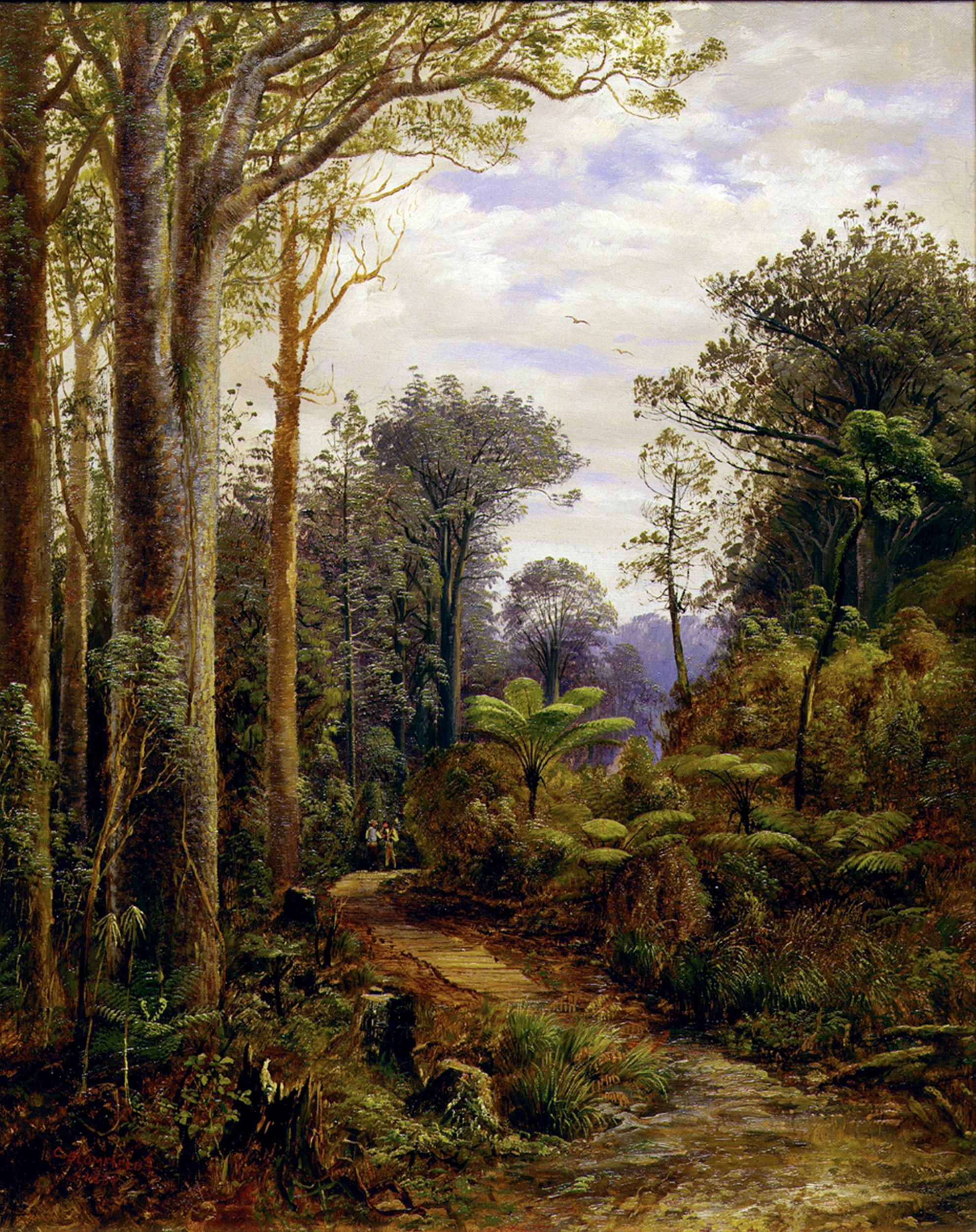
John Webber’s 1788 painting, Ship Cove, Queen Charlotte Sound, is another top-notch painting depicting New Zealand’s great outdoors, says Rice. Webber accompanied Captain Cook on his third Pacific expedition.
“This time, people dominate the scene. Cook’s crew are setting up camp, engaging in an exchange with local Māori on the foreshore of Ship’s Cove in the Marlborough Sounds, all set against the backdrop of native bush.It looks like business-as-usual.
“The reality, though, was far from that,” says Rice. “We know that huge tensions arose during Cook’s second voyage of discovery when several members of Cook’s crew were murdered by Māori at Grass Cove nearby. On the third return voyage, retaliatory bloodshed was expected. So, in truth, the tension during the period of this painting would’ve been palpable.”
The painting is on display as part of Tūrangawaewae: Art and New Zealand, one of the exhibitions in Te Papa’s new art gallery, Toi Art.
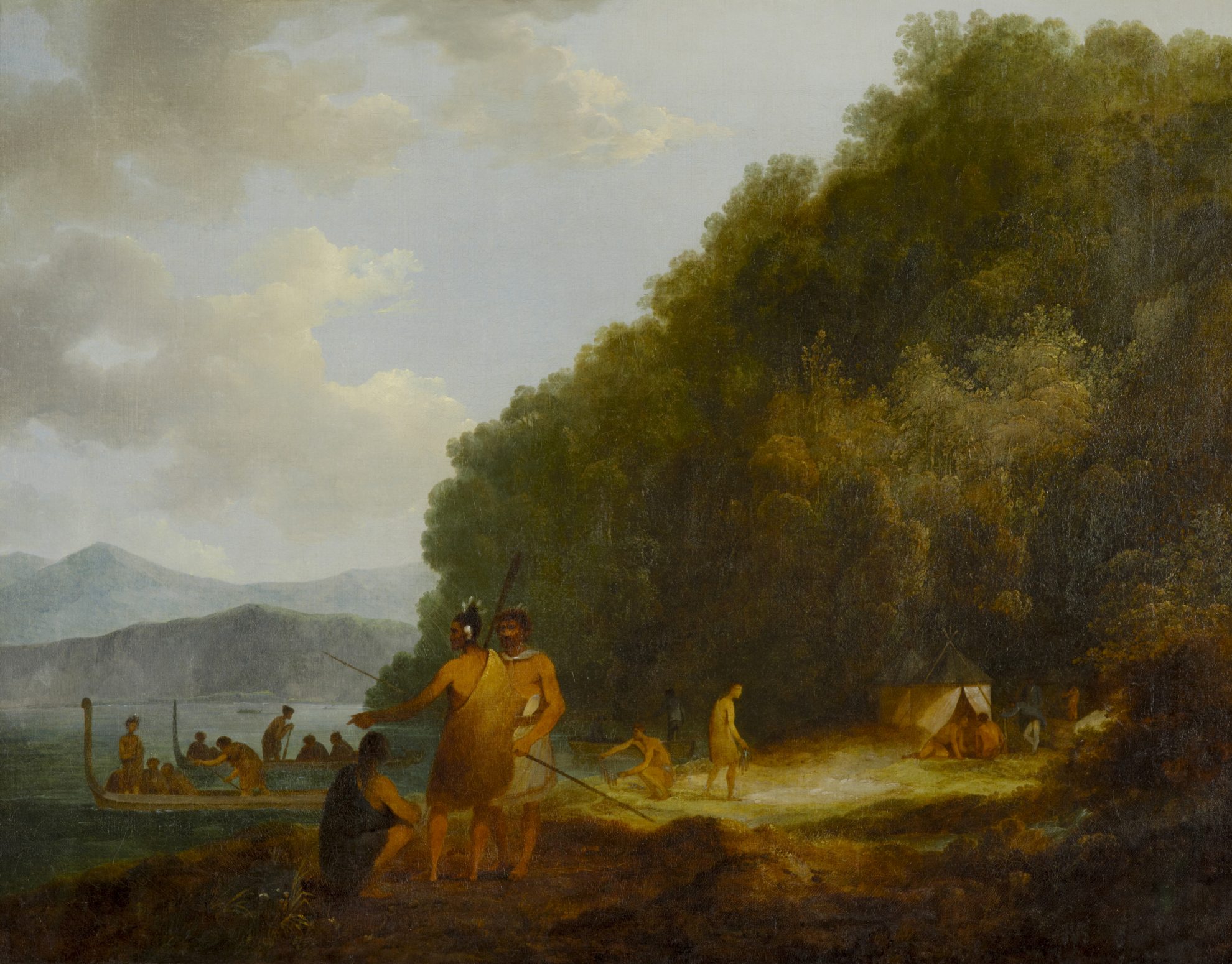
William Strutt’s 1861 painting View of Mt Egmont, Taranaki, New Zealand, taken from New Plymouth, with Māoris driving off settlers’ cattle is also worth mentioning.
“This is a very special painting,” says Rice. It depicts Māori resistance against European settlement in Taranaki. “There aren’t many like it around today,” she says. “But it’s also special because it pictures land that Strutt himself knew well. His writing tells us he worked the land, clearing it with his own hands. He knew its features and its flora and fauna.”
Rice points to the nikau on the left-hand side of the painting: “Just look at the detail.”
She adds: “I think of this painting as the Holy Grail of New Zealand colonial art – it’s both rare and significant – which is why Te Papa purchased it for $1.5 million in 2015.”
For more than 150 years it was owned (and seen) by just one family. Now it’s on public display at Te Papa and later this year will become part of an exhibition at Taranaki’s Govett-Brewster Art Gallery.