

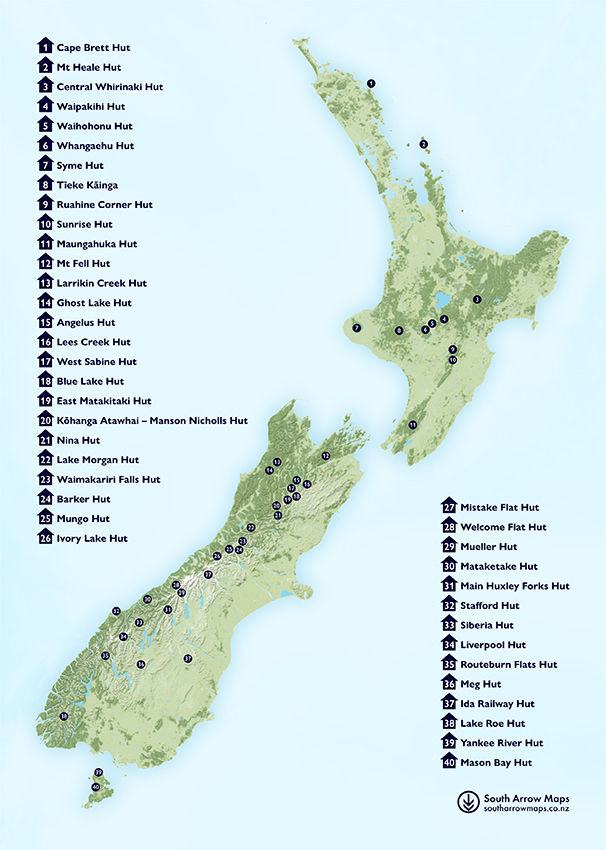
1. Cape Brett Hut, Northland
A lighthouse keeper’s hut at world’s end.
By Matthew Cattin
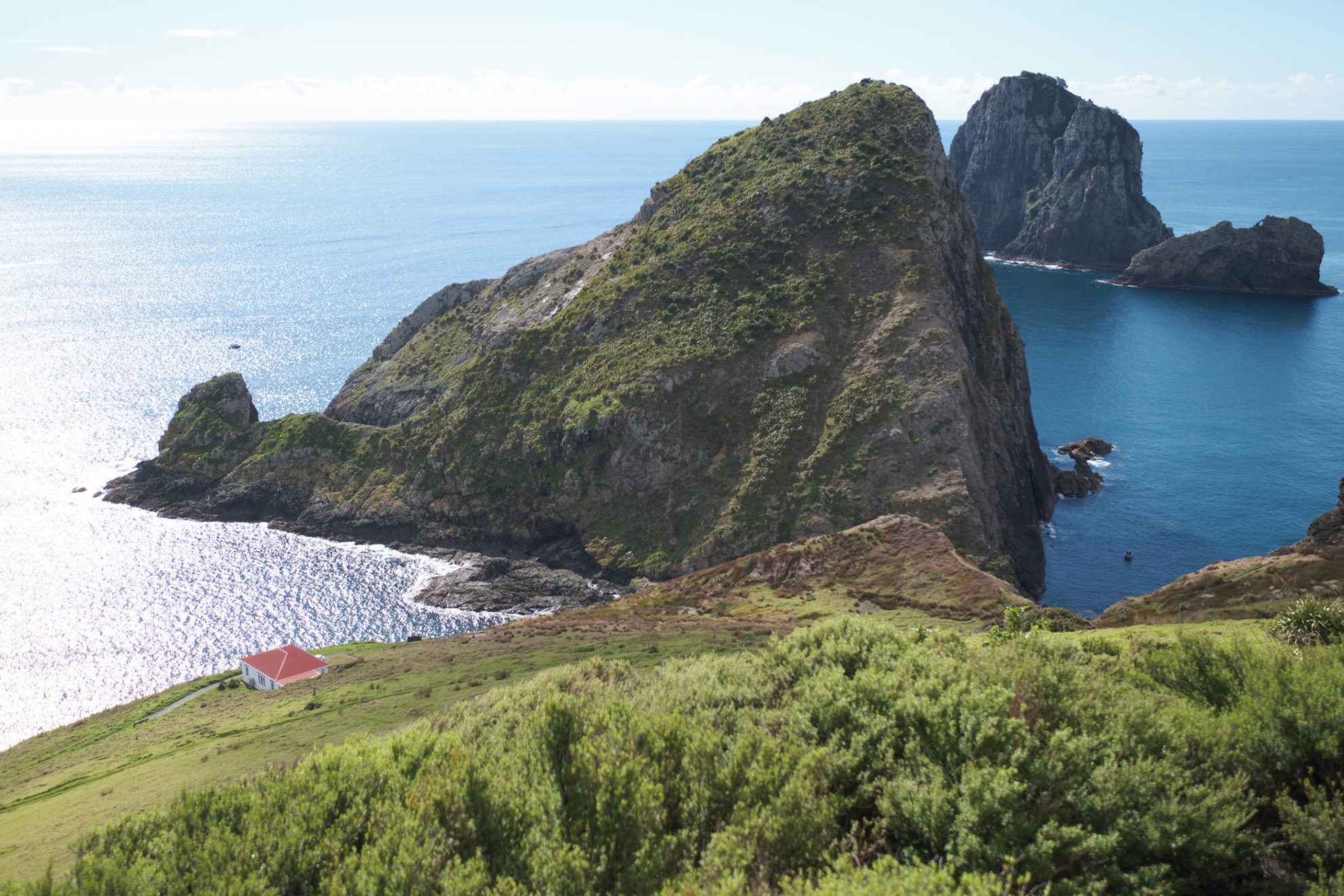
Cape Brett Track ranks frequently on international lists of the world’s greatest hikes. While this may leave some Kiwi trampers scratching their heads, it actually makes a great deal of sense. On how many tramps can you spend the night in a lighthouse keeper’s cottage on the fingertip of a windswept cape? The isolated hut is difficult to get to, especially in summer when the exposed track threatens dehydration and heat stroke. Visitors who make the effort are treated to a homely nautical hut with ocean views, salty breeze, and an opportunity to spot whales and dolphins from the doorstep.
Grade Difficult Time 4hr.
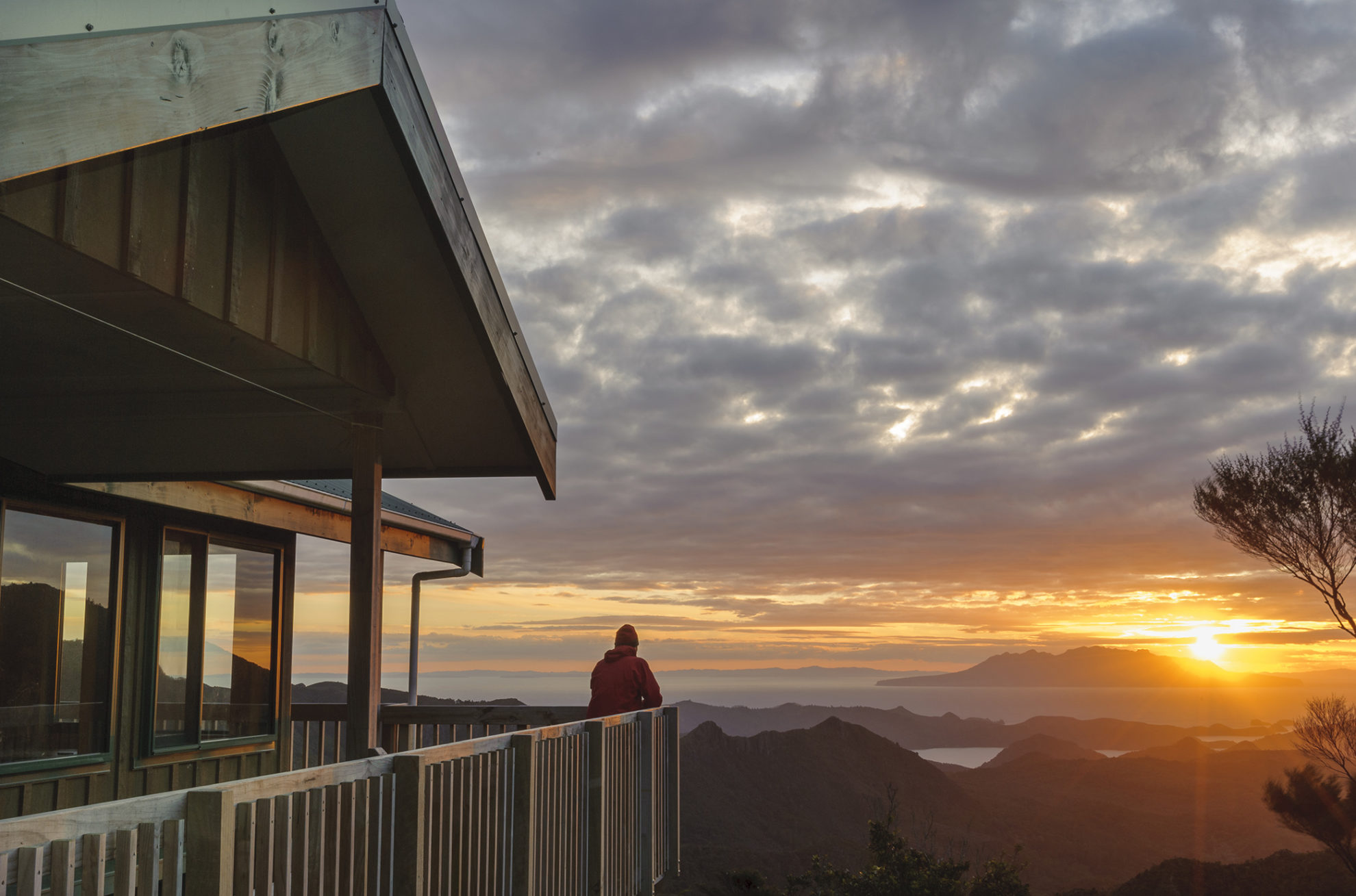
2. Mt Heale Hut, Great Barrier Island
Auckland’s best hut lies perched with standout views over the Hauraki Gulf and to Te Hauturu-o-Toi/Little Barrier Island.
By Shaun Barnett
Built in 2010, the comfortable 20-bunk Mt Heale Hut offers a haven on the Aotea Circuit of New Zealand’s sixth largest island. The hut occupies a forested locale beneath its namesake Mt Heale, an impressive volcanic spire. It can be reached on the Palmers Track from Windy Canyon over the summit of Mt Hobson/Hirakimata (627m), the highest peak of Aotea/Great Barrier Island. Enjoy a circuit around the Kaiaraara Valley, then head out via the Peach Cove and Tramline Tracks, pausing for a soak in the Kaitoke Hot Springs en route.
Grade Easy-moderate Time 2–3 days.
3. Central Whirinaki Hut, Whirinaki Forest Park
Surrender to complete peace in Whirinaki’s enchanting forest sanctuary.
By Matthew Cattin
It’s no coincidence that my best ever hut sleep was enjoyed at Central Whirinaki Hut. Like a storybook oasis, the tranquil 25-bunker sits in the shade of ancient trees in a picture perfect clearing. The visitor’s book logs dozens of whio sightings in the Whirinaki River, which whispers within earshot of the hut, and by night resident ruru and kiwi call beneath a dazzling night sky. You won’t find flashy views, but with the woodfire keeping the cold and the critters at bay, there is deep peace to be found here.
Grade Easy Time From River Road, 5hr; From Plateau car park, 3hr.
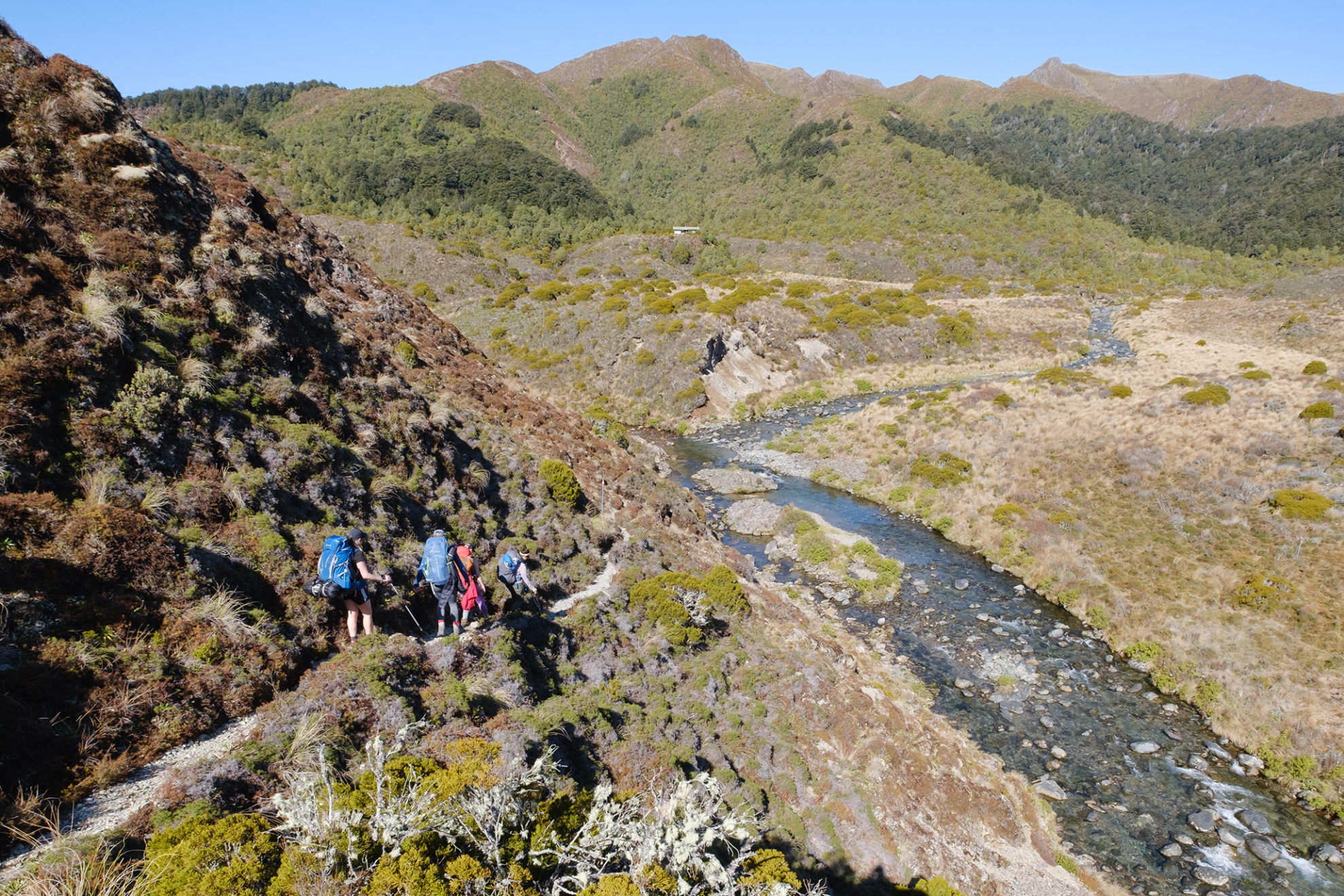
4. Waipakihi Hut, Kaimanawa Forest Park
Sun, swimming holes and idyllic valley scenery.
By Matthew Cattin
Waipakihi Valley is a tramping utopia. Flanked by accessible tops, the wide, tussocky valley floor with its crystal river and numerous swimming holes feels like a slice of the South Island. Its namesake hut is perched on a sunny ledge with its back to the bushline. It’s simple and cosy with two bunk rooms separated by a well-stocked kitchen and living space. The deck faces due west – perfect for afternoon basking and sunsets over the valley.
Grade Difficult Time 6–8hr via Umukarikari Track.
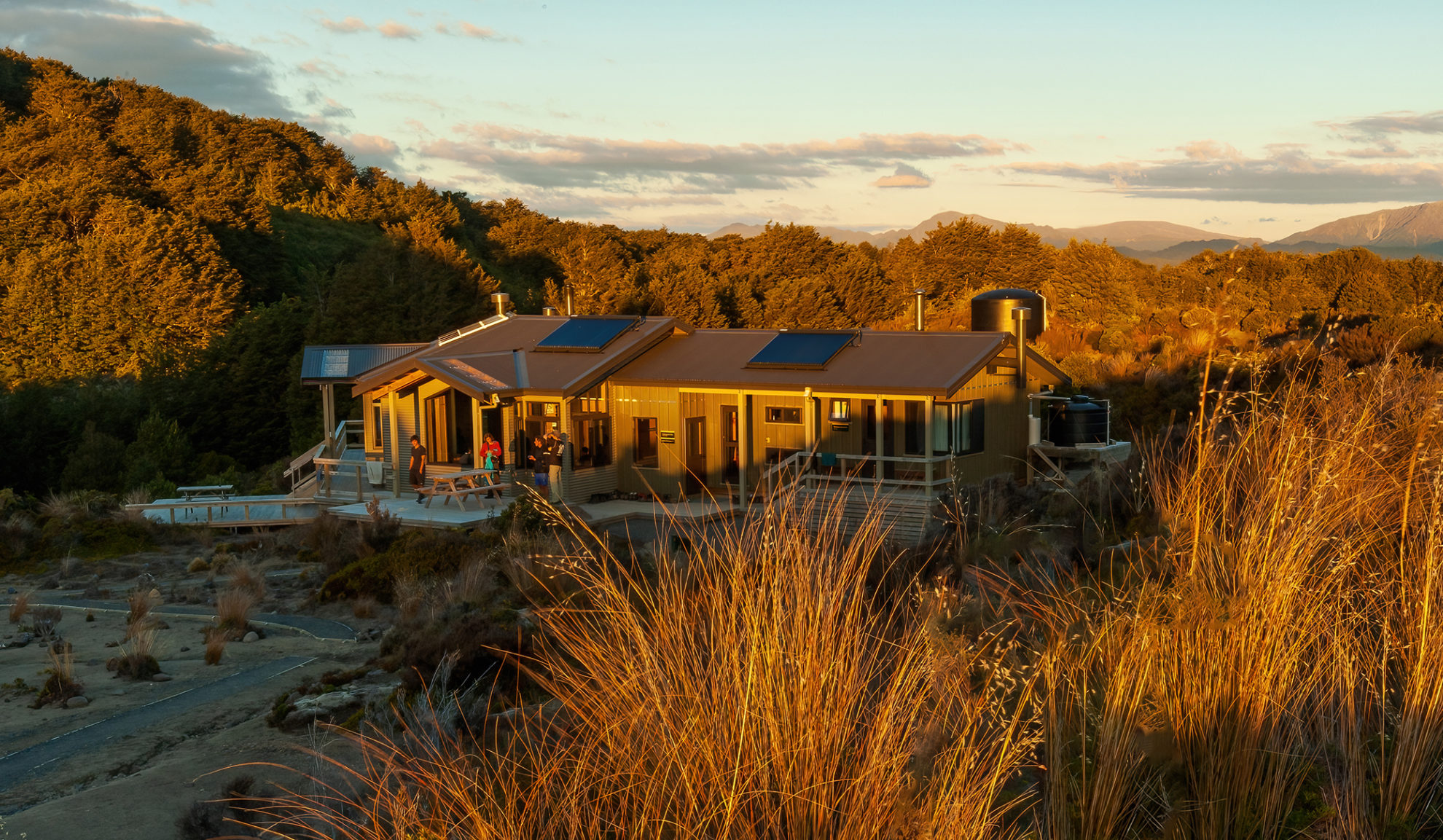
5. Waihohonu Hut, Tongariro National Park
Tongariro’s newest hut boasts two huge glass windows, each perfectly framing a view of a different volcano.
By Shaun Barnett
Waihohonu Hut is the third to occupy the area, forming key accommodation for both the Tongariro Northern Circuit and the Ruapehu Round the Mountain Track. The hut can also be reached on an easy track from the Desert Road, putting it within reach of families and lesser experienced trampers. With a woodburner, solar lighting and hot water, the 28-bunk hut is definitely one of the country’s more luxurious. And with Ruapehu framed in one window and Ngāuruhoe in the other, it’s a stunning place to take in the volcanic scenery. The hut must be booked during summer months (October to April).
Grade Easy Time 2hr.
6. Whangaehu Hut, Tongariro National Park
Watch the sunrise from a hut overlooking the country’s premier lahar path.
By Hazel Phillips
This is the highest hut in the park, at 2060m. It’s perched on a rocky knoll overlooking the Whangaehu River – the main lahar path from Ruapehu’s Crater Lake / Te Wai ā-moe. That means you’re in the box seat if Koro Ruapehu decides to blow its top while you’re overnighting. Looking east over the Desert Road and out to the Kaimanawa, Whangaehu Hut catches the sunrise, which lights up the craggy surroundings and spectacularly carved catchment below. Just don’t take a wrong turn on your way to the loo (the cliff is nigh).
Grade Easy Time 2-3hr from Tukino ski field, or a full day expedition over the top from Whakapapa.
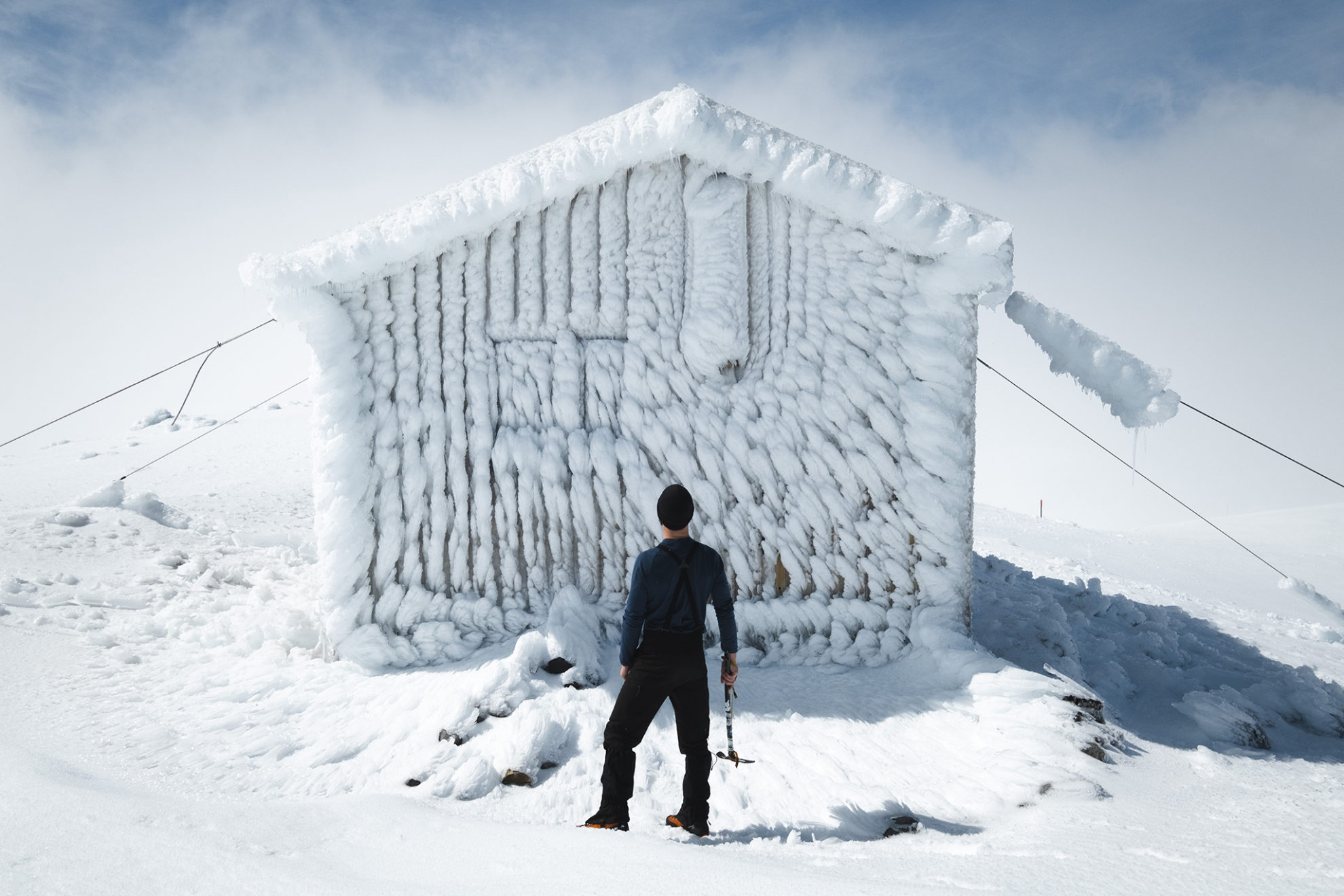
7. Syme Hut, Egmont National Park
An unforgettable night in a mountain-top ice box.
By Matthew Cattin
Small, damp and cold, Syme Hut is likely the least comfortable hut on this list but its location is beyond hyperbole. Fastened by wires to Fantham’s Peak/Panitahi, the hut is as precarious as it is spectacular. Taranaki Maunga dominates the doorstep, its summit attainable within a few hours for experienced climbers. Those content to climb only to the hut can watch the others from the window. Accessible year round, Syme Hut is undoubtedly at its most dramatic in winter. when half a metre of rime ice can seal it in a frozen tomb.
A night here will be the best $10 you’ll ever spend.
Grade Difficult Time 4hr.
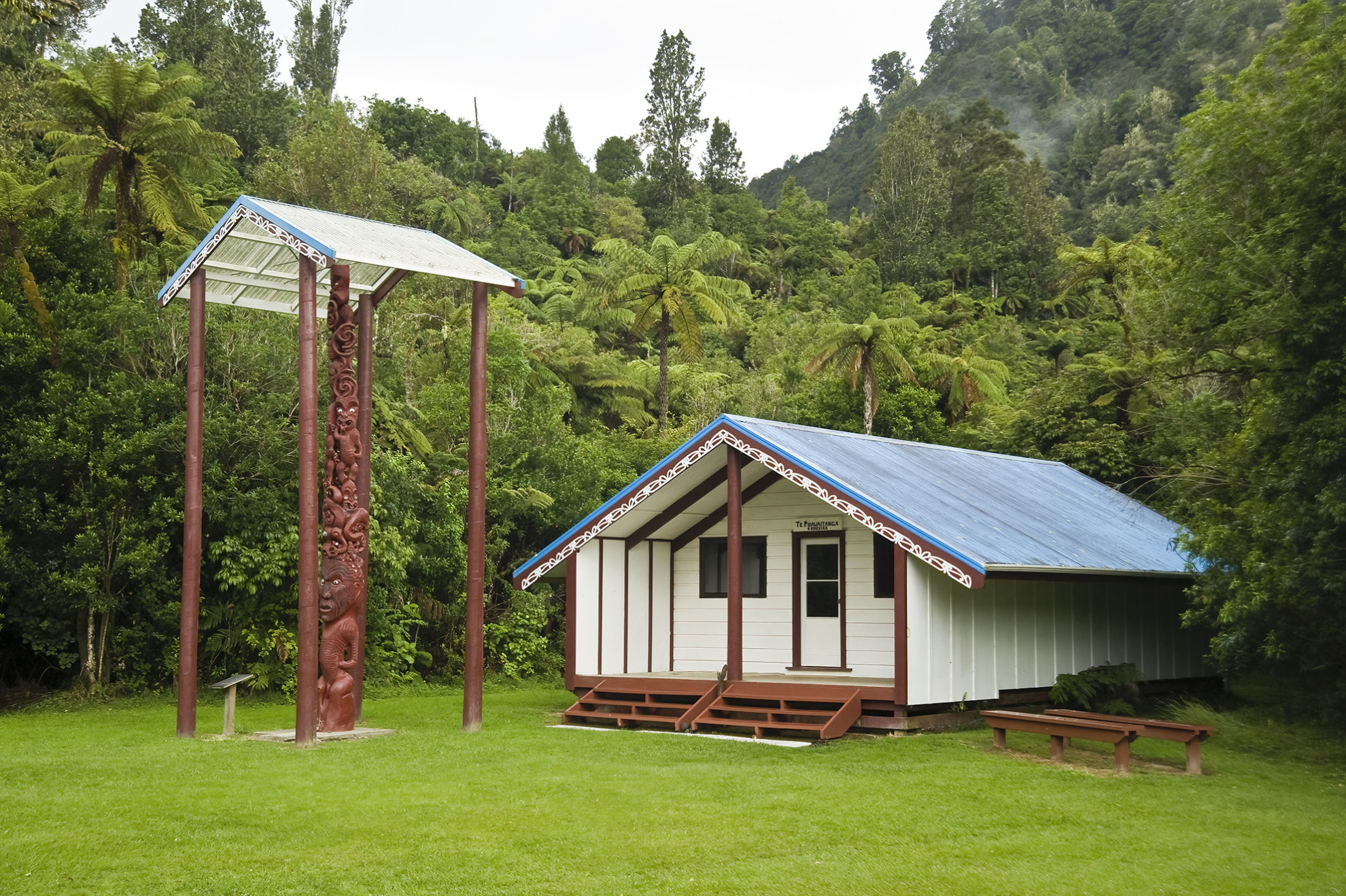
8. Tieke Kainga, Whanganui National Park
There’s culture and hospitality in this most welcoming hut.
By Matthew Cattin
Visitors are so lucky to have access to Tieke Kainga. The functioning marae is unlike any other Great Walks hut, in that people are treated as whanau/family rather than manuhiri/visitors. Canoes are left on the banks of the Whanganui River and gear is lugged up the steep banks to the marae grounds, which overlook a magnificent bend in the river. In the afternoon, trampers are welcomed onto the marae in a powhiri and invited to introduce themselves in whichever language they feel comfortable. Once the tapu is lifted, guests can settle in for the evening, chat with the hosts and enjoy the fantastic kitchen facilities, which include an oven.
A stay here is peaceful, comfortable and unforgettable, but remember to leave koha and embrace the expectations of the iwi.
Grade Moderate Time 3 days from Taumarunui, 2 days from Whakahoro.
9. Ruahine Corner Hut, Ruahine Forest Park
Located on the boundary of a great tussock plateau and a wall of pāhautea, this hut has a location like no other.
By Shaun Barnett
At Ruahine Corner, past fires created a vast plain of red tussocklands, leaving a distinct forest edge – one of the largest swathes of pāhautea/mountain cedar in the country.
On this edge, Ruahine Corner Hut has views over the extensive tussock grasslands, towards Ruapehu. The hut is an ideal place from which to explore the surrounding area, fringed by limestone bluffs and studded with tors and tarns. While somewhat remote, getting to Ruahine Corner is possible from several routes. Most direct is from the east via Golden Crown Ridge, Piopio and Potae. From the west, link routes over the Mokai Patea, down the Maropea River and past Lake Colenso.
Grade Moderate-difficult Time 2–3 days.
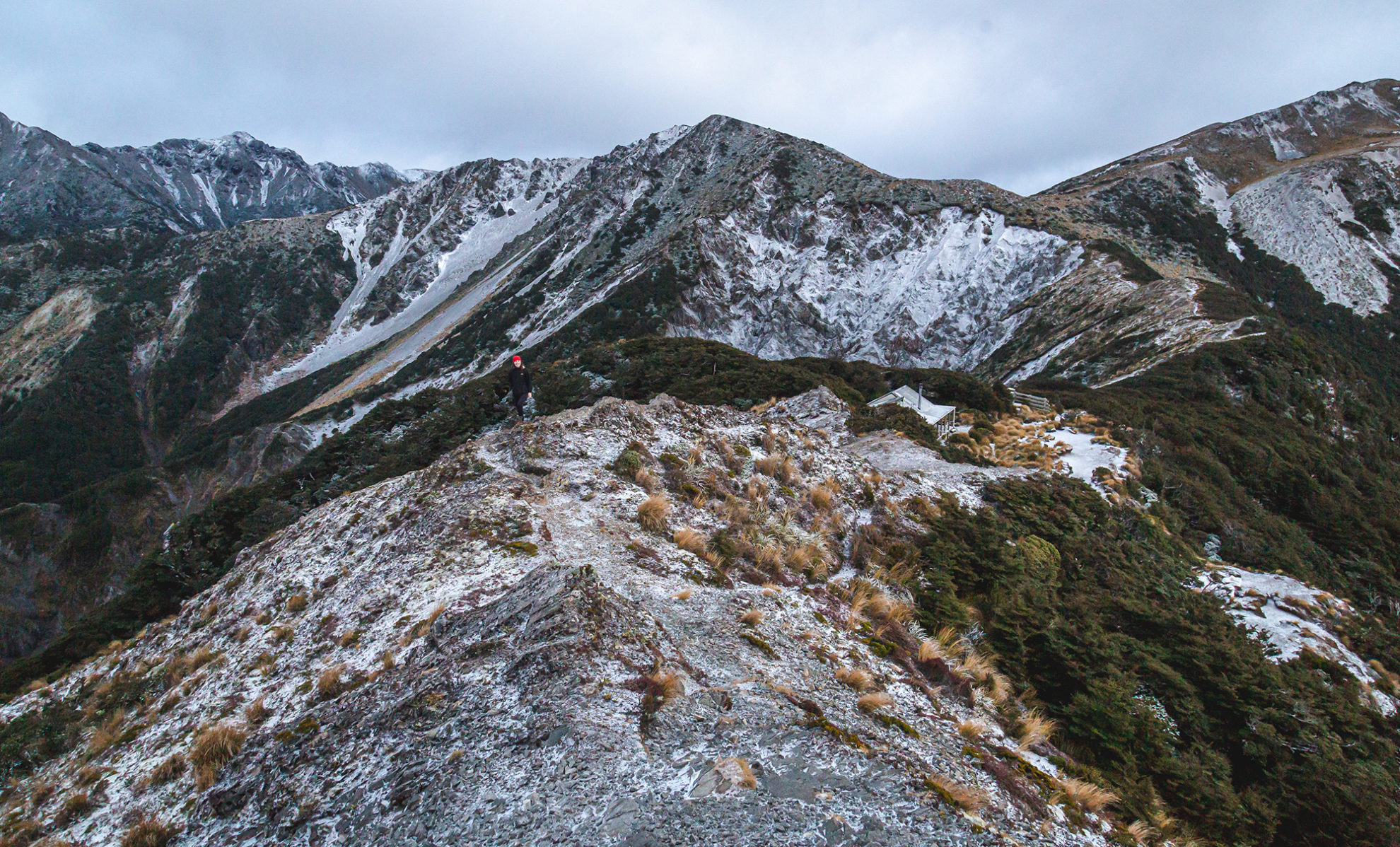
10. Sunrise Hut, Ruahine Forest Park
Enjoy sunrise over the sea in this family classic.
By Matthew Cattin
There’s no such thing as a sleep-in at this classic Ruahine hut. The moment the sun rises, brilliant gold barges through the windows. Sleepy trampers – if they’re not outside already – layer up to enjoy the spectacle. The hut is an ideal introduction to tramping. The track winds over gentle switchbacks and through beech forest for a couple of hours, but the spacious hut is ample reward. It sits atop a 1300m peak above Buttercup Hollow, sheltered from predominant westerlies by a battalion of wind-battered trees. Views extend over Hawke’s Bay to the ocean, but the best vista is behind the hut – a glimpse over Waipawa Valley and the surrounding peaks.
Grade Easy Time 3hr.
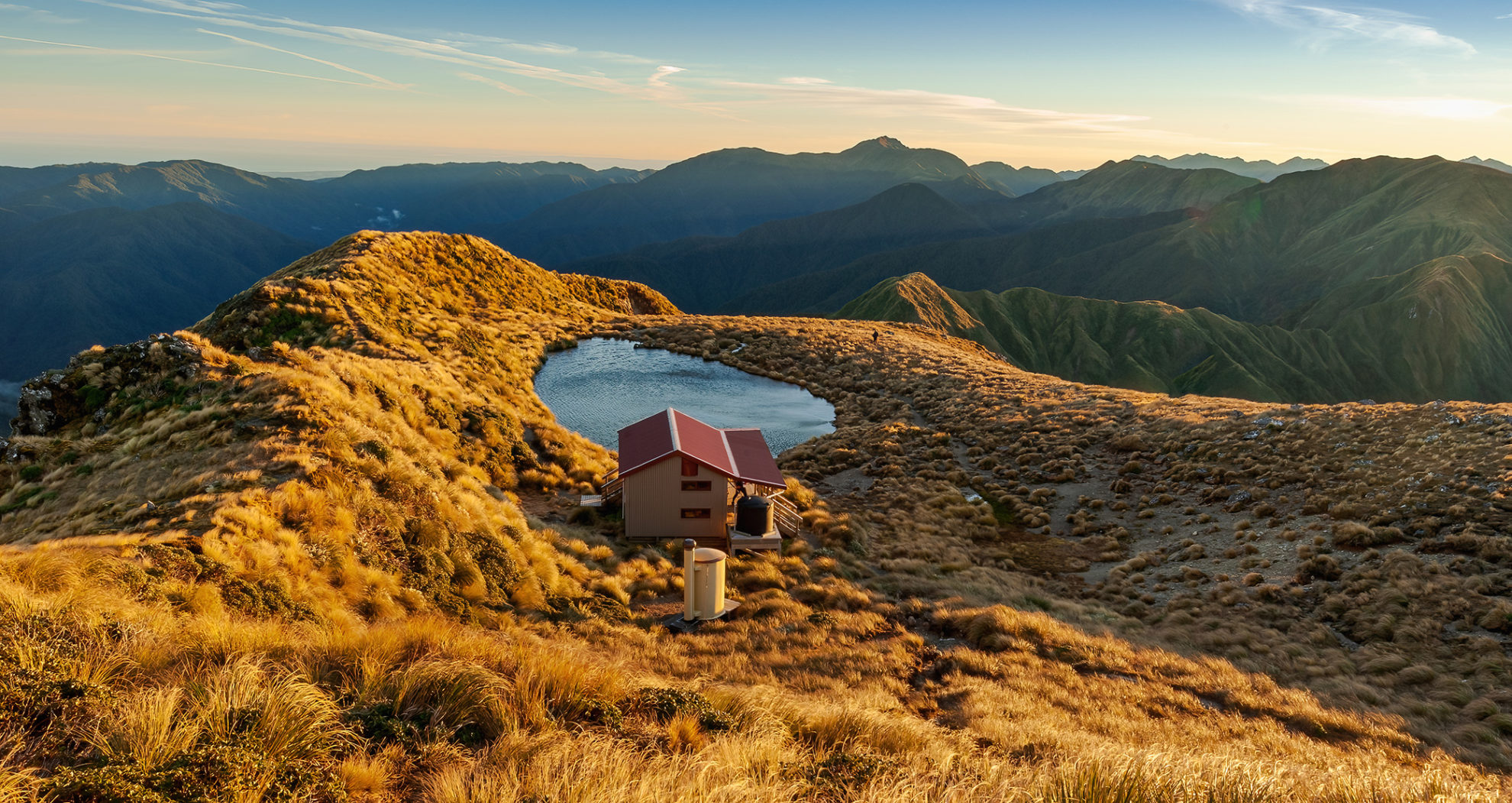
11. Maungahuka Hut, Tararua Forest Park
Located beside a large tarn and with a view of a great array of Tararua ridges.
By Shaun Barnett
Set beside the largest tarn in the Tararua Range, in an appealing bowl-like basin, Maungahuka is undoubtedly in the best location of any hut in Tararua Forest Park. Getting there involves a tramp from Ōtaki Forks via Field Hut, a traverse of the rugged Main Range, negotiating the infamous Tararua Peaks ladder, then a final ascent to the hut. Beyond, continue along the Main Range, past Anderson Hut, then an exit via Waitewaewae Hut to complete a satisfying and classic Tararua circuit.
Grade Difficult Time 4–5 days for the circuit.



