

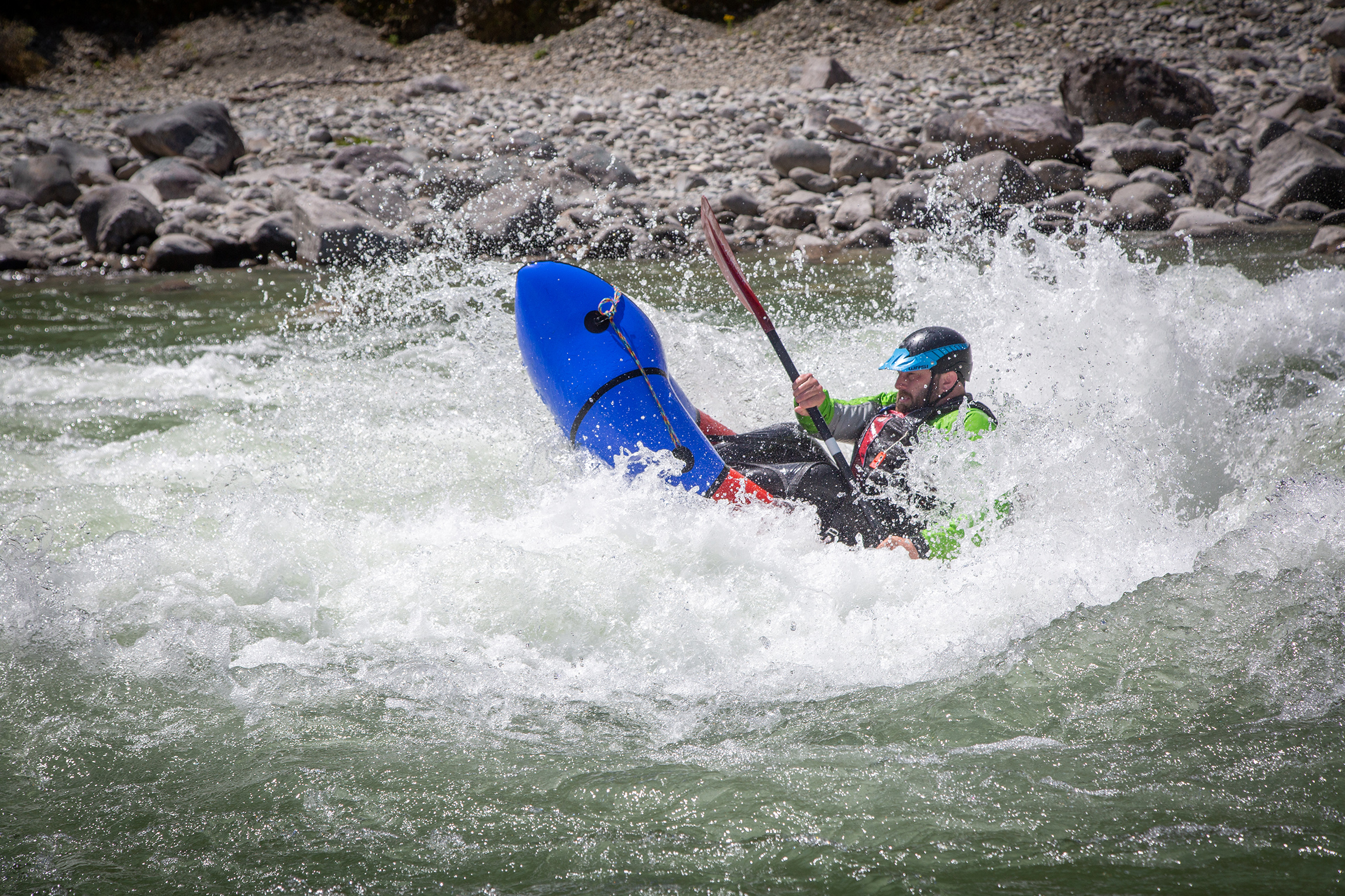
Packrafting is not just “hiking on the water”, Miles says. It has to be appreciated as a wholly different sport. Unlike tramping, where going solo is always an option, packrafting is safest when done with other people.
Nevin warns against some of the cheap rafts sold in New Zealand big-box stores. For use in remote places, a packraft has to be sturdy. “Get a proper packraft – don’t end up in the wilderness with a cheap inflatable, it’s a different beast.”
Weather requirements are different, too, as river flows are affected by weather from the week beforehand. Nevin recommends looking at flow gauges on regional council websites for the river you’re heading to or one nearby, so you know what to expect. “If you start without any river knowledge, you’ll have a short-lived packrafting career,” says Miles.
Packraft courses are a good opportunity to test different boats to find which one works best for you. A packrafting set-up is a major investment, and though the secondhand market is growing, a paddle, helmet, flotation vest, wetsuit or drysuit and repair kit will still set you back at least $1000.
While some people prefer double packrafts for efficiency – one bigger boat weighs less than two smaller ones – Miles warns against them. “There’s a reason they’re called divorce boats,” he says. “It’s half the fun, and they’re less manoeuvrable.”
As a newish sport, however, there isn’t the wealth of route information for trampers to access. One key resource is packraftingtrips.nz. “It’s built by the community and has rivers all over the country,” Nevin says. A browse-through is a great starting place for trip ideas.
Fitness is a consideration, if only because a packrafting setup adds as much as 10kg to your pack. Packrafts are compact, but the gear will take up a good portion of your pack. Lightweight tramping gear will leave more room for the non-negotiables: food, raft and paddle. Staying in huts instead of tenting is another obvious option to reduce weight, as is drying gear as much as possible overnight if the next day includes some walking.
Whether you’re a beginner or not, Nevin recommends attending a PRANZ meetup. A national gathering is held annually, often near Murchison in the Tasman region, and there are regional meetups throughout the year. “It’s not about doing the hardest thing possible; the gatherings are for people who want to explore, journey and travel together.”
Packrafting has grown since Nevin first overcame his scepticism a decade ago. Have we reached peak packraft yet? No way, says Miles: “When we started in 2012, every packraft trip was a bit of a sufferfest. It’s already so much more comfortable and inviting. I can’t wait to see where it goes next.”
Expect to see more of these inflatable boats bobbing down Aotearoa’s rivers in future.
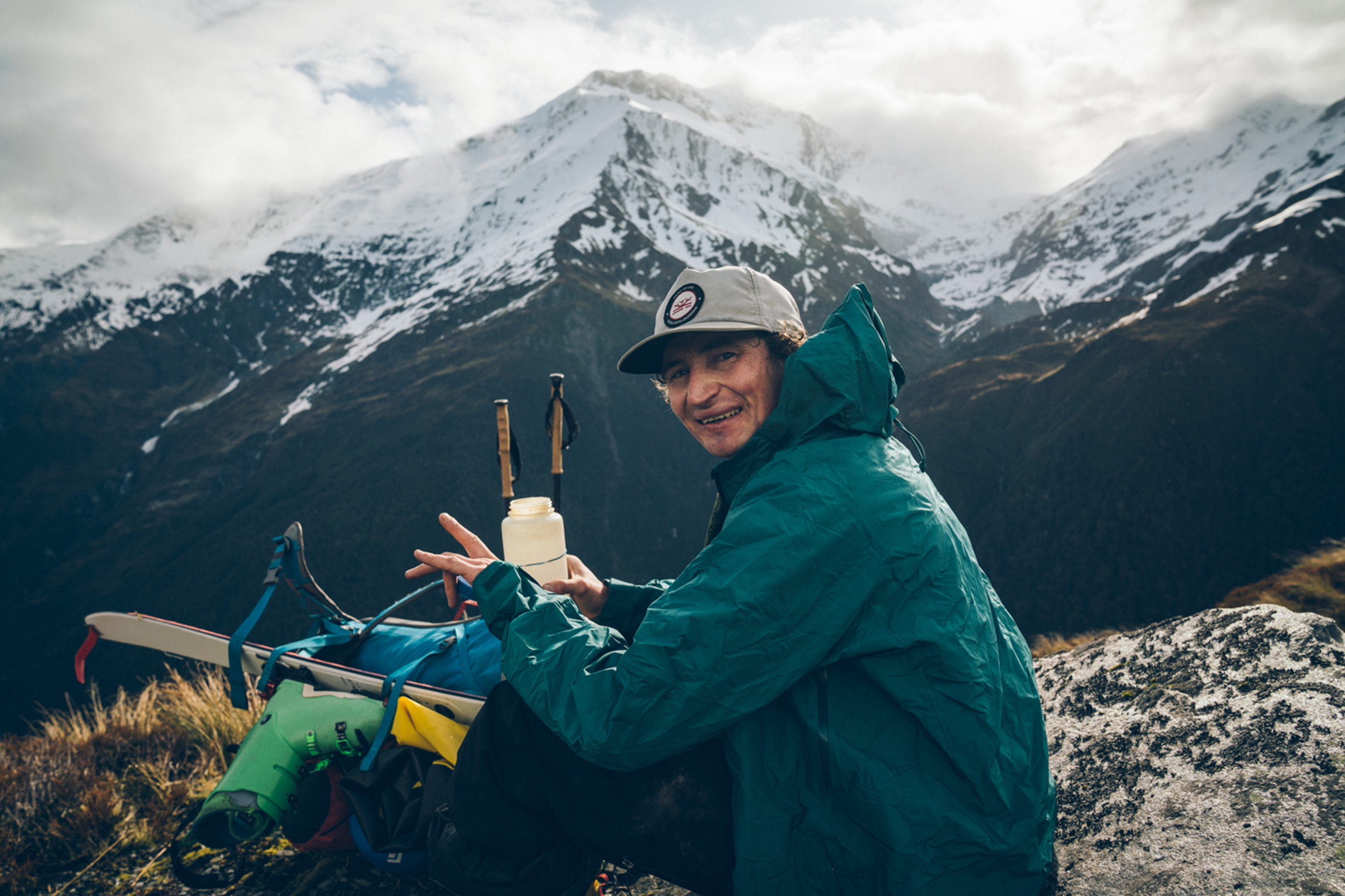
Nick Pascoe grew up in Otago and spent a lot of time playing in kayaks in the lower reaches of the Matukituki and Shotover rivers. In 2020 he tried his first packraft and a new possibility opened up: what did those rivers look like at the top?
With experience in whitewater kayaking, skiing, mountaineering, tramping, biking and combinations thereof, Pascoe was happy to launch straight into technical trips with lots of rapids and navigational challenges.
“For me, a good packraft trip is all about a place that’s hard to get to otherwise, with cool access or an interesting route,” he says. Possibly the best example of this is a trip he did with friends Charlie Murray and Jasper Gibson.
Starting in the Matukituki Valley, they ascended Tititea/Mt Aspiring on foot, ski touring as much of the route as possible. Traversing the Bonar and Volta glaciers, the trio used packrafts to cross terminal lakes then navigated into the Waiatoto River, where they spent three days paddling to the Tasman Sea. The trip is documented in the short film Waiatoto, which screened at the 2025 New Zealand Mountain Film Festival.
Having so many components – skis, packrafts, seven days of food and lots of warm layers – meant extremely heavy packs. Bushbashing with huge packs and pointy skis was not fun, but the opportunity to combine his passions of ski mountaineering and paddling was incredible, Pascoe says: “It’s an amazing way to unlock new routes.”
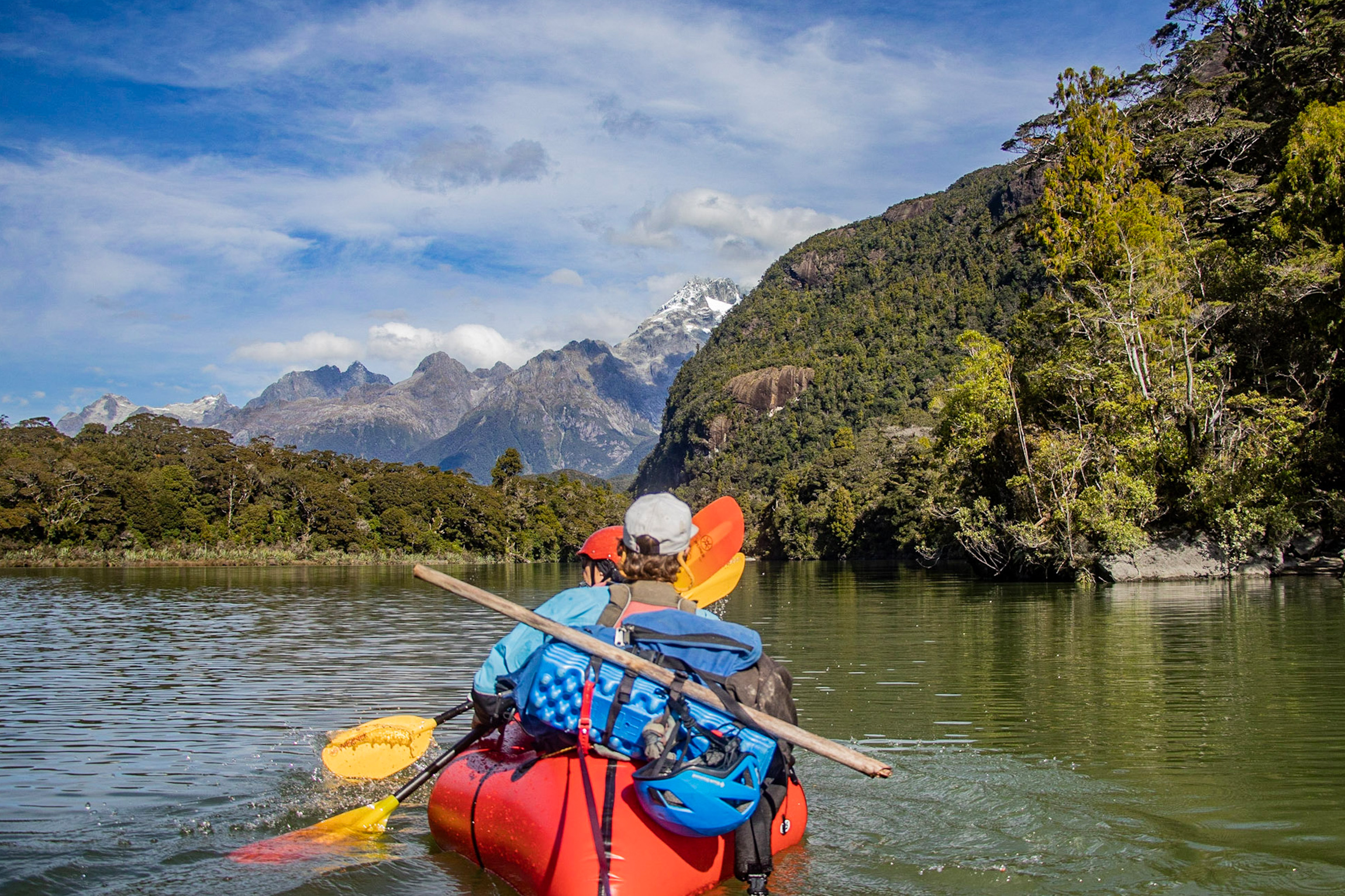
He usually uses an Osprey Mutant 52 pack for packrafting. “The lid extends quite high so it fits a lot of gear for a 52L pack, with good attachment points externally. It’s big enough for everything except a trip like the Waiatoto, where I borrowed a custom Macpac roughly 90l pack. If you keep gear minimised and pack it in well, I don’t think a monstrous pack is a necessity for most packrafting.”
When looking at possible packrafting trips, Pascoe spends a lot of time studying satellite images and topo maps. “Anything that drops more than 30m a kilometre will be too steep for a packraft,” he says.
Pascoe first tried packrafting in a double raft during some adventure racing, and still likes them on flat water because they’re faster. “If you’ve got someone experienced in the back, you can do some pretty serious white water.”
Because packrafting is still relatively new to New Zealand, it also provides the opportunity for lots of ‘firsts’. “There are so many rivers that haven’t been explored in a kayak or packraft,” Pascoe says. He has his eye on packrafting in the Landsborough, or using a boat to make travel in Fiordland easier. Provided it’s not too windy, a packraft is a great way to avoid a long trudge around a body of water.
“Being on the water is a pretty unique way to be outside. It’s an environment you miss if you’re only tramping.”
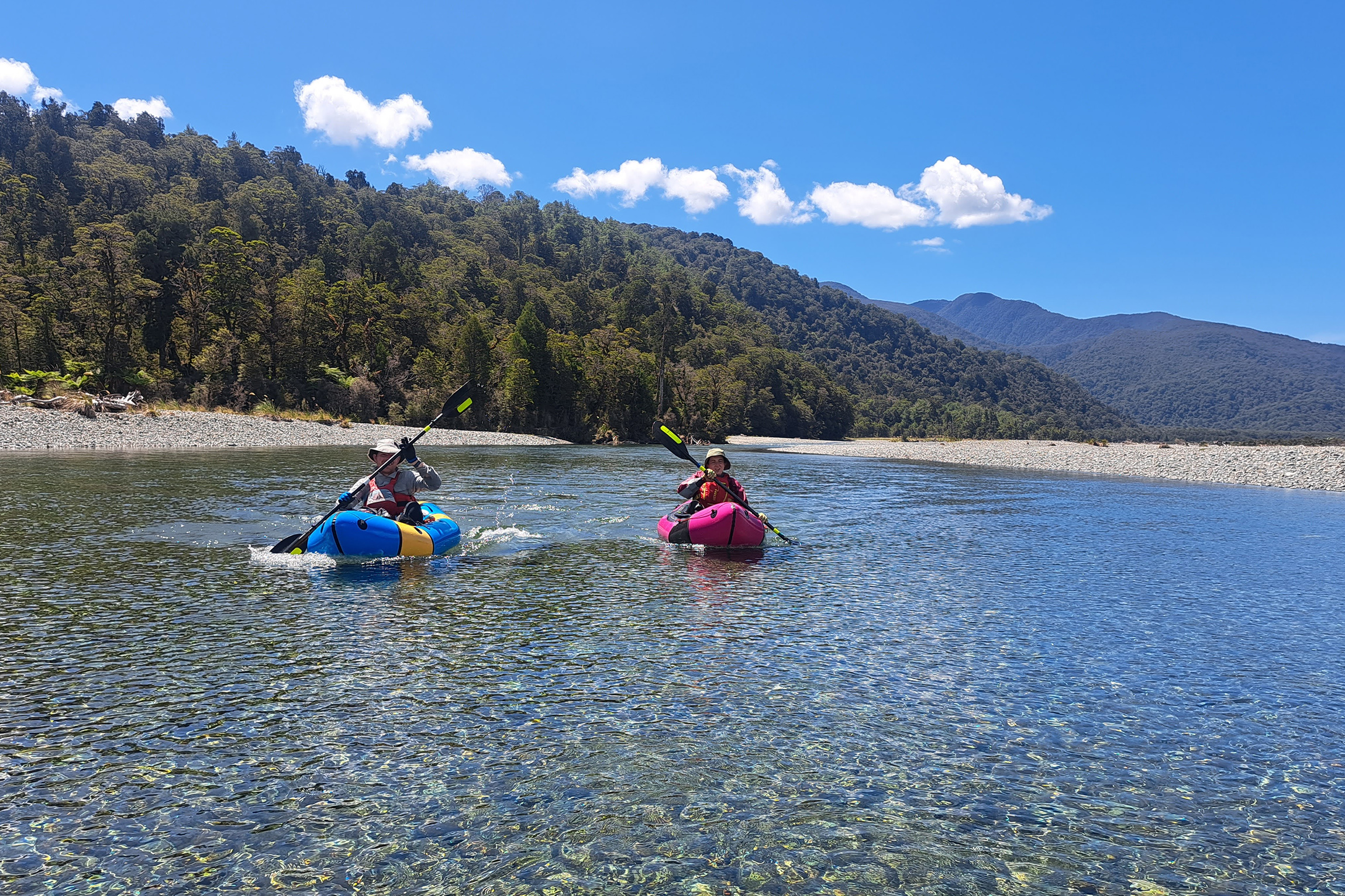
Rachel Smith first tried packrafting when her husband booked a course for her as a birthday present. “We hadn’t bought packrafts at that stage and it was a good way to try them out and get a feel for whether this was something we wanted to do more of,” she says. Smith was already an enthusiastic tramper and had also been in the university canoeing club for a year.
“The kayak faff is insane – stacking boats on roof racks and needing car shuttles from end to end,” she says. Packrafting was immediately appealing because the boats are easier to transport and don’t take up as much space.
For Smith, packrafts offer a new way to spend time in the backcountry. “I do quite a lot of roadside packrafting trips,” she says. It’s a good way to get practice and the transport can be simple: leave a bike at one end, raft the river, then bike back to the car.
Smith lives in Christchurch and has travelled to the North Island to go packrafting: “The water’s so much warmer, you can actually enjoy swimming!”
The boats made it possible to paddle out on Lake Taupō to see the Ngātoroirangi rock carvings in Mine Bay without needing to cart kayaks around on the car all summer.
She uses an Alpacka Expedition boat, which has a spray skirt to keep her drier and warmer, although it makes getting in and out of the boat harder. Her carbon fibre paddle folds into four and is easy to stash in her pack, a Fiordland Packs 65l. “If the paddle were on the outside it would get caught when bushbashing,” she says.
Smith’s packrafting gear weighs about 10kg all up, so she prefers to go on trips with a packrafting focus if she’s bringing a boat, and looks for routes “with nice river sections where it makes sense to packraft”.
Summer trips are easier, minimising how much warm gear she needs to bring. Neoprene socks are a must to prevent icy toes, and her dry top has gaskets so she doesn’t get soaked through, unless she’s immersed for a good while.
A big difference between tramping and rafting is safety. “When tramping, things tend to go wrong quite slowly. But in rivers, an accident can happen and you can drown very quickly,” Smith says. On a river she’s always alert for what is coming up, and hasn’t had any major accidents other than a run-in with a jet boat that tipped her husband out on a rapid.
Paddling reminds Smith that people have always travelled by boat. “There’s a nice simplicity to it. I love that the current just takes you along, and you can stop at a beach for lunch, then keep going.”
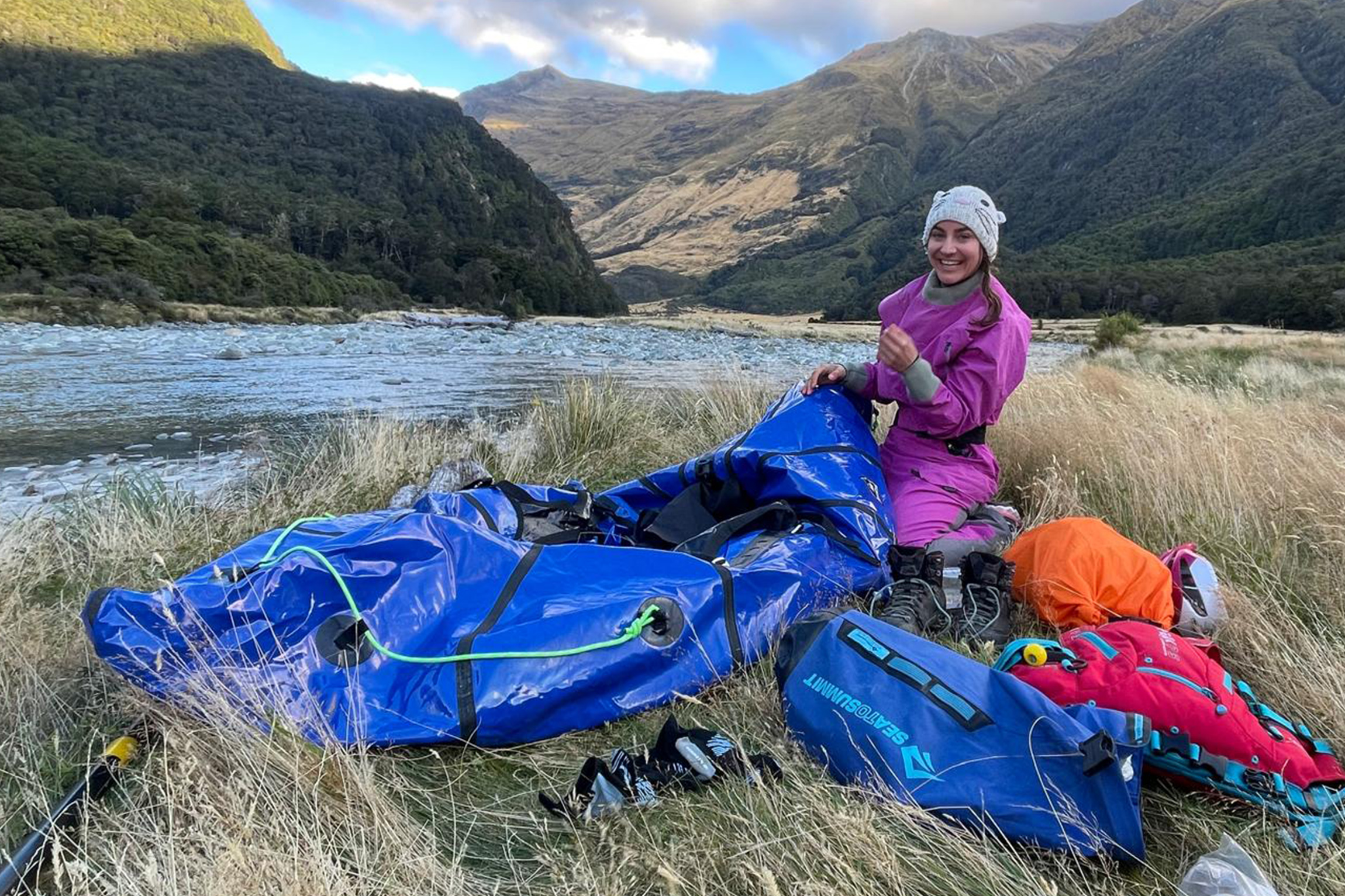
When Corine Pontbriand lived in the North Island she got really excited about tramping in the Kaimanawa and Kaweka ranges, often venturing out for two weeks at a time. She was used to viewing rivers as barriers: blue lines on a map to be treated with caution and remembered in every damp step afterwards.
“I started thinking that if I could travel down that, it could be fun,” she says.
A few years ago a friend suggested tubing down the Mohaka River. They carried their inner tubes, inflated them and bobbed through the current. “I got so bruised!” Pontbriand says. “I thought how wonderful it would be to use a craft designed for rivers instead of bruising my bum on the rocks.”
She took a three-day ‘introduction to packrafting’ course. “I had no river awareness and had never been on white water,” she says. “I had no idea how to read a river.”
She quickly saw the possibilities packrafting presented. Those blue lines became new opportunities to experience the wilderness.
“You can packraft down a tiny narrow gorge that you couldn’t walk anywhere near,” Pontbriand says. “You can access totally different terrain.”
She also likes the feeling of accomplishment she gets when she has navigated to the bottom of a rapid: “It’s quite a thrill, even if you’re not doing a high grade or crazy descent.”
Pontbriand has a custom-made 65l Southern Lite pack with big side pockets for drinks and paddles, and hip pockets for snacks and a phone. “I just have the one backpack I use for all my trips, be it tramping, mountaineering or packrafting. For most packrafting trips I can fit my boat in the backpack, but for longer trips like the Hollyford–Pyke, which I did over five days, I carried my boat strapped to the outside of my pack in a sturdy mesh bag.”
Pontbriand started with an Alpacka Gnarwhal boat, often recommended for beginners because of its stability. But finding the medium size too big, she recently purchased an Alpacka Mage, which tips more easily but is also better at stabilising when it has been tipped. “It’s going to be a learning curve – I’ll be swimming a bit at first,” she says.
Pontbriand prefers longer trips where possible. “I love the slog: I don’t mind carrying my packraft for three days and having only one day on the river,” she says. She recently roped some friends into a trip over Gillespie Pass, which was exactly that.
As well as the absolutely essential gear – drysuit, boat, paddle, helmet, repair kit, throw bag, inflation sac – Pontbriand has a few extra items to keep herself warm in cold water. She likes her pogies (gloves that attach to her paddle) and wears a thin merino beanie under her helmet.
Pontbriand now lives in Christchurch, where she helps organise PRANZ meet-ups to connect with other people as stoked about packrafting as she is, and she’s eyeing up trips on the Clarence and Pelorus rivers.
“There’s such an allure to doing something different, to see the same terrain you tramp through from a different angle.”
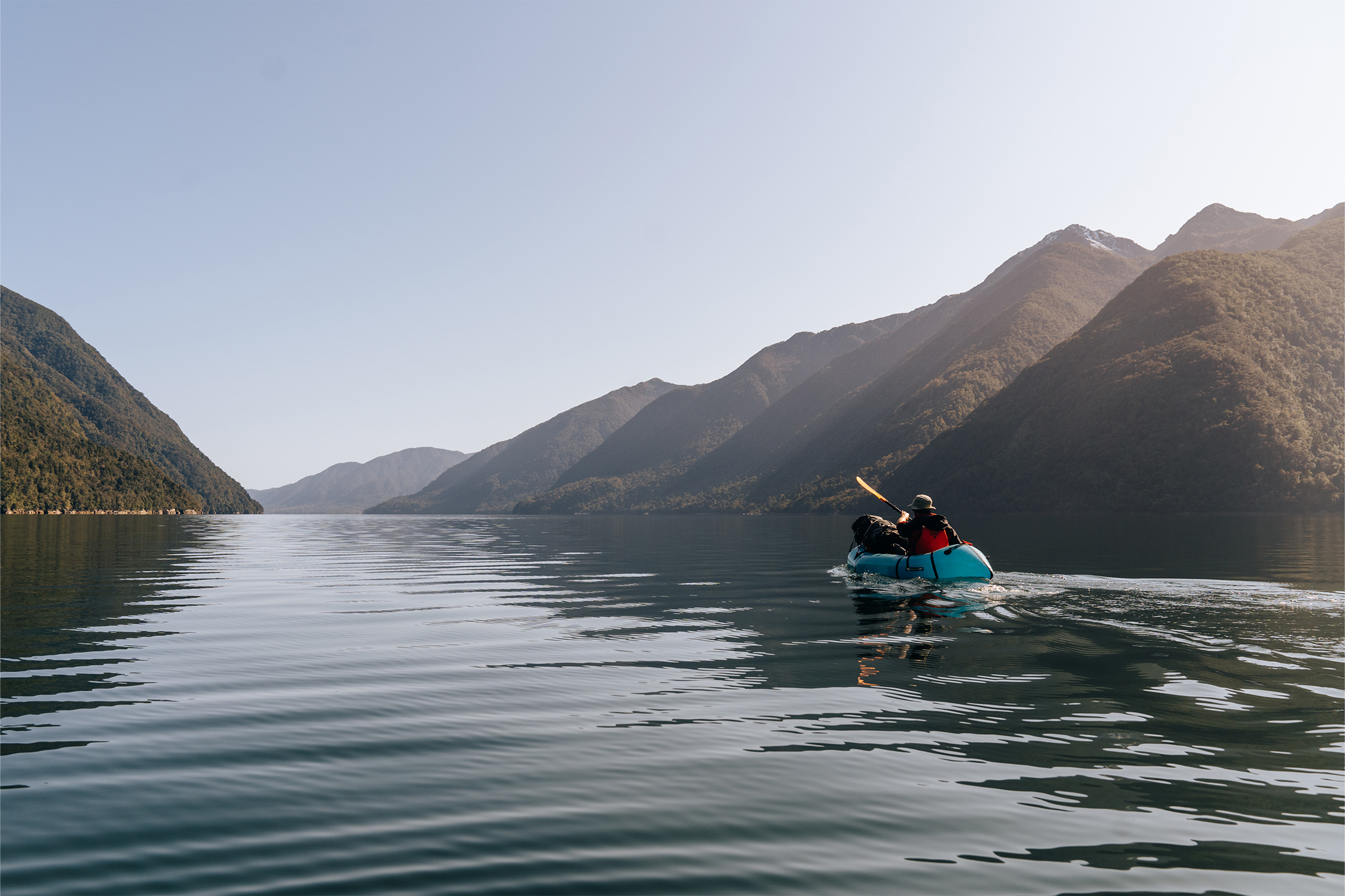
The Hollyford–Pyke circuit is a frequently recommended trip for people keen to start packrafting. Due to a quirk of geography, the Hollyford and Pyke rivers run in almost opposite directions, meaning you can maximise your time on the water and turn a 10-day tramp into a five or six-day mix of walking and paddling.
Although the rivers are graded easy and the few bigger rapids are simple to avoid, there are many fallen trees in the water and lots of paddling across lakes (and, depending on tide conditions, part of Big Bay). The route crosses lakes McKerrow, Wilmot and Alabaster.
“Paddling on lakes is a lot more cardio!” says Corine Pontbriand, who embarked on the circuit soon after doing her first packrafting course.
As with all packrafting trips, you’ll have to be strategic about picking a weather window, taking into account river flows and the possibility of headwinds on the lakes. “On one lake we had a strong tailwind and the waves were breaking a bit. It was very intense, almost like we were surfing the waves,” Rachel Smith says.
The Pyke River is known for its rough track, meaning it’s quite a slog for walkers. It’s a different story for packrafters. “You’re just floating down this river with pools that are maybe three metres deep and so clear you can see your shadow on the bottom,” Smith says. “It’s peaceful.”
The mix of activities is a perfect showcase of how packrafting and tramping can enhance each other, says Brendon Nevin. “A day floating down a river, a day crossing a lake, a day up the coast, a day tramping back into the hills, another day floating down a river and walking back out – it’s an opportunity to link lots of components.”
A detailed route description on packraftingtrips.nz has up-to-date advice about the river conditions, as past floods mean topo maps are slightly out of date.



