

“Before we built the trail, the upper estimate for how much it would bring to the region was $3m, but last year it is estimated to have brought in $4m. That doesn’t take account of all of the money reinvested in maintaining the trail, buying supplies from local businesses and employing local contractors.
“The Buller community is only about 10,000 people, so that’s really significant. It means an awful lot in a small place where everything’s been going backwards for years. And it’s all done sustainably while giving people the opportunity to connect with nature, and with friends.
The trust is now investigating building another hut to break up the second day of the trail, which requires walking or biking for 25km.
The Old Ghost Road is one of the latest in a resurgence of community-developed trails around the country, from short tracks linking rural towns to multi-day cycle trails attracting millions in funding.
But the trails also come with challenges. For community-trails which have a long history, there have been tough times.
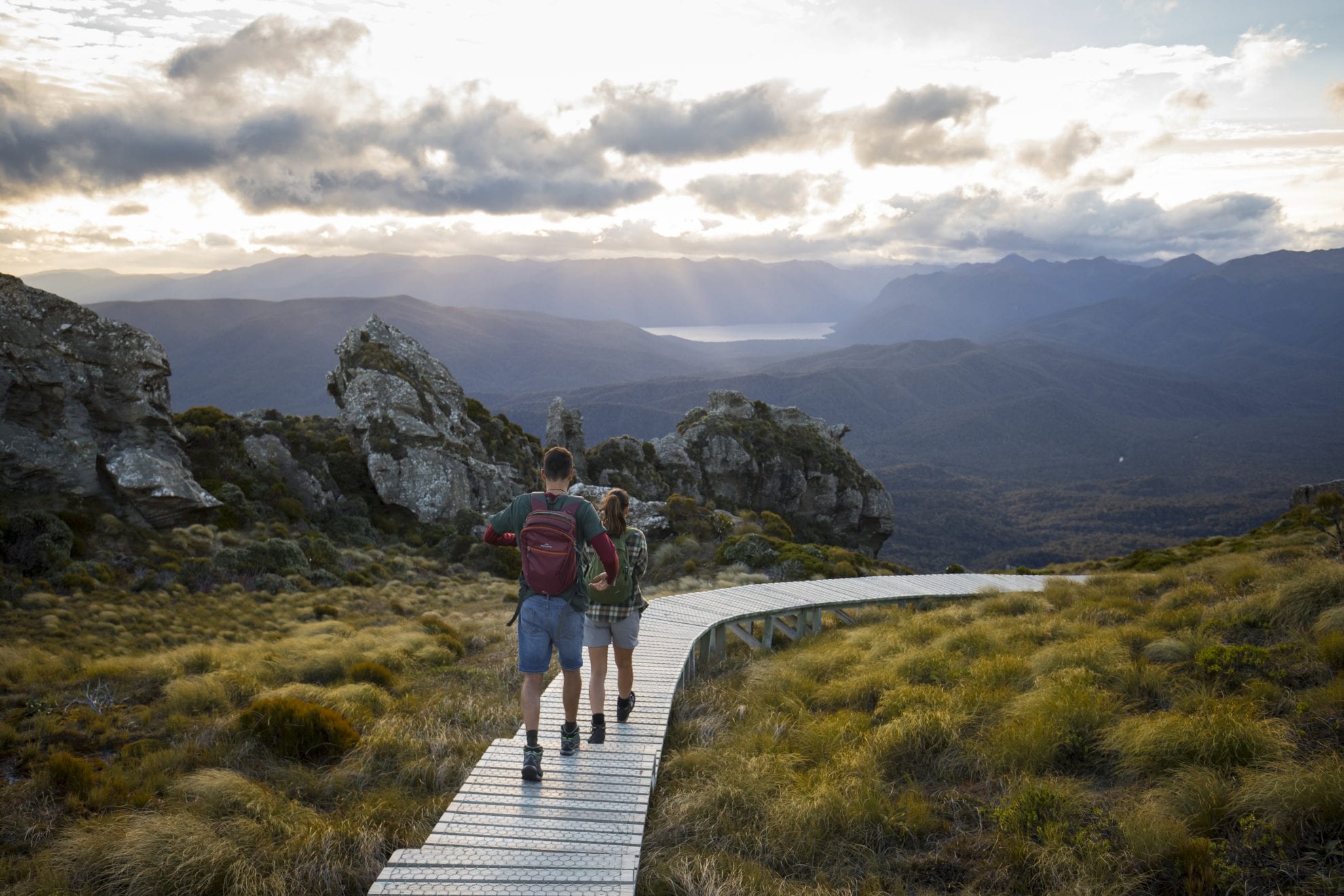
The Hump Ridge Track in southern Fiordland was created to reinvigorate the economy of Tuatapere, a small Southland town. It was developed by a community trust which hoped the trail would turn a profit that could be reinvested into the community.
“The idea started in the 1980s when farming was going through a slow spell and native forestry was closing down,” Tuatapere Hump Track Ltd board chair Don Frengley says. “Tuatapere was under pressure and locals gathered around and said ‘what can we do?’.”
The idea of a three-day track was proposed to draw people into the area, and after years of planning and fundraising, construction got underway, which included building two lodges. But 17 years on, the trail is only now finding its feet. The community hopes to pay off the debt it incurred to build the trail this year and finally get its first dividend.
“It didn’t turn out to be as popular as originally thought and it’s been a real struggle in the past,” Frengley says.
Under the group’s agreement with DOC, it has had to pay for maintenance of the track, which became a burden when the number of walkers began to decline following the 2008 global financial crisis. With declining income and mounting costs, the trust decided to lease management of the track to a private business.
But even that proved too tough a proposition for the operator and the quality of the track started to suffer from a lack of maintenance. So the community again rallied in support of the track, bought it back and set up a company to manage it. Now, its fortunes are turning around. The Hump Ridge is one of three options being considered for the next Great Walk and the number of people walking it is increasing.
“Over the last five years, it’s really been winding up,” Frengley says. “The track is flourishing, it’s bringing people to the area and it’s generating funding for the local community.
“We are also spending money upgrading the track and huts. It feels like all of the hard work has been justified.”
Frengley says it has only survived because of the support of the community.
“You’ve got to either have big pockets, or an enormous amount of community support. The community is the key to it. Without that, we wouldn’t be where we are now, in a position to give back.”
Marlborough’s Queen Charlotte Track, another contender for the next Great Walk, has had a similar experience – a fall in demand, challenges with maintenance and a recent revival.
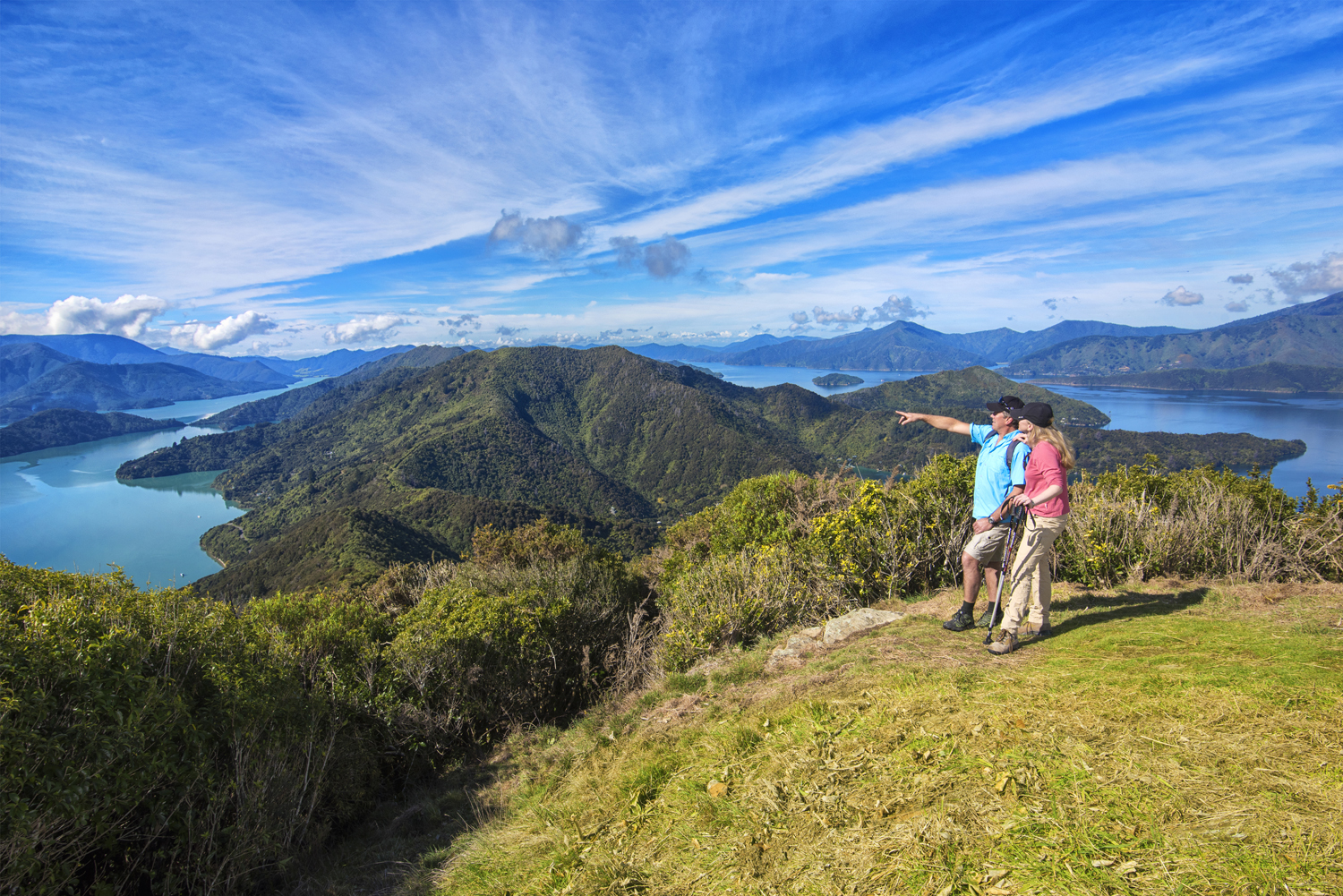
The track follows a network of old trails, weaving along a ridgeline above the countless bays of the sounds. In the late 1980s and early 1990s, the track was recut by DOC and the air force and the trail opened in 1991. It crosses a mixture of DOC, private and council land and is managed by the Queen Charlotte Track Trust. Private landowners charge walkers $18 to walk the track, part of which goes to DOC to maintain it. But trust chair Rob Burn says it has been underfunded and a rocky ride at times.
“It has been a struggle,” Burn says. “DOC has had some incredible champions of the track, but it’s had very little money in the last few years. DOC’s got a maintenance budget of about $50,000, and that can be wiped out with one bad storm.”
The number of walkers has also been impacted by the global financial crisis, and the Christchurch and Kaikoura earthquakes.
“Tourism was really impacted and the numbers on the track declined.”
But buoyed by the recent tourism boom, numbers are starting to grow again – 12,000 walked and biked the trail last year – and the trust is rebuilding sections of the track and extending the trail.
If it becomes a Great Walk, it may also get a new hut – currently, trampers stay in DOC campsites and private lodges.
“It’s a more optimistic time,” Burn says. “The Queen Charlotte Track is a great walk, regardless of whether that’s spelled with a capital g or not.”
A DOC report in 2005 found the trail was generating $9.4m for the regional economy, and that’s thought to have significantly increased since. Yealands Family Wines has also stepped in to help fund maintenance, contributing $100,000 in 2015.
The Old Ghost Road is already finding maintenance a burden. The Mokihinui-Lyell Backcountry Trust has to fund all of the maintenance, which costs about $400,000 a year – double what was predicted.
“It’s a big responsibility,” Rossiter says. “We are responsible for everything from clearing the track to cleaning the toilets and we only need one good storm and we have to sink tens of thousands of dollars into maintenance.
“But we have to make sure the experience is good for it to survive.”
The trust increased fees and changed the structure from charging per hut night to a fixed $140 fee.
But while there are financial risks, community-run trails can bring more variety to the DOC network and can be more responsive to public demand. The Old Ghost Road features separate cabins for people wanting more privacy and the huts have more creature comforts than a DOC trail. Rossiter says it’s about catering to what the users want.
“About two-thirds of people are biking the track, and the lighter they can go, the more they enjoy it. So the huts have got crockery, plates, coffee plungers, frying pans and gas cookers – it’s a simple thing, but it means all people need to take is food and clothing. That helps with the experience.”
The greater flexibility and volunteer labour is also a cost-saver. The huts cost between $45,000 and $75,000, built with volunteer labour. A far cry from the $750,000 budgeted for the new Powell Hut, or the $1.8m for the new Mintaro Hut on the Milford Track. The cost of the track, at $5.9m, is also almost half that of the nearby $10m Paparoa Great Walk, set to open next year.
The lodges on the Hump Ridge Track include private rooms, showers, flush toilets, and food and alcohol is available to buy, while the Queen Charlotte Track has a broad range of private accommodation. But it all comes at a cost – the Hump Ridge Track costs nearly $100 a night.
With all of the benefits and burdens considered, are community-developed trails the future of New Zealand’s trail network?
Federated Mountain Clubs president Peter Wilson believes community-run trails should be the exception, not the future – the economic risks are too high and there are plenty of existing trails that would be better to revitalise.
“There’s always enthusiasm to build something, but after a few years, the enthusiasm to maintain it diminishes,” Wilson says. “In the long run, you need a level-headed sober look into the future, when the tracks are no longer new and exciting and climate change is resulting in more damage and higher costs.”
Tourism advisor Dave Bamford, who was involved in developing the Timber Trail Lodge in Pureora Forest, agrees.
“We have too many trails already,” Bamford says. “Building a trail and cutting the ribbon is the easy part. Without maintenance and marketing, these tracks are history.
“We should be focusing on turning good trails into great trails.”
Despite the success of the Old Ghost Road, Rossiter also believes that, in most cases, it’s better for DOC to develop the track network.
“Every week someone calls me dreaming of a project and asking how they can go about it,” he says. “There is wonderful agility in community groups doing these things, which is all well and good when everything is going well. But what happens when that’s really tested and it falls over? The reality is the model hasn’t been fully tested. I’m sure there will be some casualties in 20 years time.”
With more than 14,000km of track already on the conservation estate, perhaps rehabilitating old tracks can be a more sustainable way of creating new tramping experiences. Around the country, thousands of trampers are pitching in to adopt tracks and huts to put them back on the tramping itinerary.
“This country is well served with facilities,” says Rob Brown. “We just need to look after them and give them a new life.”
Brown manages the Backcountry Trust, a partnership between FMC, NZ Deerstalkers Association and Trail Fund NZ, which gets $350,000 a year from DOC to fund hut and track restoration projects. Since its inception in 2014, it has helped restore over 100 huts and 900km of tramping and mountain bike tracks.
Brown says whereas building a new trail costs millions, an old trail can be recut and huts refurbished for a few thousand dollars.
“People should be celebrating the network we already have and getting more people to use it,” he says. “What we’ve been able to do is completely restore some huts using volunteer labour for just $15,000. It’s significantly cheaper to look after what we’ve got.”
One example is the Kaimai Ridgeway Trust, which is aiming to create a new multi-day tramp in the Kaimai Range, by building huts and rebuilding old tracks.
The trust, which includes tramping and deerstalker clubs from Auckland, Waikato, Coromandel and Tauranga, has taken over maintenance for seven huts and 150km of tracks in the range. About 100 volunteers regularly pitch in, restoring the huts and recutting the tracks.
Trust chair Roger Montgomerie says it formed because the ranges were becoming unusable.
“We concluded that unless we do something about it, nothing will get done,” Montgomerie says. “The tracks were in terrible condition and hadn’t been maintained for 20 years and some of the huts were like ice boxes. We’ve installed fireplaces in some of the huts and have done a lot of work on the tracks. The improvement is quite phenomenal and a lot more people are using the huts now.”
The trust now has a bold vision to redevelop a multi-day walk. It plans to build four huts along the 82km North-South Track in the range, creating a trip that is currently only achievable for the hardiest of trampers.
Construction of the first hut has already started, thanks to funding from the Backcountry Trust. The 12-bunk Te Whare Okioki Hut is expected to open early next year and will be added to DOC’s booking system.
Other groups are focusing on linking up the track network. In Marlborough, a number of groups are working to link up trails to create a network stretching from Nelson to Kaikoura and beyond.
“The locals have said ‘this is what we need to revitalise our community’ and they’ve got the vineyards, farmers and other industries on board because they can all see the value in it,” Rob Burn says.
“There are some really keen people that want to make these things happen.”



