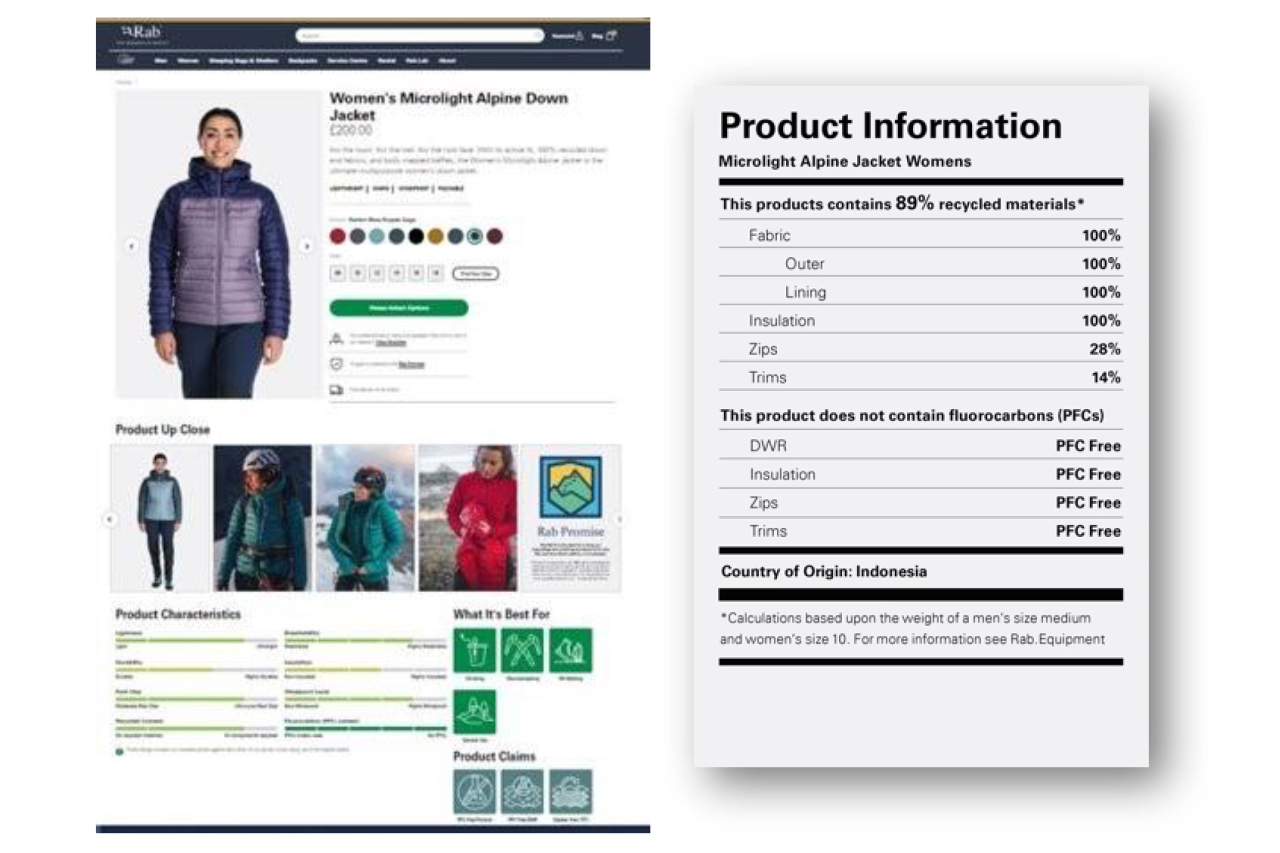
Material Facts label for outdoor clothing
Equip Outdoor Technologies, home of Rab and Lowe Alpine, is calling for greater transparency from outdoor gear manufacturers.
The UK company says it has achieved a 17.6 per cent reduction in greenhouse gas emissions per product since 2019. But there’s still much to do, says CEO and owner Matt Gowar.
“The last couple of years have seen extraordinary pressures for the outdoor industry and supply chains,” he said. “While our overall emissions continue to rise due to increased production, our item-level carbon emissions have reduced for the third consecutive year.”
The company’s Material Facts programme is a label attached to Rab products and is similar to an ‘ingredients label’ in that it discloses recycled material content, fluorocarbon status and where it’s made.
Equip is hoping other brands will join with Material Facts and form an industry-wide standard.
Equip product director Tim Fish calls Material Facts “the only way forward”.
“We may not have it right yet, but we are transparent, show our methodology and are open to an
industry-wide dialogue,” he said.
“To create real change in the industry, we call on other brands and retailers to join our path and disclose the same.”
A bag to avoid the bin
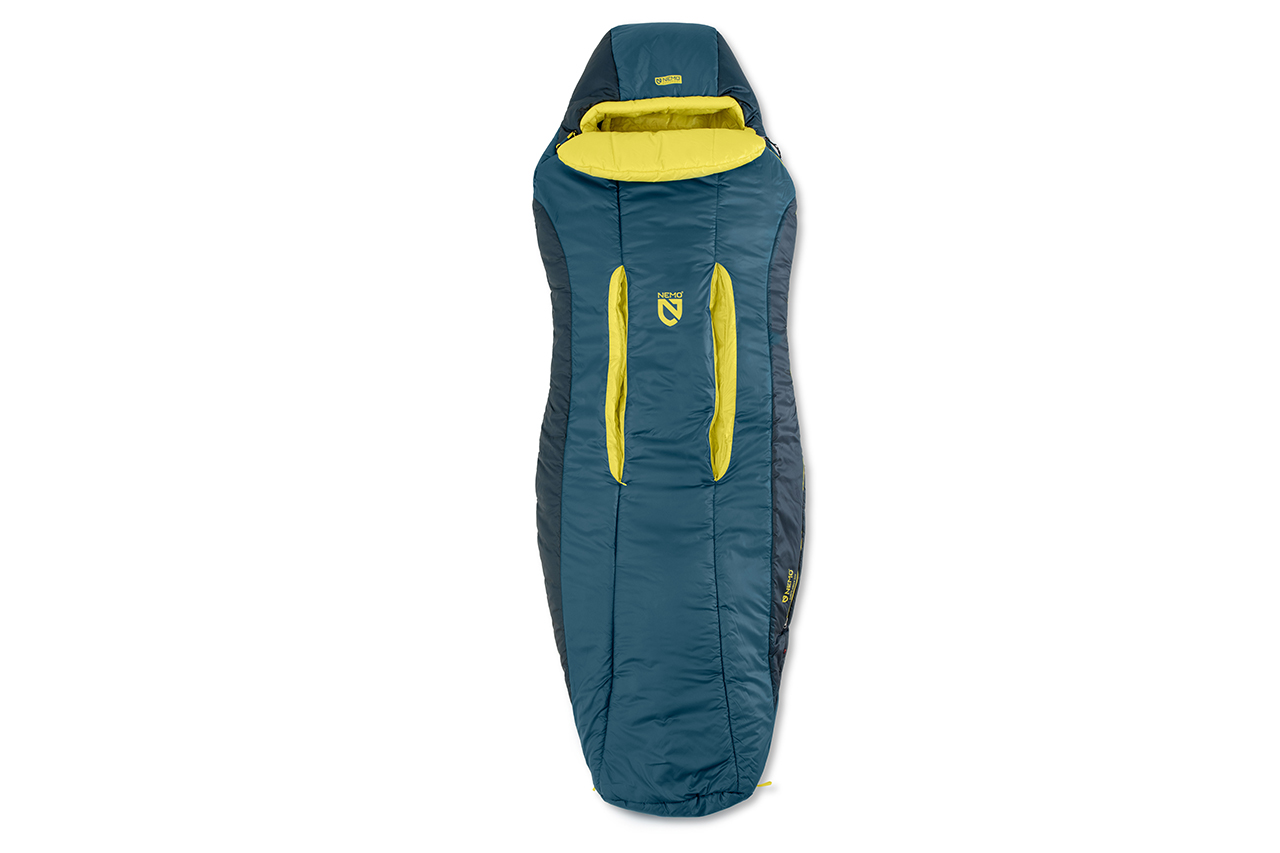
NEMO has a new 100 per cent recyclable sleeping bag.
The Forte is made from recycled synthetics and is an eco-friendly reimagining of the brand’s top-selling sleeping bag series.
At the end of this sleeping bag’s life, customers in the US can return it to NEMO for resale or recycling in exchange for NEMO gift cards. The recyclable Forte won’t be available in New Zealand until next year and the distributor, Mountain Adventure, says it hopes to work with NEMO Australia to allow consumers here to get the bag recycled.
The Forte marks the first product in the US brand’s Endless Promise series, set to deliver gear designed to be repairable, resellable and recyclable.
“We’re hyper-aware of the resources required – and waste created – by manufacturing,” NEMO CEO and founder Cam Brensinger said.
“With our Endless Promise Collection, we’re not just being mindful, we’re taking 100 per cent
responsibility for our products, long after they’re sold.”
Patagonia’s pristine reputation
Patagonia has ranked top for reputation in a poll of more than 16,000 consumers.
The company beat the likes of Apple, Microsoft, Nike and Paypal in the Axios Harris poll of the USA’s 100 most visible brands.
Writing on the Axios Today podcast, journalist Margaret Talev credited Patagonia’s environmental efforts and values for the win.
“What consumers have been saying consistently in this survey is that they like a company that knows what it stands for and isn’t just chasing consumers with marketing employees, but that sticks to its message,” she wrote.
Founded in 1973, Patagonia celebrates its 50th anniversary this year and has so far contributed nearly $200 million to environmental organisations.
Cactus Outdoor looks overseas to meet local demand
Cactus Outdoor is shifting some of its production offshore for the first time.
The NZ-owned apparel brand – which recently celebrated 30 years of operation – will source some product labour from Vietnam to meet demand.
Director Ben Kepes confirmed the Christchurch factory will not close or shrink, and Cactus is still looking for domestic employees.
“Broadening our supply chain is necessary for our long-term sustainability and our ability to remain present in the local and global market,” Cactus reported on its website.
“We will continue to use the same high-quality materials and craftsmanship that have made our products so durable and reliable for the last 30 years.”
New products will still be designed and tested in New Zealand, and repairs will remain local.