The rush of happy hormones after an icy plunge is hard to beat
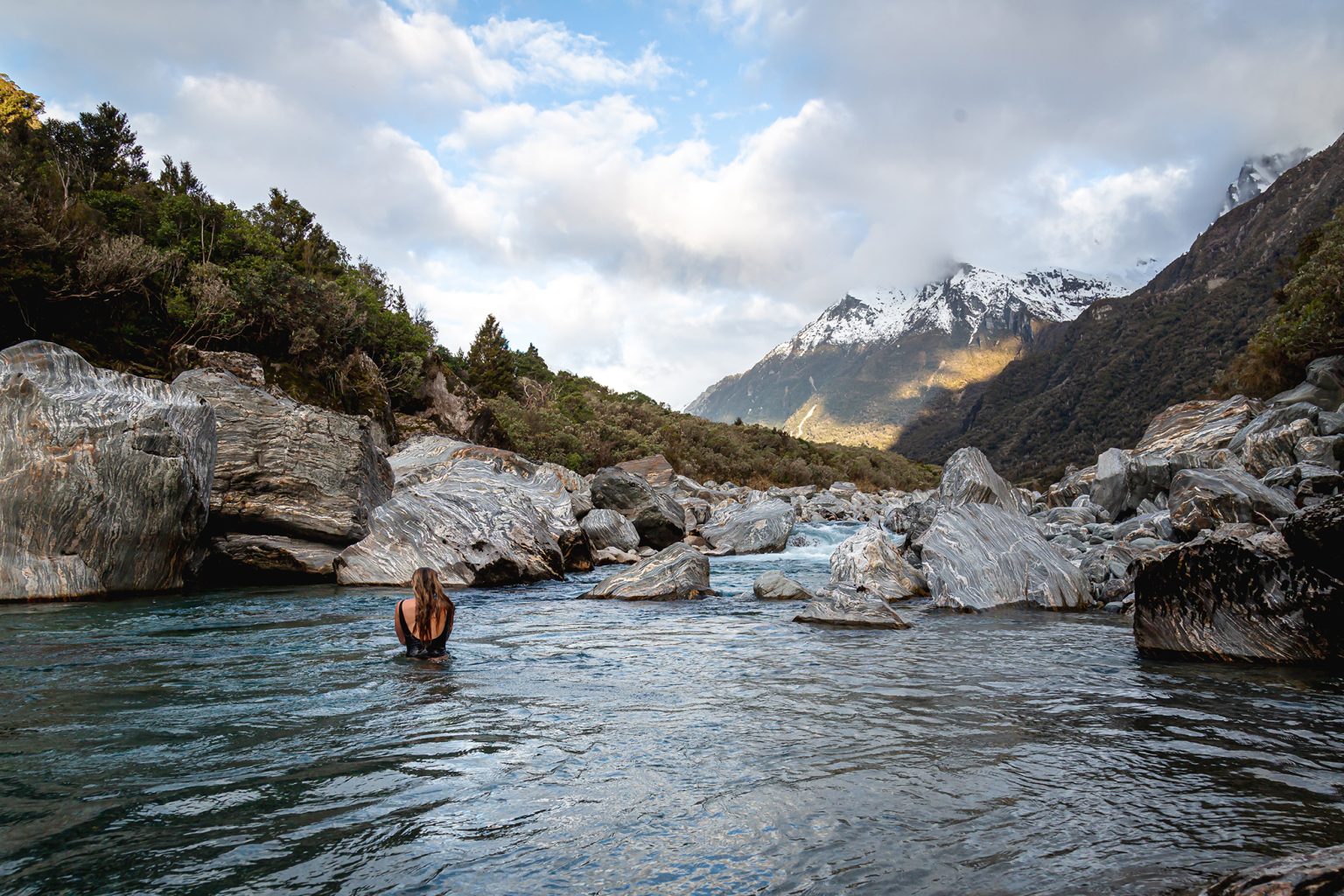
On a crisp winter afternoon I stand in trepidation on the bank of the Copland River. I muster my courage and dive in. Cold water sweeps over my body. Blood drains from my extremities as the world melts away. Kicking upwards, I surface violently.
“That’s bloody freezing!” I exclaim with the last of my breath. My friends laugh as they watch, warm and dry, from the bank. They call me mad, and I agree. But man, do I feel alive.
People have been swimming wild since time immemorial, and as the world grows busier, the appeal of swimming in natural places has also grown. It’s a chance to remove oneself from the hustle and bustle of everyday life. When the UK’s Outdoor Swimming Society polled its 175,000 members to ask why people went wild swimming, 94 per cent responded with ‘joy’.
A 2023 study for the US National Institute of Health found that open-water swimming can benefit mental and physical wellbeing. In New Zealand, swimming in wild places is part of our national psyche, something we treasure immensely. And nowhere is better for swimming than our conservation estate, where lofty snow-capped mountains feed the vast network of untamed waterways that make their way to the ocean.
You might think swimming is a summer activity only. But why limit yourself? Sure, the water is colder in winter, but if we’re honest it never gets that warm anyway. What’s more, in winter you have the opportunity to swim without the usual crowds. Imagine the serenity of having a whole beach to yourself in the Abel Tasman.
My favourite, however, will always be a wild river. Slipping into its frigid embrace is a chance to cleanse the mind and the body.
The tradition of ice swimming stretches back more than 300 years in places like Finland, and ice bathing is making a resurgence in popular culture. Olympic athletes like Michael Phelps have touted the practise as a method of reducing muscle soreness and fatigue. A 2001 study by Finnish scientist Hannu Rintamäki showed that a 30-second immersion in water colder than 4℃ resulted in a flood of ‘happy’ hormones in the brain—endorphins, serotonin, dopamine, and oxytocin—and improved mood and well-being benefits.
Winter swimming comes with increased risks, however, including cold-water shock and hypothermia. To mitigate these, make sure you can dry yourself and have a warm change of clothes to get into. If swimming in a river, check the current is not too strong and that there is a spot where you can exit the water easily. Supervise children and always check the depth before jumping in.
Consider taking the plunge on your next winter tramp. You might find you enjoy it!