Learning about mountain safety opens up options for trampers of all ages.
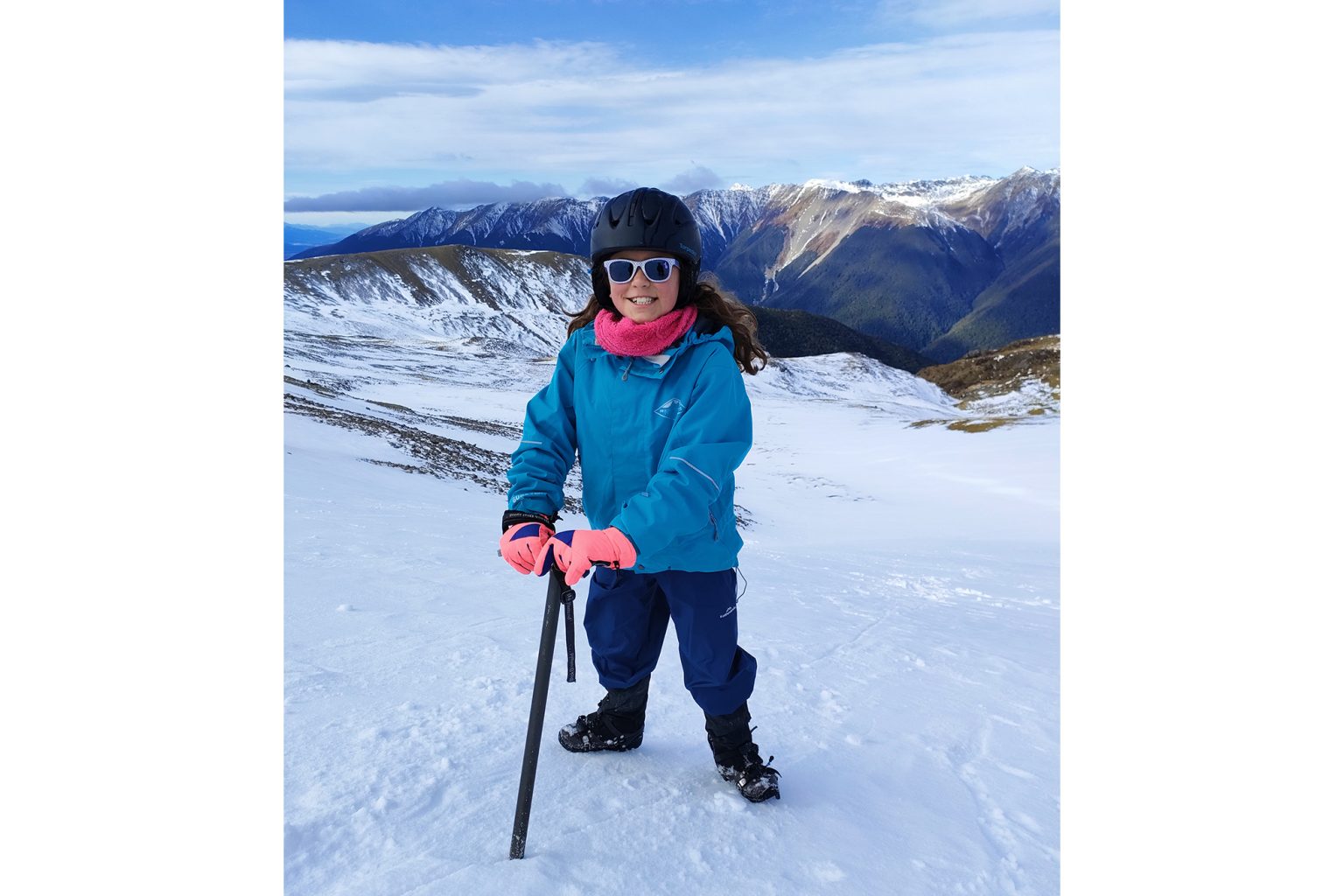
Last winter, my daughter Emilie (9) and I took part in an introductory snowcraft course with Nelson Tramping Club. We are keen trampers, and it was a good way to level up our winter trips while spending the weekend in Nelson Lakes National Park with a great group of people.
It’s a two-day course during which instructors provide training in the basics of handling an ice axe, wearing crampons, moving confidently and safely on snow, ascending and descending steeper slopes and how to self-arrest.
We climbed Pinchgut Track, carrying our full overnight tramping kit, and practised in and around the pristine environment of 2nd Basin before spending the night at Mt Robert Ski Lodge.
Here are our top takeaways.
1. Bring baking or treats to share
Nothing breaks the ice like homemade baking. We shared our supply of chocolate fudge brownie during the introduction and, in return, enjoyed sampling fellow participants Tom and Leah’s homemade muffins.
2. Practise fitting crampons before you get on the snow
Take time to get accustomed to your crampons, learn how to fit them in advance so you don’t feel left behind when your group takes off. Try fitting them with your boots off first – it’s much easier than when you’re wearing them.
3. Pack warm layers, but don’t start off too hot
It’s tempting to start winter trips layered up with cold-weather gear, but the added weight of crampons, ice axe and other safety equipment will make you sweat, especially if you have to hike to reach the snowline. You don’t want to be cold and damp when you get there. You can add layers at the snowline, such as waterproof trousers and raincoats.
4. Bum-sliding is good fun
Bum sliding is simulating a fall by sliding down a snowy slope on your behind. It’s also a fun way to travel, providing there’s a safe run out below. Our tutor, Brian, showed us how to self-arrest by sliding, axe in one hand, then flipping over onto our bellies with our full weight on the axe. He taught us how to steer our slide by pushing the handle of the axe into the snow. I gave it a go and enjoyed the thrill of picking up speed but wasn’t as confident as Tom, who whizzed past me to the bottom of the slope.
5. The shortest route is not always the best
Smooth, unbroken snow can be deceptive and hide obstacles. It’s important to read the landscape and understand the depth of snow, the height of the snowline and its quality before venturing out. If in doubt, stick to ridgelines, spurs and areas where there’s something solid to walk on. In the late afternoon our group headed for Mt Robert Lodge. It was hard work as the snow grew calf-deep. We avoided trouble by navigating a longer route, climbing out of the basin and taking a line along the ridge before dropping down a spur above the lodge.
6. Go slow and stay focused
Mistakes are easy to make when travelling through snow, and can have dangerous consequences: focus on every step. To get back to the ridge we needed to walk up an icier slope, digging in all four corners of our crampons for full grip and leaning heavily on our ice axes.
Some lost focus on the task at hand. I heard a sharp cry and saw Tom hurtling towards us.
Luckily he slid right into his mum’s path, and she managed to arrest his fall while staying clear of all the sharp bits. This time, there was a smooth run-out below, but that’s not always the case.
We continued climbing onto the ridge and Emilie approached her new friend with saucer-wide eyes: “Wow, Tom, you’re really brave!” Tom just smiled. Did he think so too?