Letter of the month
Sir Robert who?
In ‘Arise, Sir Robert’ (December 2024) Mark Watson described an epic trip across the Southern Alps and back again to visit the remote Sir Robert Hut. Not many people in the country have the honour of a hut named after them but I was left wondering … who was Sir Robert?
It turns out the man in question was Sir Robert Stout (1844–1930), twice premier of New Zealand in the nineteenth century. While much of his political career was lived in the shadow of ‘King’ Dick Seddon, Julius Vogel and William Balance, Stout was considered one of the great theoretical and enlightened thinkers of his time.
Inside Parliament he was an ardent land reformer and advocate for secondary education. Stout was active in the drive to grant voting rights to women, having introduced his own unsuccessful legislation in 1878. Despite Seddon’s opposition, he was later part of a progressive group who passed the Suffrage Bill in 1893, making New Zealand the first country in the world to grant women the right to vote in parliamentary elections.
After leaving office, Stout returned to law before being appointed chief justice of the Supreme Court. He also served on the senate of the University of New Zealand for 45 years and was instrumental in the founding of Victoria University of Wellington.
So all up, plenty of good reasons for honouring the man with an NZFS four bunker in an obscure creek just off the Southern Alps. It may not be marble, but if the Permalot group has anything to do with it, this hut will continue to be an enduring memorial to Stout’s tireless service to this country.
A question I have left is: was Sir Robert a tramper?
– Paul McCredie
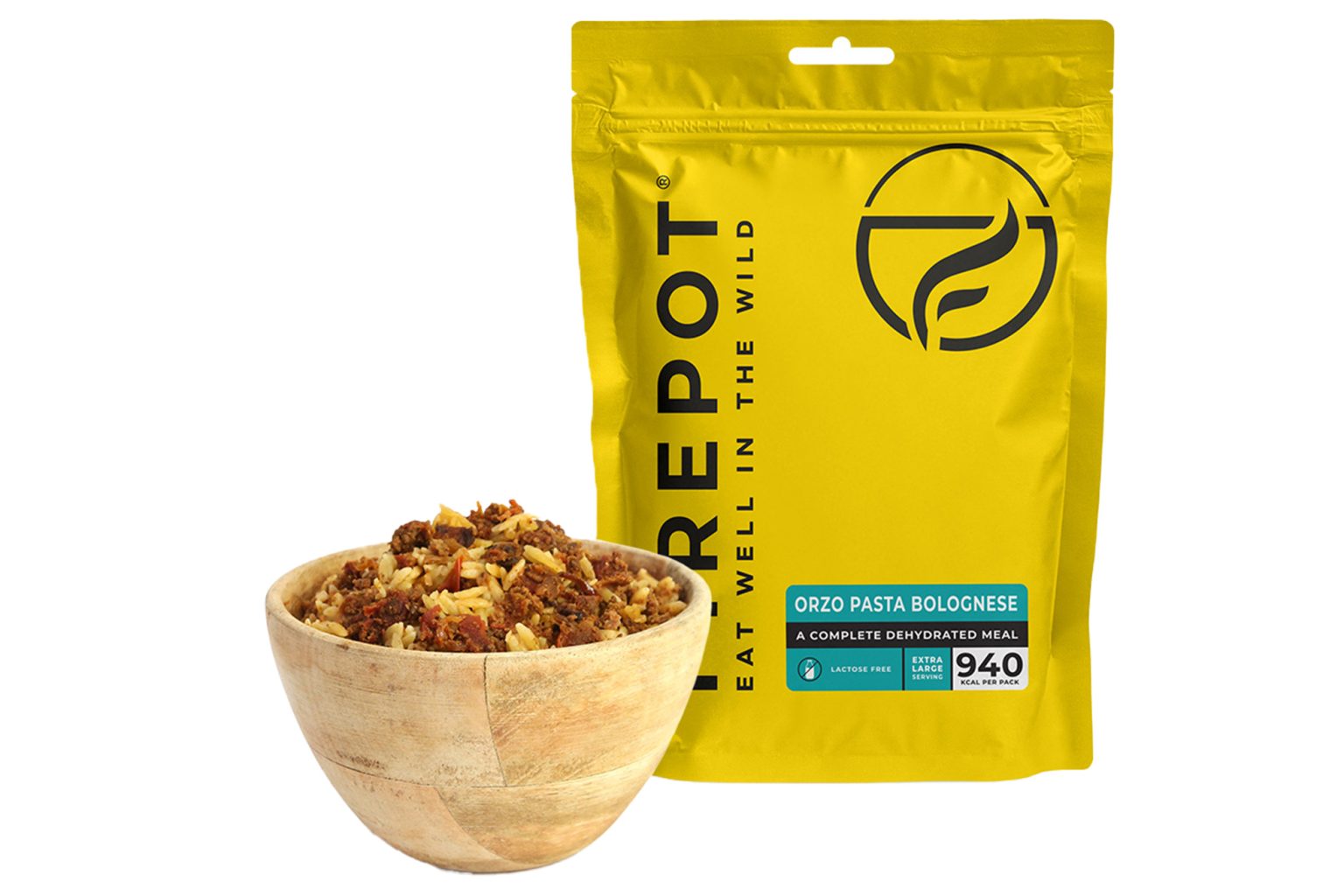
– Paul receives five Firepot meals for his upcoming tramps from www.furtherfaster.co.nz. Readers, send your letter to the editor for a chance to win.
New frequency
It was with great dismay that I received the email regarding the decreasing publication frequency of Wilderness (sent November 28). I have always loved reading Wilderness whenever I enter a backcountry hut and would have no hesitation in buying a copy whenever I saw it on the supermarket shelves.
Sadly, it seems Wilderness has somewhat lost the spirit of being in the wilderness and instead now has a focus on walking in urban and accessible areas, which is quite different to the unique experience of tramping Kiwis have grown to love. While I do applaud the efforts of people accomplishing Walk1200km, walking 5km on a flat path versus tramping 5km on rugged steep terrain is very different.
The joy of being in the wilderness is being able to enjoy nature in a remote setting and being connected to our whenua, in addition to escaping the hustle and bustle of the city. One thing I do really appreciate in the current Wilderness magazine is acknowledging our Māori history with regards to the tramping routes, as I felt like that was overlooked in the past.
Comparing a 2015 issue of Wilderness where the heading states ‘Better than the great walks’ to a recent cover where the heading states ‘The joy of urban walking’, things have definitely changed. Maybe this represents the new demographic of readers but I hope that you also remember your old demographic. Ka pai!
– Felicia Bishop
– Thanks for your considered thoughts, Felicia. FYI, we’ve only dropped two issues so plenty of opportunities to take Wilderness to a hut. Most Walk1200km participants do many of their walks on tracks and trips you would find in Wilderness. The challenge has also introduced many new people to tramping. – AH
Old school kit a winner
Your recent presenter of ‘What’s in My Pack’ (Quentin Duthie, December 2024) made me smile with his genuine old school-style kit, and also persuaded me that this page isn’t an advertorial. It’s a fantastic column and always interesting – one of my favourites – but it usually leaves me with pack envy. This issue’s column was something more akin to pack recognition.
Thank you again for your great magazine!
– Rebecca Webber
A list of ‘good tramps’
With increasing pressure of numbers on the 11 Great Walks, is it time to create a list of Good Tramps, perhaps lesser in the standard of huts, potentially crossing private land (Cape Brett, Queen Charlotte), or rougher underfoot?
I suggest such tramps could take at least three days but not require route-finding or alpine travel skills. Some could include sections of Te Araroa.
As a Mainlander my experience of Te Ika a Māui is limited, but to start the ball rolling, may I suggest the following in the south (I have not done them all so some are by reputation):
• Rees–Dart Track, Mt Aspiring National Park
• Hollyford Track to Martins Bay, Fiordland National Park
• South Coast, Fiordland National Park
• North West Circuit, Rakiura National Park
• Old Ghost Road, West Coast
• Wangapeka Track, Kahurangi National Park
• St James Walkway, Lewis Pass
• Mt Arthur, Kahurangi National Park
• Travers–Sabine Circuit, Nelson Lakes National Park
• Silver Peaks Circuit, Dunedin
• Matukituki Valley, Mt Aspiring National Park
• Mt Somers Loop Track, Canterbury.
A national system of around 20 Good Tramps would encourage overseas visitors especially to broaden their experiences and possibly take the pressure off the Great Walks.
– Gordon Douglas
Food for thought
While bikepacking recently, I spent the night in a small B&B. Breakfast was of the full English variety – cereal followed by bacon, eggs, sausage, fried bread, tea and toast. I overindulged and set off feeling a little uncomfortable. This wore off as the kilometres flew by. I had no morning tea and only a light lunch and rode until 4pm, when I looked for a campsite. That evening I was not as hungry as usual, so had a snack and a cup of green tea. I’d covered more distance than usual, had no muscle aches and felt good. Was the change of meal responsible? I remembered the old saying, ‘Eat breakfast like a king, lunch like a peasant, dinner like a pauper.’
The next morning, as an experiment, I had a freeze-dried dinner for breakfast. By lunchtime I was ravenous, the afternoon was a struggle, and when I stopped for the night I was hangry.
The question is: was it the substantial English breakfast that made the difference? I must experiment more with what I eat and when. I am sure the old saying holds more than a grain of truth.
– Tony Stevens