Shaun Monk operates the multi-day Island Hills Station private walking track in North Canterbury. He guides groups and individuals and teaches people how to hunt. In 2019 he turned his weekend adventures into a full-time gig. He also organises volunteer fundraiser events, such as the Skedaddle Trail Running Race.
Hunting mates dubbed Shaun ‘the bush janitor’ because he cleaned up huts and toilets wherever he went. “I’m essentially a possumer and a cleaner; no need to flash it up more than that.”
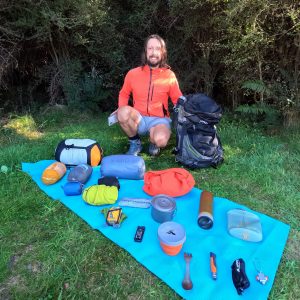
Being a hunter means his pack is weighed down by binoculars, ammo and a rifle.
Pack
The heavy-duty Tatonka Bison 70 is doing the job, but I’m saving up for an ultra-lite Stone Glacier pack.
Clothing
I’m a head-to-toe fan of First Lite – American all-weather lightweight kit that uses New Zealand merino wool. My two favourites are the Kiln long-sleeve hoodie and the Brambler gaiters.
Special items
Insulation tape is a one-stop first aid and boot repair kit. It also covers the rifle barrel’s end to avoid moisture and debris blocking the bullet exit.
Tarp
This is lighter and easier than a tent for three-season use. In the tree-free alpine country you’ll need a hill stick or walking pole to pitch it. Big rocks hold the strings in place. No need for tent pegs, but extra string can be handy for making a tight ridge.
Sleeping mat
The Klymit Insulated V Ultralite is tough, light and really comfortable for my 50-year-old bones.
Pillowcase
Stolen from the linen cupboard, it keeps flies off your deer meat while it cools. Once set, the meat can be transferred into a secure plastic bag. A quick rinse in the creek, dry off and stuff in your puffer for a comfy headrest.
Cooking
MSR PocketRocket stove and stainless pot and pan. It’s a versatile system that can boil water, fry a deer heart, then bake bread. I often light an evening campfire and use the embers for cooking or spit-roasting meat. Salt and spices add flavour; flour, baking powder, salt and oil are lightweight – and there’s nothing like fresh camp bread.
The 2026 Wilderness Outdoor Photographer of the Year competition
Otamatapaio Hut, Oteake Conservation Park
Dirt bike trial on Tongariro Northern Circuit gets approval
Adventurer and author Dunc Wilson
A majestic coastal walk
Subscribe!
Each issue of Wilderness celebrates Aotearoa’s great outdoors — written and photographed with care, not algorithms.Subscribe and help keep our wild stories alive.