Three stone huts to rest your weary head
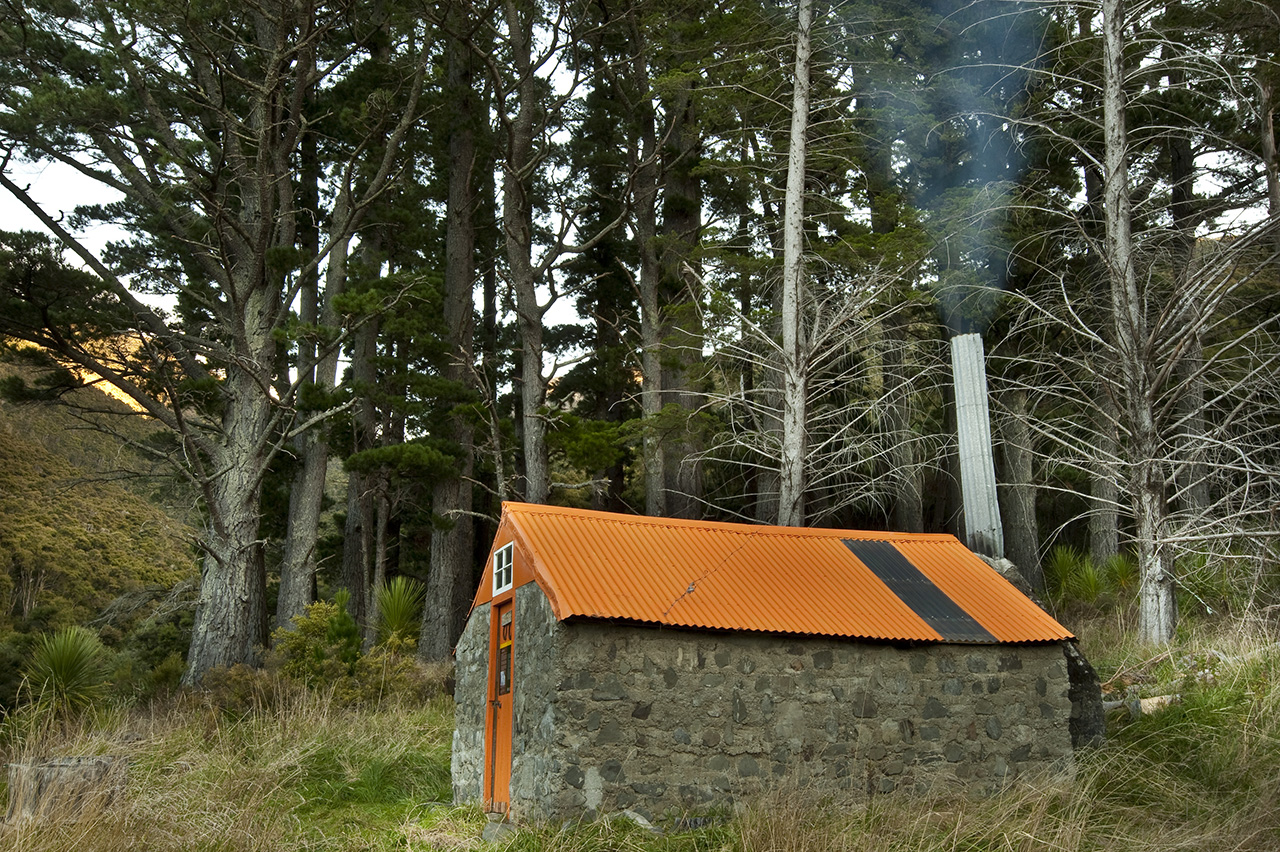
There’s something solid and reassuring about a stone hut. Something that says the person who built it, meant it to last. The quality of the craftsmanship in many stone huts means they’ve survived decades of rough use, poor weather and even avalanches or earthquakes. Indeed, New Zealand’s most enduring backcountry huts, dating from the 1860s, are made of stone.
In the days before aircraft, people built huts out of whatever materials they could. Many a hut was built from timber hacked from the bush. In treeless parts of the South Island, however, stone sufficed for walls. Roofing material was more problematic; thatch served sometimes, but more often a watertight hut required carrying in a roll of malthoid or unwieldy sheets of corrugated iron.
In the North Island, stone huts have always been rare. I know of only one: Shutes, in the Ruahines, although perhaps more existed in the past. The South Island boasts more, with several surviving in parts of Canterbury and Otago.
Names can be deceptive however. One known as Stone Hut, situated on the Wangapeka Track in Kahurangi National Park, is made entirely from wood and iron and earned its name instead from the nearby Stone Creek. The following three are all genuine stone huts, all worth visiting, each with their own interesting history.
Shutes Hut, Ruahine Forest Park
Built by rabbiter Alex Shute and E Smith in 1920, Shutes Hut stands on a terrace among trees about 20min walk from the Taruarau River. Just why the pair used stone, when there was timber nearby, remains unknown. Mortar and sand had to be lugged some distance and the small creek nearby could not have yielded enough stones, so the hut builders had their work cut out. Alex Shute was a rabbiter for Poporangi Station, which then ran sheep on the nearby tops of the Ruahine Range. Difficulty of the terrain, the lack of feed, and the rabbits made it a marginal operation at best and eventually the sheep were withdrawn. Shutes Hut is one of the few tangible relics from this Ruahine grazing era.
Stone Hut, Te Kahui Kaupeka Conservation Park
This shelter lies on the Te Araroa Trail, in Bush Stream. Stone huts have existed here since the 1880s, when the area was part of Mesopotamia Station. The current hut, originally built in 1939, features a large stone chimney and one stone wall, but the rest was destroyed by an avalanche in 1967 and since replaced with corrugated iron. Because of the avalanche risk, DOC recommends trampers use nearby Royal Hut during spring and winter.
Aspiring Hut, Mt Aspiring National Park
Aspiring Hut was built from stone simply because the New Zealand Alpine Club wanted an aesthetically pleasing, locally-sourced material for their main climbing base in the Matukituki Valley. The club spent three years, and immense effort, constructing the large but elegant hut, which was opened in 1949. Ed Hillary visited it, poet James K. Baxter wrote in it, and artist John Drawbridge sketched in it.