A plant that provides foreground interest for landscape photographers.
As a tramper, I naturally enjoy photographing the rolling tussock tops of backcountry ranges. Often, however, I yearn for something to anchor the foreground and to provide a contrast against the red-gold tussocks. Mountain tarns make pleasing foregrounds, and sometimes offer reflections too, but can become a bit clichéd.
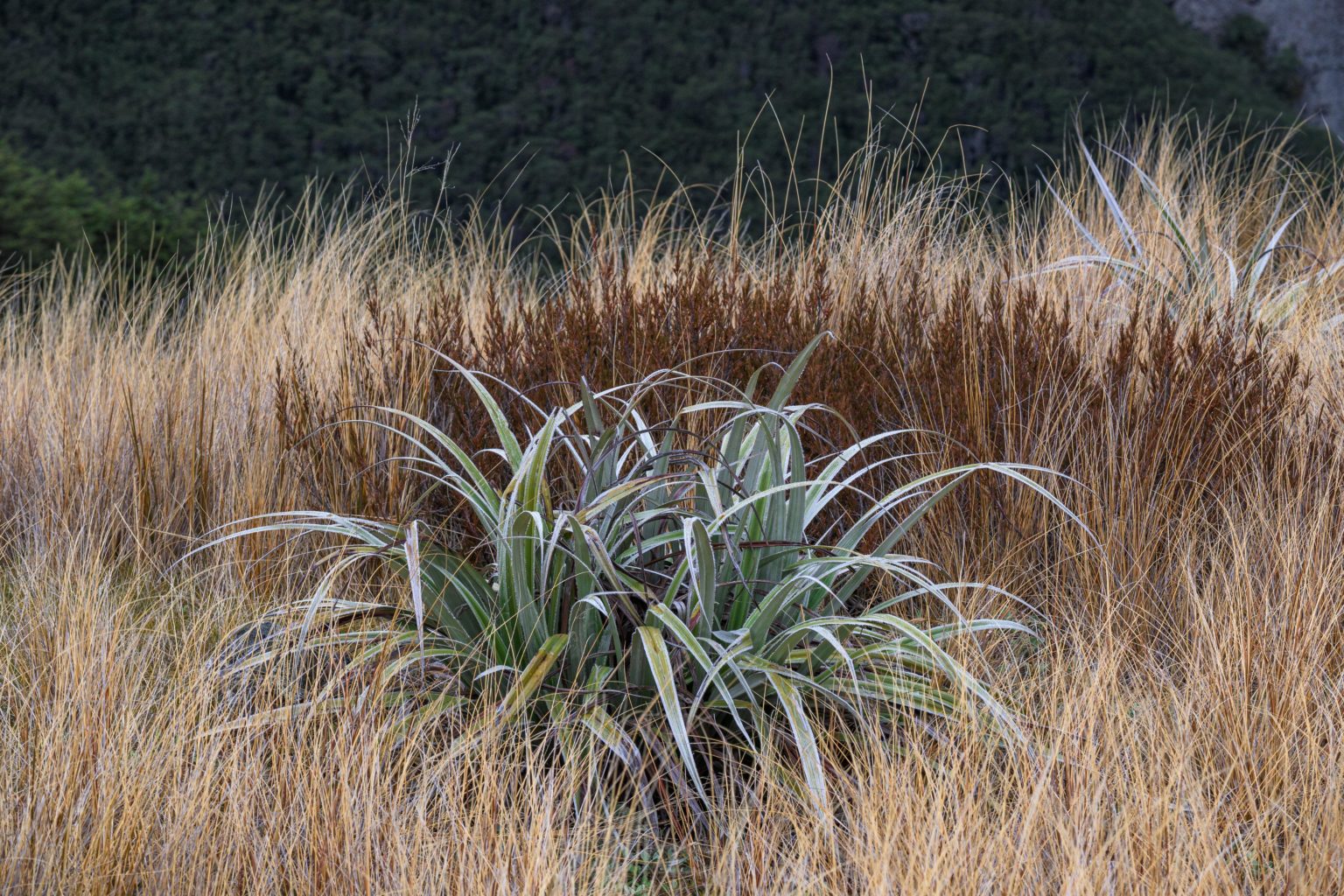
Over recent years, I’ve found myself drawn to photograph a distinctive plant that often makes a fine foreground: kakaha/mountain astelia. Superficially flax-like, this plant often makes attractive splays among the tussock, its long, pale leaves offering a distinctive colour and texture against its surrounds. In fact, the cultivated varieties sold in garden centres are often marketed as ‘texture plants’. And while they aren’t particularly showy, in the fruiting season their bright orange or red berries offer an additional splash of colour.
New Zealand has 13 species of Astelia, which grow from sea level right up into the mountains, and all are native. In the forest, the most common species is Astelia fragans, or kakaha/bush flax, even though it is not closely related to the better-known flax/harakeke (Phormium).
The most widely distributed of the seven alpine species is kakaha (Astelia nervosa) – the one that most often appears in my photographs. It grows up to about 1500m and is common in the mountains from the Raukumara Ranges south to Rakiura/Stewart Island.
Here are three places to see kakaha/mountain astelia.
1. Mangahuia, Ruahine Forest Park
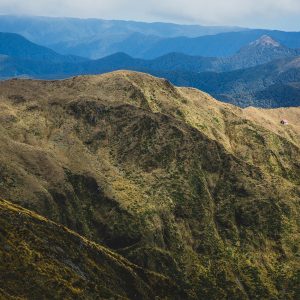
An outlier of the main Ruahine Range, the Whanahuia has the advantage of being the most accessible tops in the Manawatu. From Renfrew Road, a good, benched track climbs onto the range, en route crossing a narrow gorge on an arched footbridge. Rangiwahia Hut occupies a flat above the bushline, boasting commanding views towards Ruapehu and the west. Beyond, a poled route leads onto the tops of the Whanahuia Range to the summit of Mangahuia (1583m), where there are clumps of kakaha. From the summit, trampers can descend to the car park on the Deadmans Track. Allow 8-10hr for the round-trip.
2. Sylvester Hut, Kahurangi National Park
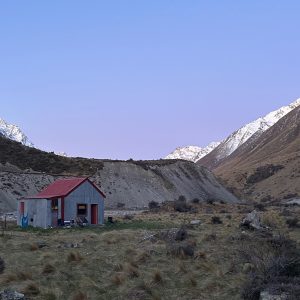
Sylvester Hut replaced the old Bushline Hut, and DOC made the fine decision to place it on the tops of the Lockett Range, near Lake Sylvester. It’s reached on the wide Sylvester Lakes Track, beginning beside the Cobb Valley reservoir, and takes about 2.5-3hr. Beyond the hut, a whole day could be spent exploring the lakes and ridges, and brushing past clumps of mountain flax.
3. Cupola Hut, Nelson Lakes National Park
In my opinion, Cupola Hut is the best-situated hut in Nelson Lakes National Park – surpassing even Angelus. Originally built to house scientists, the eight-bunk hut sits on a ledge among beech trees, just below the bushline, but with a view over the valley to the intimidating southern faces of Mt Hopeless. And above the hut, the track emerges onto a stunning series of ledges, with tarns, clumps of kakaha and views of Cupola – another fine mountain of the Travers Range. The hut is most easily reached on an offshoot of the main Travers Valley Track, beginning near John Tait Hut. From the head of Lake Rotoiti, the tramp will take a long day, or a more leisurely two.