Three island safe havens for New Zealand’s most threatened bird species
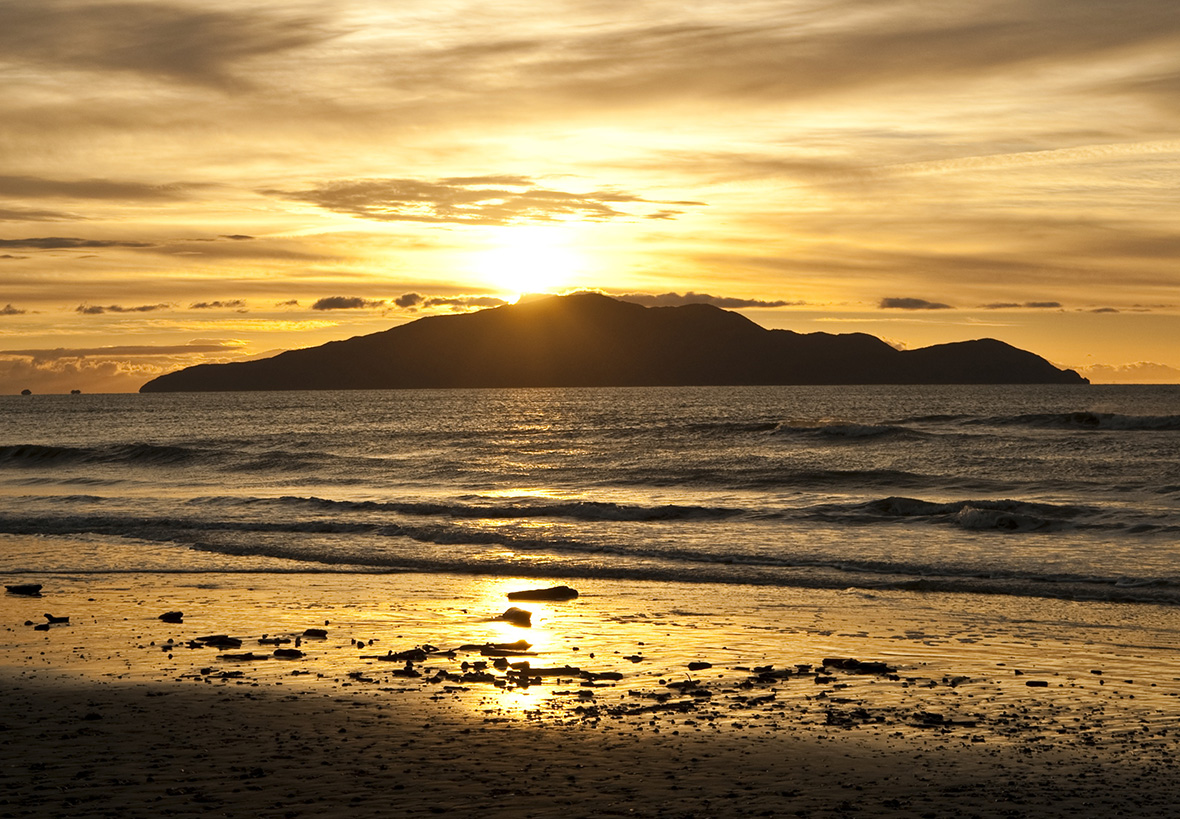
The kaka whistle and screech, performing acrobatics among the canopy, their orange underwings flashing as the light catches them. Fat kereru sit on top of bushes, their plump white breasts exposed above a bib of green-purple plumage. Tieke, tieke, tieke; the staccato call of a saddleback sounds from hidden forest glens. On an island such as Kapiti, you’re likely to have these encounters within minutes of arriving.
Islands are a world apart; not just because the sea separates them from the mainland, but because they offer sanctuaries for many native birds and animals. New Zealand has more than 600 offshore islands, and about 34 outlying ones. Some islands harbour our rarest plants and animals – including ones no longer found on the mainland outside of fenced sanctuaries like Zealandia. And others like the Chatham Islands boast their own endemic species – including the black robin and the taiko.
The role islands could play in conservation was increasingly recognised late in the 19th century. After prompting by concerned individuals, the government set up three nature reserves: Resolution Island in Fiordland’s Dusky Sound (1891); Little Barrier Island in the Hauraki Gulf (1894); and Kapiti Island near Wellington (1897).
Resolution was the most pristine of the three. Between and 1894 and 1908, pioneer conservationist Richard Henry made extensive efforts to move more than 700 kiwi and kakapo to the island from the nearby mainland. Most of Henry’s efforts were in vain; the island was just too close to the mainland, and mustelids – better swimmers that anyone had expected – invaded the island in about 1900. Six years of hard slog undone, with many of his precious birds eaten. Although Henry stayed on the island for eight more years, trying to trap the predators, the invasion just about broke his spirit.
In retrospect, Henry can be considered the pioneer of bird translocation, a technique that later conservationists have employed to great effect on other islands.
Tiritiri Matangi Island, Auckland
Once a farm and lighthouse keeper’s domain, during the 1980s Tiritiri Matangi became a community conservation initiative. Beginning in 1984, volunteers planted thousands of trees, and the steady process of restoring a forest canopy to the island progressed well. Now the island is an increasingly popular destination for visitors wanting to see rare birds. Boat operators run regular services to the island from Auckland and the Whangaparoa Peninsula.
Kapiti Island, Wellington
After his failure on Resolution Island, Richard Henry became the caretaker on Kapiti in 1908. The island, however, was a mess. Infested with goats, cats, rats and possums, and with large areas burnt off for farmland, it was a bird sanctuary in name only and Henry did little to solve the problems. Successive efforts by other caretakers, and more recently DOC, have slowly transformed the island into a pest-free haven. Both the six-year possum eradication effort in the 1980s and the rat eradication success in 1996 were huge conservation milestones. Several operators run trips to the island, but visitors require a permit from DOC.
Alternatively, visitors can stay overnight at a lodge on the privately-owned northern part of the island. A substantial population of little spotted kiwi exist on the island.
Ulva Island, Stewart Island
A small, elongated island set in Patterson inlet, the largest inlet of Stewart Island, Ulva became predator-free after a successful 1997 rat eradication. The public has full access to the open sanctuary, and several Oban operators run trips to Ulva over the summer months, giving visitors an opportunity to see kiwi, weka, kakariki, yellowhead and South Island saddleback.