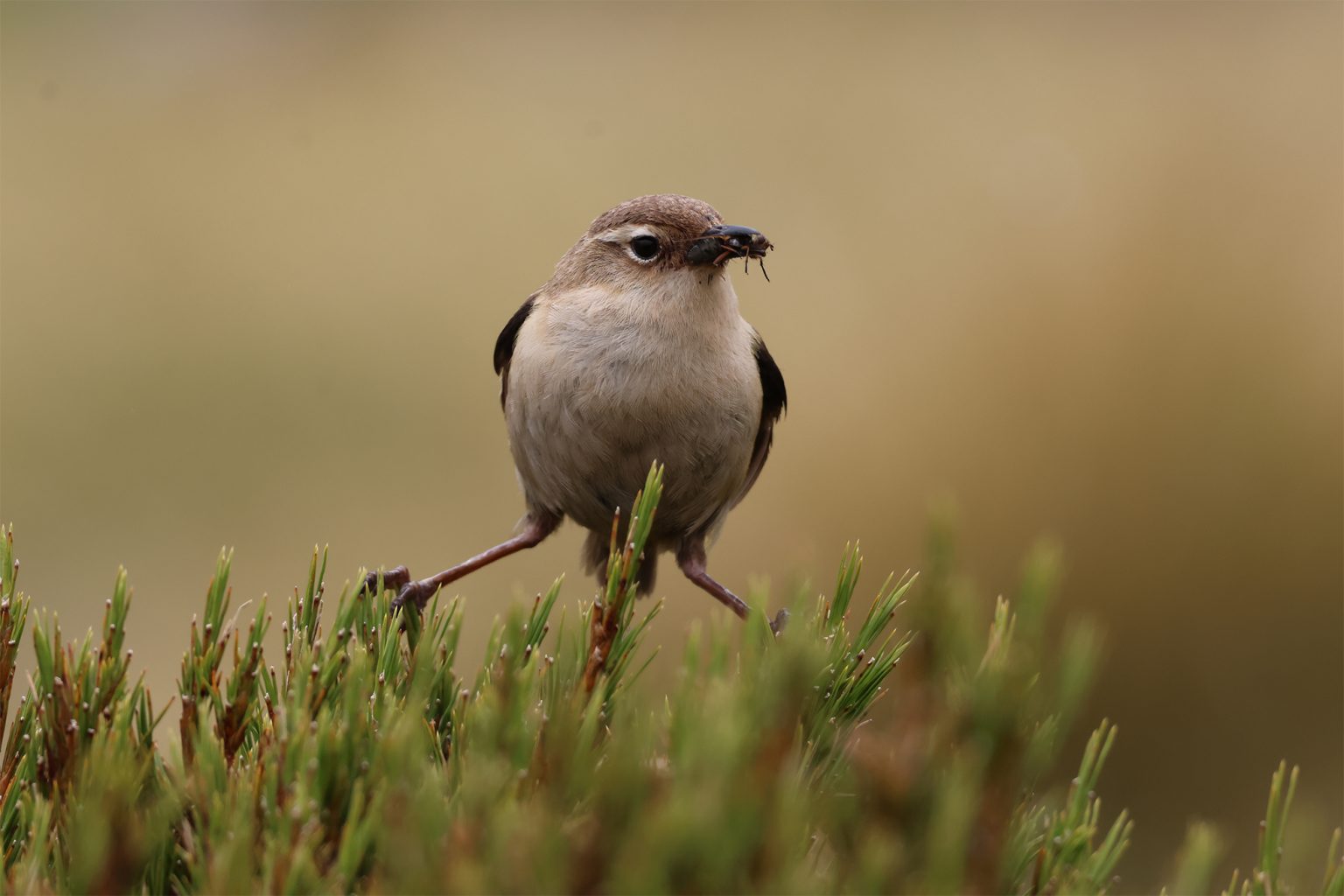
For the past five years DOC has been monitoring Aotearoa’s only true alpine bird, the pīwauwau rock wren, and finds the population is increasing where predators are controlled.
DOC science advisor Tristan Rawlence said that areas with predator control have on average twice as many rock wrens, whereas populations are gradually declining at unmanaged sites.
Of the 25 monitoring sites from Fiordland to Kahurangi, 19 have predator control and six have none.
Data also shows which control methods are most beneficial to rock wrens.
“We’re seeing the best results where we’re using aerial 1080 in the alpine area above the tree line where rock wrens live year-round, and not just in the surrounding forest,” Rawlence said.
“We’ve also learned we need to control predators whenever the beech forest seeds, as predator numbers soar in response to more food.”
As pīwauwau hop and nest on the ground rather than flying, they are easy prey for rats and stoats.
“Stoats can be common in alpine areas and we’re increasingly seeing rats in the environment too, possibly due to warmer temperatures,” Rawlence said.
In Wairau Rainbow Valley and Nelson Lakes National Park it is hoped that kea are also beginning to thrive.
For the first time in years, kea were seen on Rainbow Ski Field this winter, and chicks were seen early in the breeding season.
“The results so far are positive, but we’ll have to wait until the end of summer to see how successful the breeding season has been for kea, and only long-term monitoring will tell us if the population is trending back upwards,” said Melissa Griffin, DOC’s senior biodiversity ranger for Nelson Lakes.