1179g (m), 1020g (w)
What we liked: Light and comfortable with exceptional grip
What we don’t: Softer sole rubber wears out faster
We recommend for:
Transalpine, scrambling and technical terrain.
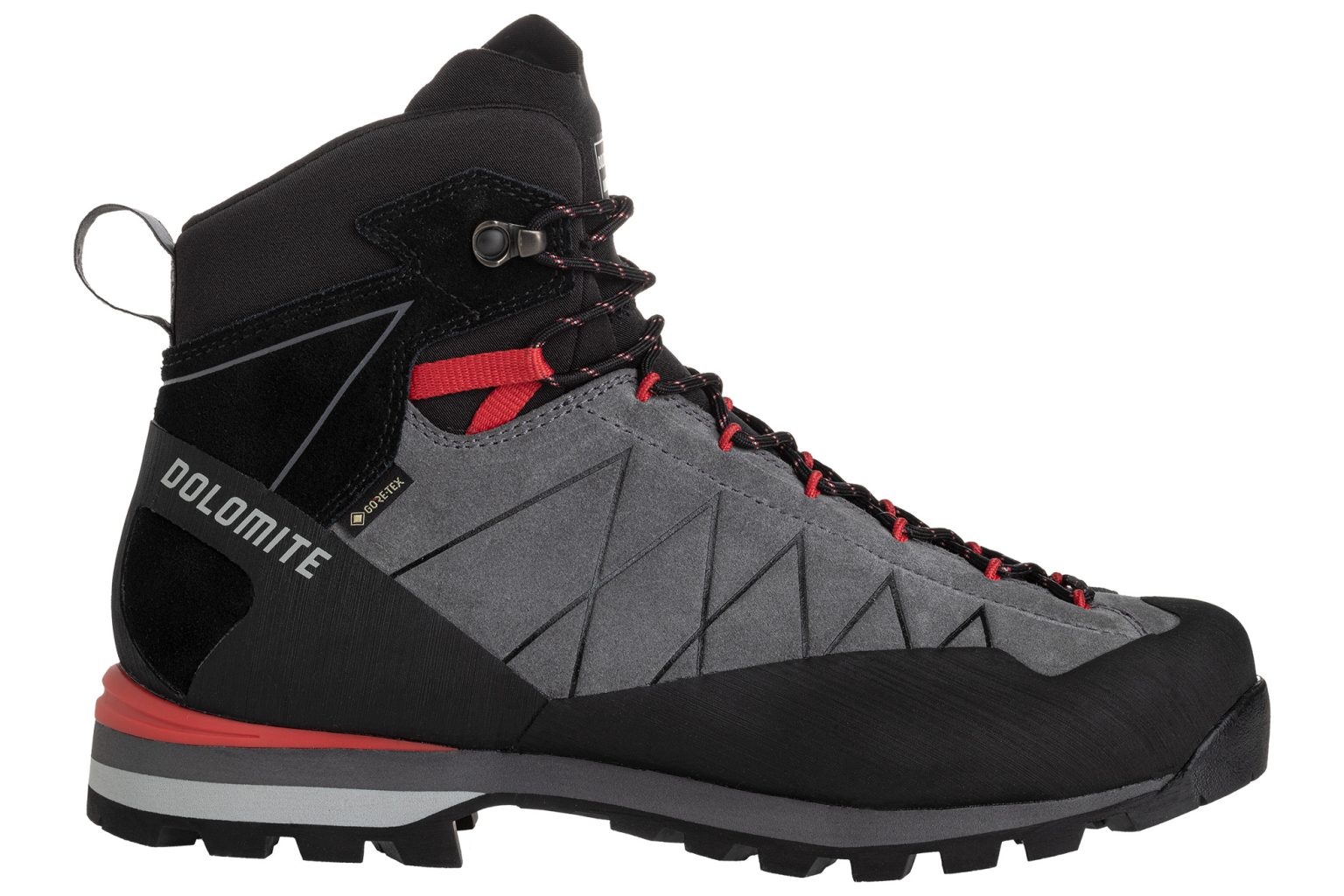
Overview and features: The Crodarossa Hi brings approach shoe attributes of grip and precision to a lightweight but durable trekking boot. Suede uppers are combined with comfy stretch fabric for the cuff and tongue, along with Gore-Tex lining and low-profile climbing lacing. The Vibram Winkler Evo sole is a high-friction compound coupled with a full protective rand.
Fit and comfort: This is a low-volume, medium-width boot, optimised for technical terrain. My regular size felt just right with a light hiking sock and my wide feet appreciated the broad toe box. The low-profile tongue and cuff provide a comfortable foot-hugging fit. The firm sole is optimised for edge-bite, traction and surface feedback, rather than plush comfort. It’s still a comfortable boot that requires minimal breaking in.
Durability: With suede uppers, a full rand, few seams, only two riveted lace hooks and a high-density midsole, there is little to go wrong. The boot is built to handle rocky terrain and the uppers are among the most durable to be found in a hiking boot. The high friction sole is softer than standard hiking boot soles, however, so it will wear out faster.
In use: I couldn’t fault these boots. Light on the foot, they handled very well for approaches and scrambling as well as regular tramping. The sole has aggressive tread with a narrow heel that brakes well. The cuff is intentionally flexible for a range of motion. Their stiffness is similar to a light trekking boot – enough for a moderately heavy load, but they don’t feel at all clunky underfoot.
Value: Compared with others in this small class of boots, the Crodarossa is more durable without being a lot heavier.
Why buy the Dolomite Crodarossa?
If you want approach shoe traction in a sturdy, supportive but relatively light platform, suitable for Fiordland approaches and transalpine scrambles, this boot is ideal (the only caveat being that the sole will wear quicker than that of a standard hiking boot).