Best for versatility, durability and the environment.
Plusses: Recycled materials, comfortable, robust
Minuses: Expensive, some pockets not fit for purpose
426g minimum, 510g with bag and cup
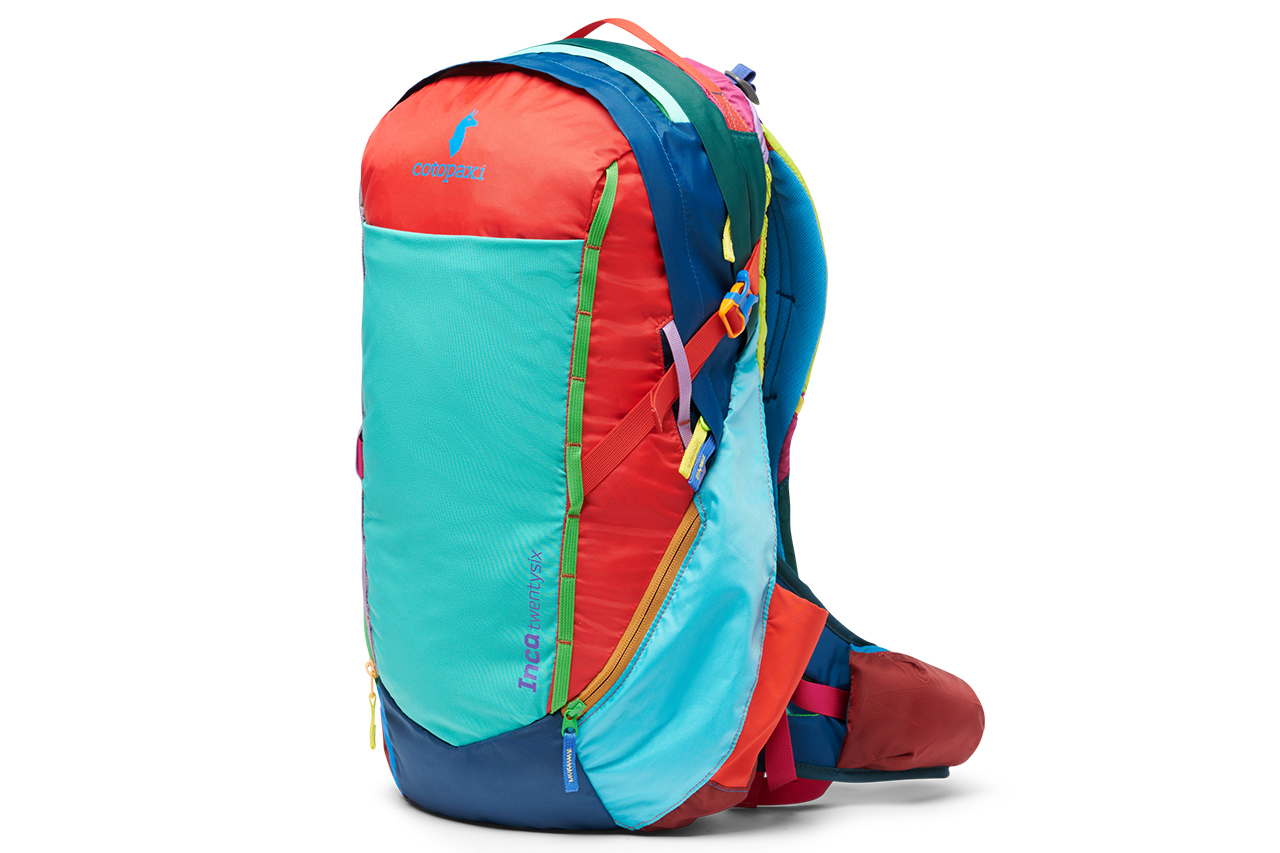
Features: A trademark of this US brand is that each Inca pack is made from an assortment of repurposed fabrics so that no two are exactly the same colour-way. Shoulder straps are wide and padded and feature a zippered cell phone pocket and hydration hose clip. There are adjustable chest and waist straps, the latter with two zippered waist pockets. Storage includes a front stretch pocket, an internal hydration sleeve, zippered top pocket with hang loop and two zippered side pockets.
Two side water-bottle sleeves hold medium-sized bottles, while ice axe and trekking pole attachments provide external storage.
Fit: This model is tall and narrow and well-suited to my 1.8m+ frame. I felt no need to ride the pack high or low, as I do with shorter daypacks. The shoulder and chest straps are non-intrusive, and the waist strap offers plenty of wriggle room for a range of users. The fixed chest strap may be inconvenient for women, but fitted me well.
Comfort: It’s hard to find fault with the Inca’s comfort – especially as load-fatigue doesn’t come into play as it would on larger packs. Shoulder straps are generously wide and adequately cushioned, as is the back, which has enough padding to shield the body from packed items. I had no worries carrying the pack fully laden on long day trips, though there are better-ventilated options out there in this class of daypack.
In use: For day walks, the Inca 26 is a comfortable and robust pack. My only major gripe lay with storage options. The zippered shoulder strap pocket – marketed as cell phone suitable – didn’t fit my Samsung smartphone and is too small for anything more substantial than a couple of muesli bars. Likewise, the hip pockets are small and non-stretch – suitable only for car keys or similar items. The external zippered side pockets become very tight when the pack is full, and even more so when a water reservoir is stowed in the sleeve.
The outer stretch pocket is a solid addition, however. It’s perfect for light layers or snacks, and the fabric appears durable. A strip of vertical parallel loops add potential for webbing or rope extensions, which would benefit climbers or over-packers.
Value: The recycled fabrics feel hardy and I’d rate the Inca 26 for a long life; however, $300 is at the top end of similar daypacks.
Verdict: A feature-laden, environmentally friendly day pack, but it comes at a cost.