Tramping should not be a mystery tour. Put some care into looking out for the clues that ensure you are on the right track.
I recently came across a family, two adults and two young children, who were stopped on a track, about 20 minutes from a car park. They were looking for a swimming hole and asked me if they were going the right way. They weren’t, and I told them how to get onto the right track.
This family wasn’t in any danger, but they had made the simple and common errors that sometimes lead people to become seriously lost.
Information boards
Many trailhead car parks have an information board. This should be your first stop. Information may include maps, as well as important updates about track or bridge conditions or ongoing pest control. Access, walking times and track use conditions are usually given, and there may be a current weather forecast or interesting facts about flora, fauna, geology and history.
Examine any maps and identify where you are going. Check which track to take and if there are any turn-offs. Take a photo of the map to refer to if you need it. Note too that these maps are often oriented to the location: north may not be at the top as is usual with a topographical map.
Signs
Other signs provide useful information too, such as walking times and whether or not a track is shared with cyclists. When you think you know where you are going it is easy to walk right by these signs, so take time to read and interpret them. Take care with track names. For example, Waterfall Creek Track might be different from Waterfall Track or a sign that simply points to a waterfall.
Geographical features
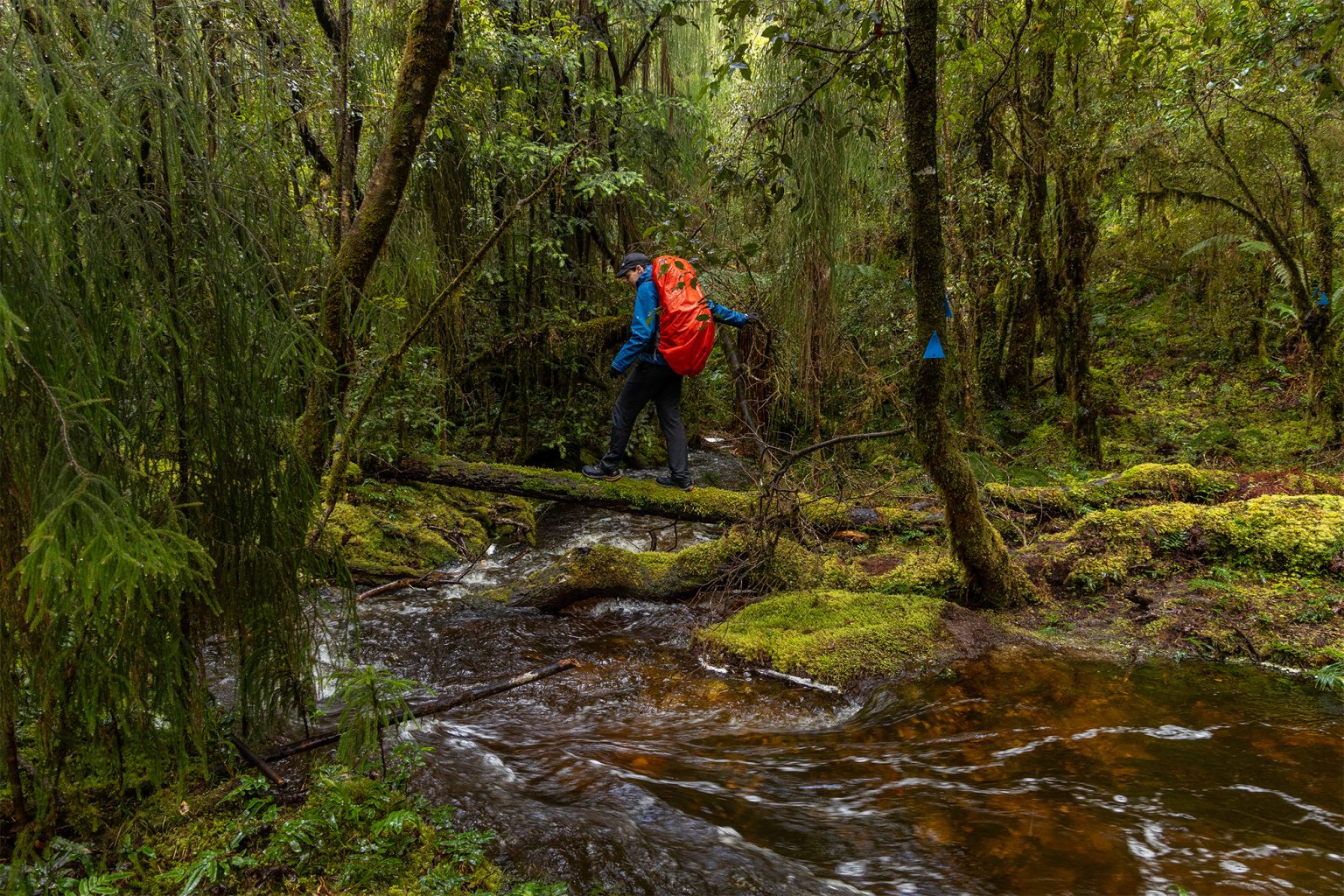
Consider what is expected of the track. Will it go up a hill, along a stream, across a farm or through the bush? If it differs from expectations, pause to think about why that is. Are you on the right track? If it doesn’t seem right, make a deliberate decision about how long you will keep going before turning back.
Bias
Avoid a bias that may lead you in the wrong direction. People are more likely to take the wider path at a junction where one path is narrower than the other, or to choose a track that leads straight on rather than one that turns off. Check your map at each intersection.
The clues the family missed
The family seeking the swimming hole had passed a large information board with a good map. The swimming hole was not marked, but only one track followed the stream. However, the start of that track was less obvious than a bridge that led to the other two tracks. The bridge is likely to have attracted their attention and they set off in the wrong direction, straight past a sign saying ‘summit’. When I met them they had been climbing for some time and had perhaps stopped to wonder if they were going the wrong way.
Whenever you are tramping, even for a short walk, take note of clues that indicate you are on the right track. If the clues don’t add up, stop and consider the situation. Never be afraid to turn back.