Hiker and trail runner Tina Luong is keen to get into the alpine. She asks gear editor Mark Watson for advice on purchasing mountaineering equipment.
Goal
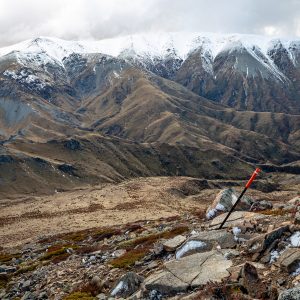
Tina Luong, 44, is an experienced tramper and trail runner. She moved to New Zealand last year from Brisbane to ‘ramp up her tramp’ and explore more alpine terrain.“The mountains really won me over during summer, and I became curious about exploring them in winter too,” she says.
Tina joined the New Zealand Alpine Club Canterbury Westland section and recently completed its basic snowcraft and avalanche awareness courses. “I’m now looking to build on the skills I learned by going on club trips and organising day missions. I feel confident that mountaineering is a pathway I’d like to explore.”
Tina’s first priority is crampons to go with her existing boots, and an ice axe and helmet.
Advice on avalanche kit and additional safety gear in case she encounters bad weather are also welcomed. This could include gear for an overnight alpine trek.
“If all goes well, I’ll be looking at buying a pair of mountaineering boots with more tailored crampons,” she says.
Tina’s 160cm tall and slightly built, so she prefers lighter gear but also gear that will last.
“I envisage, in the next couple of years, reaching an intermediate mountaineering level, competent on Grade 2+ terrain. A trip goal for me would be the classic Rome Ridge route up to Mt Rolleston at Arthur’s Pass.”
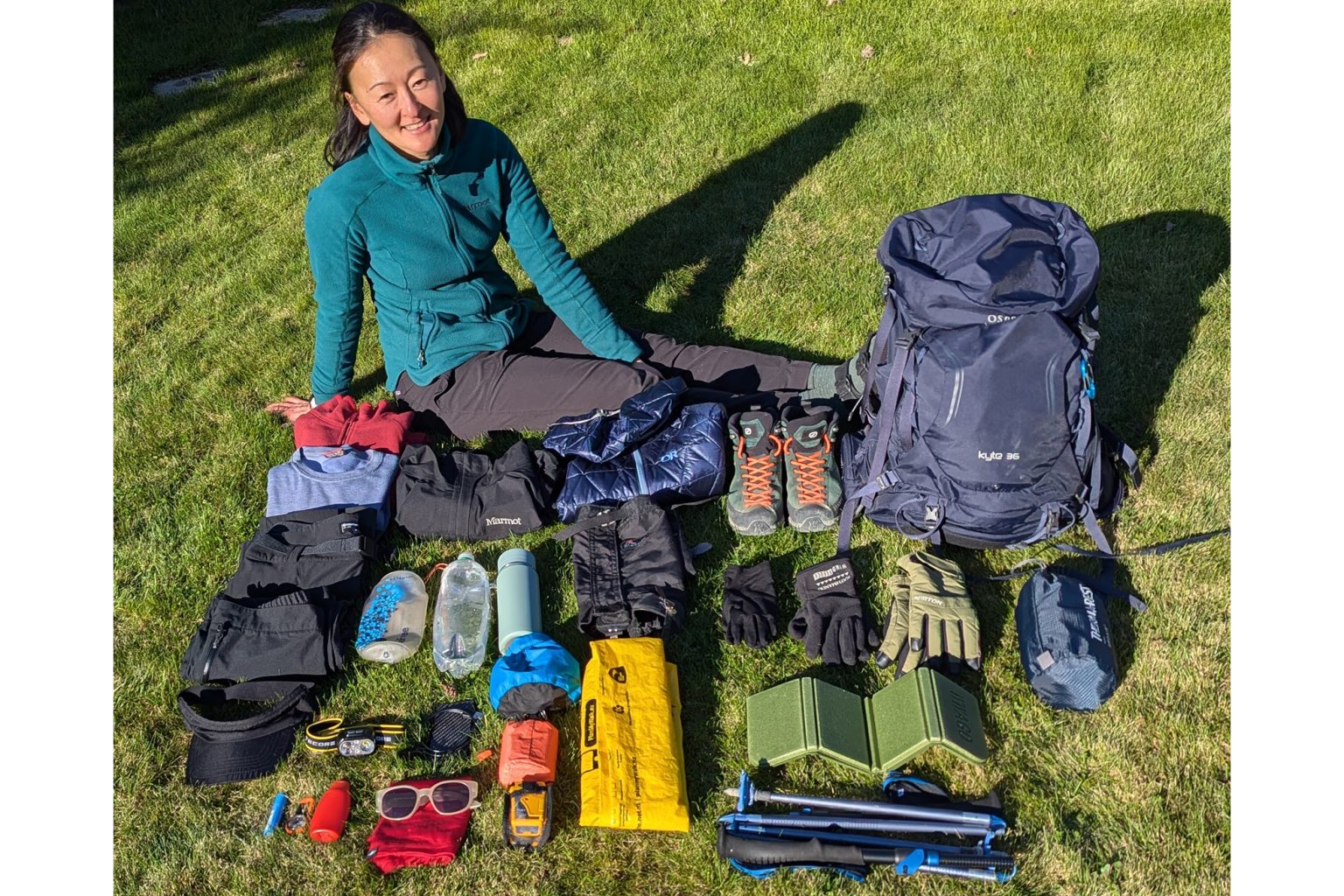
Tina’s existing gear
→ Hydration A 1.5l plastic bottle; Salomon soft 500ml flask for electrolytes; Temu 500ml insulated tea flask; Katadyn BeFree water filter 0.6L
→ Safety/emergency Ocean Signal RescueME PLB1; first aid kit; repair kit; emergency lightweight foil-lined bivvy bag; Therm-A-Rest NeoAir XLite NXT sleeping mat; Nitecore UT27 headlamp
→ Head/eyes/hands Mountain Designs merino lightweight neck gaiter; Icebreaker merino midweight beanie; DHB sun visor; Icebreaker Oasis 200 merino glove liners; Burton water- proof ski gloves; Kathmandu wind fleece gloves; Szade sunglasses
→ Clothing
Base layer – Earth Sea Sky midweight long sleeve top; Marmot Portal softshell pants
Midlayer – Outdoor Research Chain Reaction synthetic hooded puffer jacket; Mountain Warehouse Camber II half zip fleece
Outer – Marmot Gore-Tex Minimalist jacket; Marmot Minimalist rain pants
→ Equipment Scarpa Mojito GTX boots; Macpac Torlesse gaiters; Black Diamond FLZ trekking poles; Temu sitting pad; Osprey Kyte 36 pack; Gregory Jade 62 pack; MSC pack liner; Nitecore NB10000 Energy Brick; Garmin Forerunner 735XT watch; Decathlon Forclaz mini orienteering compass; Sunscreen, lip balm, poo kit
Gear Tina needs
→ Helmet
→ Ice axe
→ Crampons
→ Avalanche kit: transceiver, probe, snow shovel
→ Bothy bag
Gear Tina is curious about
→ Intermediate-level mountaineering boots and crampons.
Tina’s budget
Tina doesn’t have a specific budget but would like to invest in quality gear that will endure as her skill level progresses.
Helmet
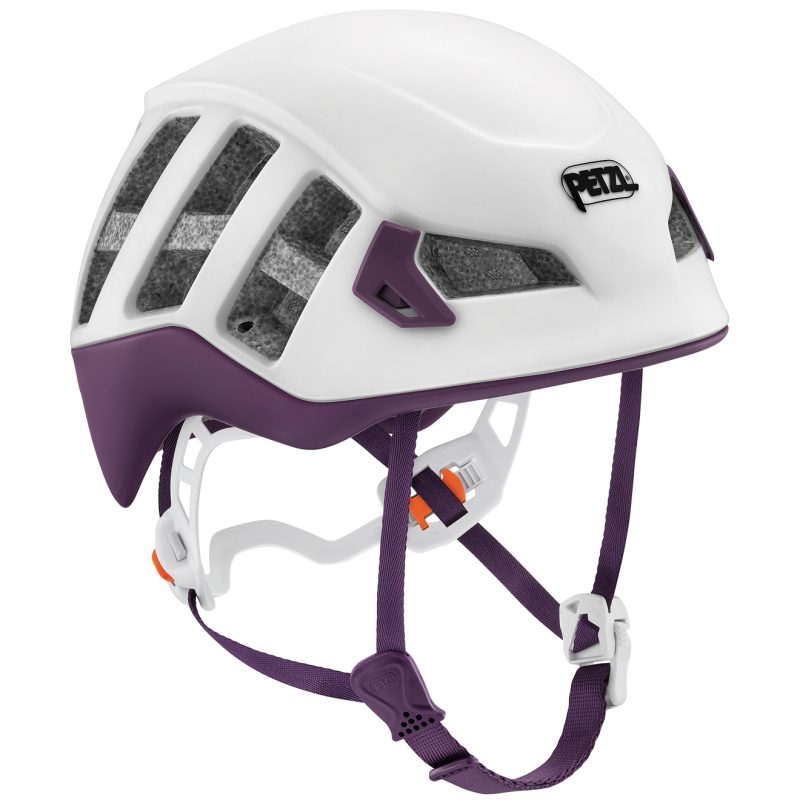
Tina’s climbing helmet options fall into two categories: a highly durable ABS plastic shell helmet, or a lighter polycarbonate shell helmet, popular with both rock and alpine climbers. Both have shock absorbent liners made from EPP or EPS foams, or a combination. Both helmets pass international mountaineering standards, but the first will withstand the rigours of trips into the hills better than the second, which would be in the region of 80–100g lighter but more expensive.
Wilderness pick: Petzl Borea Women’s Climbing Helmet (ABS/EPP/EPS) $155, 305g; or Petzl Meteora Women’s Climbing Helmet (Polycarbonate/EPS) $219, 225g
Ice axe
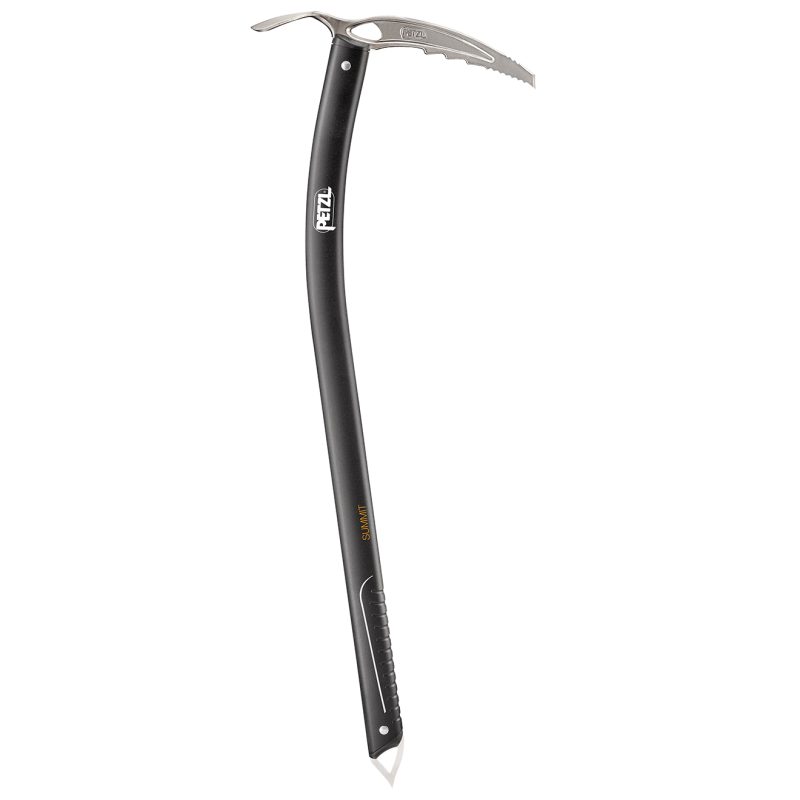
Tina’s ambition is to advance to intermediate alpine climbing, so her most future-proof option would be to buy an entry-level technical tool that pairs with a matching hammer (which could be bought later). Alternatively, she could start with a slightly longer and lighter standard mountaineering axe for winter tramping and grade 1 climbs and progress to a more technical tool later. We advise seeking expert advice to choose the correct axe length.
Wilderness pick: Black Diamond Venom (technical, available in axe and hammer versions) $299, 514g; or Petzl Summit (classic mountaineering, axe only) $289.90, 360g
Bothy bag
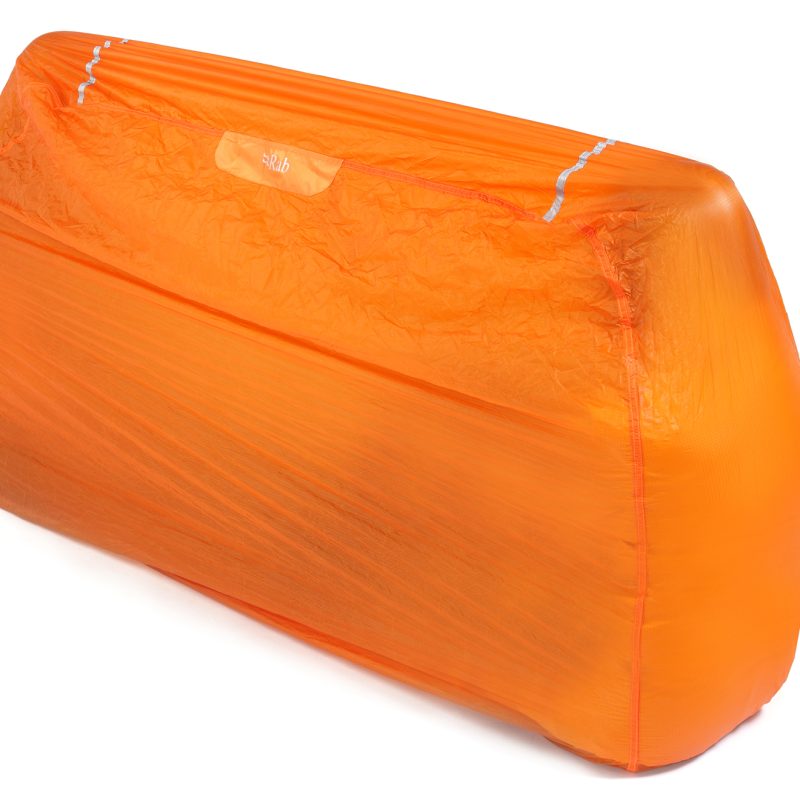
These are popular in the UK and are being slowly adopted in New Zealand. They are oversized bivvy bags designed to fit two or more people in a seated position. They’re excellent survival shelters but also provide convenient protection from rain and wind for breaks in exposed places.
Wilderness pick: Rab Emergency Superlite Shelter 2 $229.95, 240g
Intermediate-level mountaineering boots
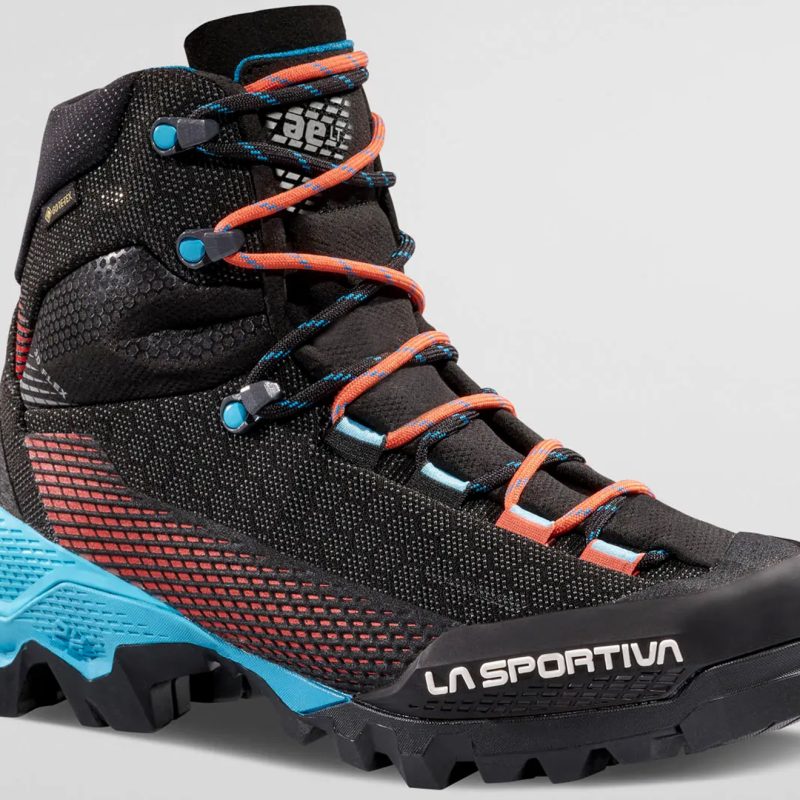
Tina needs a stiffer boot than her current lightweight Scarpa Mojito for safe crampon use. The most suitable boot would be one that has a little bit of sole flexibility so that it’s comfortable for approaches and the walking involved with Grade 2 climbs, but stiff enough for small amounts of front pointing on crampons. Both of our recommended boots are at the lighter end of the range.
Wilderness pick: La Sportiva Aequilibrium ST GTX Womens $799.95, 1030g (pair); or Scarpa Ribelle HD Womens $699.99, 1160g
Crampons
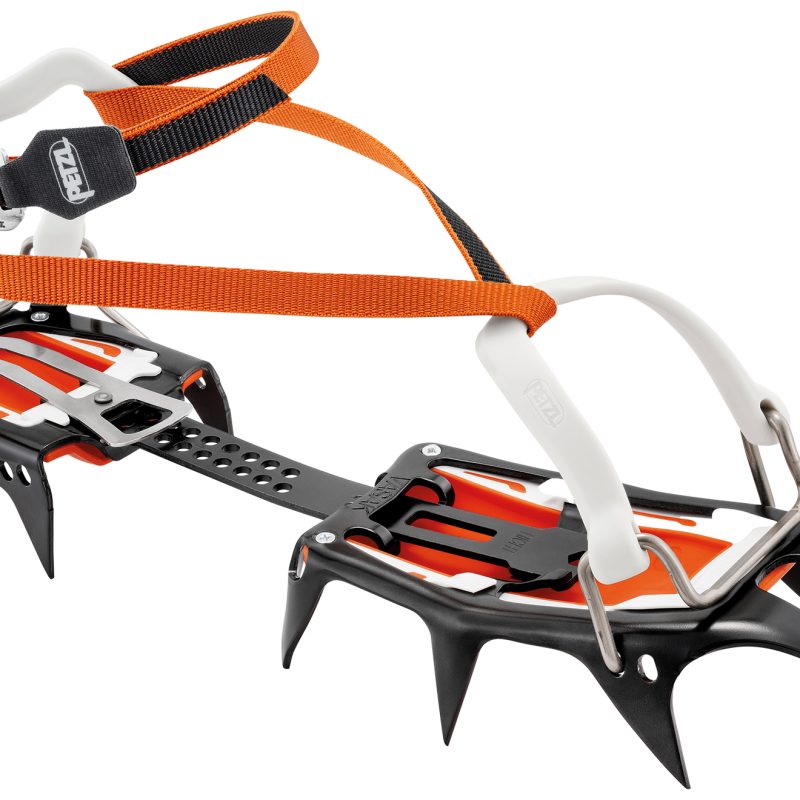
The most versatile crampon will be a C1-rated flexible model that attaches to the boot with straps and plastic heel and toe cradles. Our first suggestion is entry–intermediate level, while the second is a more technical entry–expert level crampon with a binding that can be upgraded as Tina’s climbing progresses. The most future-proof option would be the Petzl Vasak, which can be optionally upgraded from Flexlock binding to Leverlock, allowing them to clip (instead of strap) onto boots with heel welts. For boots with a toe welt, a toe bail can also be added to the crampon for an even more secure fit.
Wilderness pick: Grivel G10 Evo New Classic $299.99, 806g; or Petzl Vasak Flexlock $395, 895g
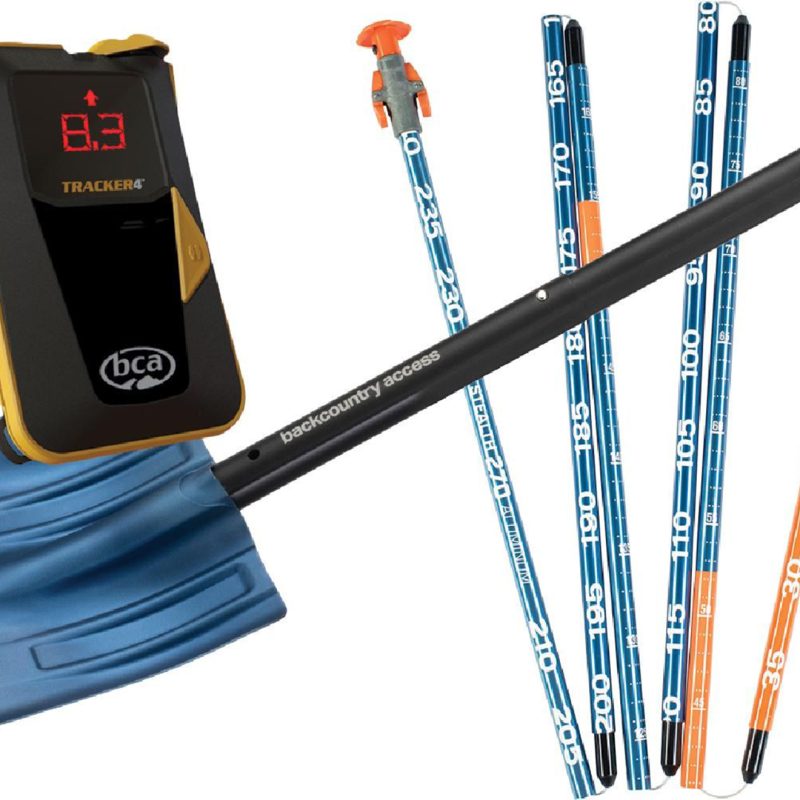
Avalanche kit: transceiver, probe, snow shovel
Tina’s risk-aware approach for backcountry adventures is sensible. All of these components can be purchased individually, but there are packages that include a transceiver, probe and shovel. Our recommended one has a highly regarded beacon.
Wilderness pick: Backcountry Access T4 Rescue Package $1059.99, 1950g
Comments and additional recommended gear
Tina’s current rain shell, a Marmot Minimalist, is unsuitable for mountaineering because the hood is not designed to fit over a helmet and the pockets may be obscured by a climbing harness. Additionally, a two-way main zip is helpful for use with a harness.
Likewise the Minimalist rain pants are also unsuitable because they cannot be put on while she is wearing crampons. We recommend a pair of overpants with full-length leg zips.
Tina’s sleeping mat, while a very good one, is rated to R4.5 which means she may feel the cold during winter use. Using some closed cell foam would extend her mat’s temperature range, or she could consider a warmer mat with a higher R-value for winter use.
Do you want some gear advice? Send a brief email to the editor to tell us about your needs.