The origin of ‘cornflake’ forests
The first time I heard of cornflake forests, I thought ‘how curious’ and ignored it. But the mention of it again in Emma Shuttle’s ‘What’s in my pack’ article (Jan/Feb 2026) piqued my interest and the search was on.
In case other readers were as mystified as me, here are the results.
Searching ‘cornflake forests’ online returns one relevant result: a 2024 Vancouver Sun interview with Dr Suzanne Simard, who is best known for popularising the ‘wood-wide web’ theory of mycorrhizal fungal networks.
It seems the term ‘cornflake forest’ is a reference to the layer of crunchy leaves carpeting the forest floor. Hence New Zealand beech forests. And lo and behold, when I search ‘cornflake’ on the Wilderness website, I find you got there first!
In his 2016 article ‘Ghosts in the landscape’, Mark Watson writes: ‘Sweat glazes my forearms and a trickle tickles my temple. Beech leaves crunch like cornflakes beneath our tyres.’
Bingo.
– Andrew Spanner
– Andrew receives a $100 Firepot food voucher from www.furtherfaster.co.nz. Readers, send your letter to the editor for a chance to win.
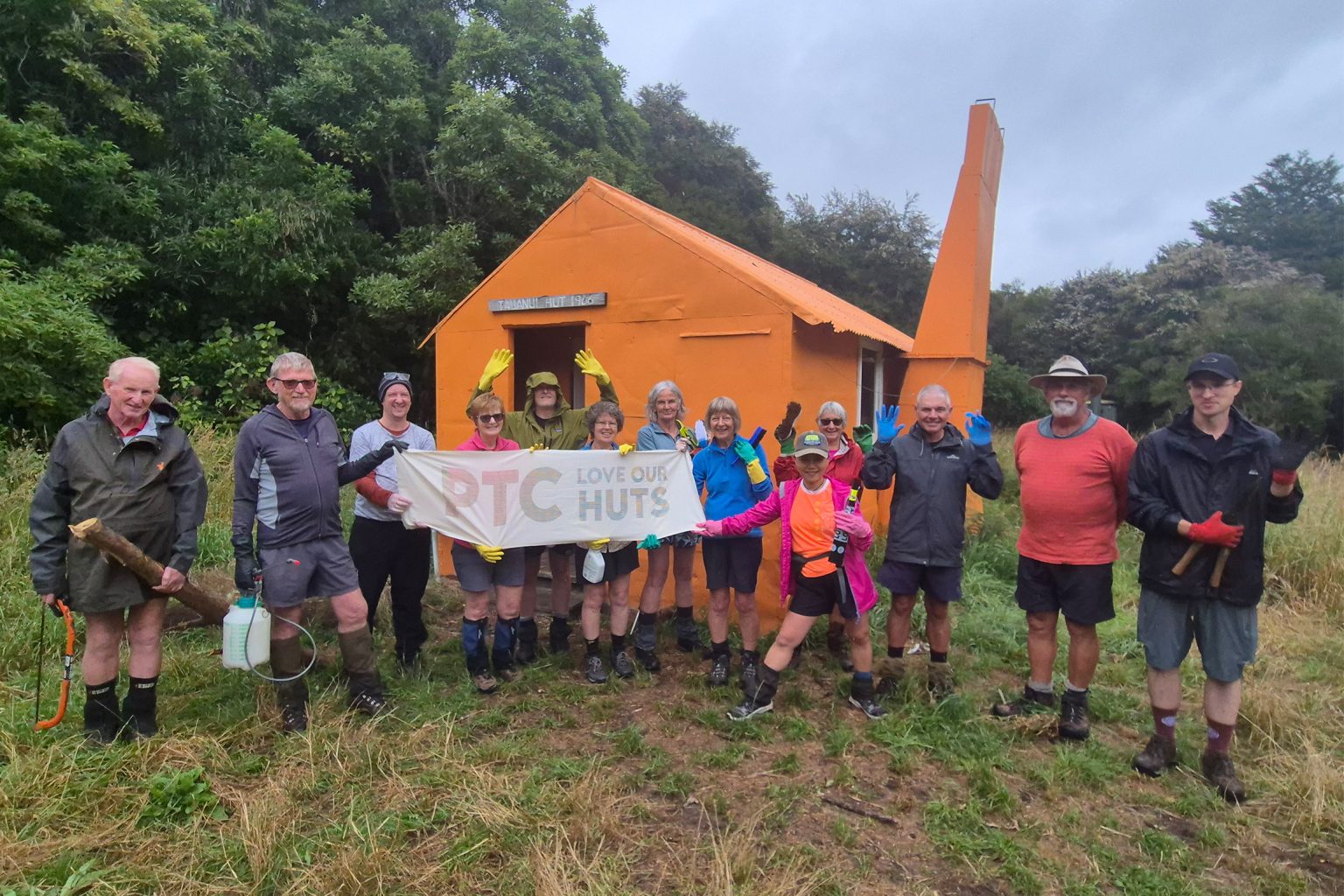
Tauanui Hut spruced up
In January, members of the Parawai Tramping Club repeated the trip to Te Maunga as described by Sam Harrison in his April 2024 article.
We had signed up to clean Tauanui Hut as part of the FMC’s Love Our Huts campaign. After the easy ramble up the river, we spent the afternoon cleaning the hut and toilet inside and out.
Inspired by the article, we decided to camp at the hut and climb Te Maunga the next day.
We were pleased to find that new pink tape markers and some branch cutting made this a pleasant trip with no issues finding our way up or down.
– Peter Davis
Using public transport for the Heaphy
I enjoyed your editorial on using public transport to access the outdoors published in the October 2025 issue (see also ‘Trains, busses and automobiles‘).
In 1973, two 15-year-old girls finished their school certificate exams and headed north from Dunedin to walk the Heaphy. We were small and our packs were huge – heavy hand-me-downs full of far too much.
We took the train to Christchurch then the rail car to the West Coast, which stopped at dawn at the Waimakariri Bridge to drop off climbers. From Greymouth we then bused to Karamea. Being very naive, we weren’t aware that the track didn’t start there, but a kind truckie took us to the end of the road.
At the other end we found out that Collingwood wasn’t actually right at the end of the track but was some way off, so we walked down the road to the first farm. The milk truck took us to Tākaka where, after a night camped in the public toilets, we bused to Nelson then on to Blenheim, from where we took the train home.
Public transport was an option back then because we had no time constraints.
Another thing to note is that we had no tent but just assumed that we would use the huts. No booking. I suppose we were lucky that it was still pre-season.
– Martha Truelove, New South Wales
Energised by Walk1200km
I finally signed up for the Walk1200km challenge and subscribed to Wilderness, having pondered it for more than a year.
The need to get fit for a tramp with friends who are keen walkers prompted me to set a personal challenge for myself this year. I like the idea of recording my daily kilometres for no other purpose than to challenge myself to get outdoors and do the mahi to get fit.
I enjoyed the article ‘50 great walks for kids’ (Jan/Feb 2026) – easy short hikes to get you match fit and to explore walks on your doorstep.
I like the can-do ethos and positivity Wilderness magazine displays. It inspires action and self-reliance. I am energised by Walk1200km and have recommended it to friends.
– Philippa Bascand
Mining the Denniston Plateau poll
After publishing the story ‘The last plateau’, about why the Denniston Plateau should not be mined for coal, we polled our newsletter readers on their thoughts. The results: 78% of respondents said under no circumstances should the plateau be mined, 13% said mining should be allowed but in a less invasive way, and 9% said the mine should go ahead as planned. Here are some of the responses we received:
These areas are sacrosanct, priceless treasures to preserve for future generations. Short- term greed drives these companies and their shareholders.
– Tom Milliken
This is such a unique area which has evolved over many thousands of years. We do not need to be mining fossil fuels to add further damage to the environment with polluting coal. Past efforts at post-mining remediation are far from satisfactory.
– Catherine Miller
Short-term gain for long-term pain!
– Pip McNaughtan
The project will also contribute millions to local and regional conservation efforts. These have already led to significant gains on the Heaphy and other areas.
– Richard Tacon
– Sign up to the newsletter to participate in our polls.