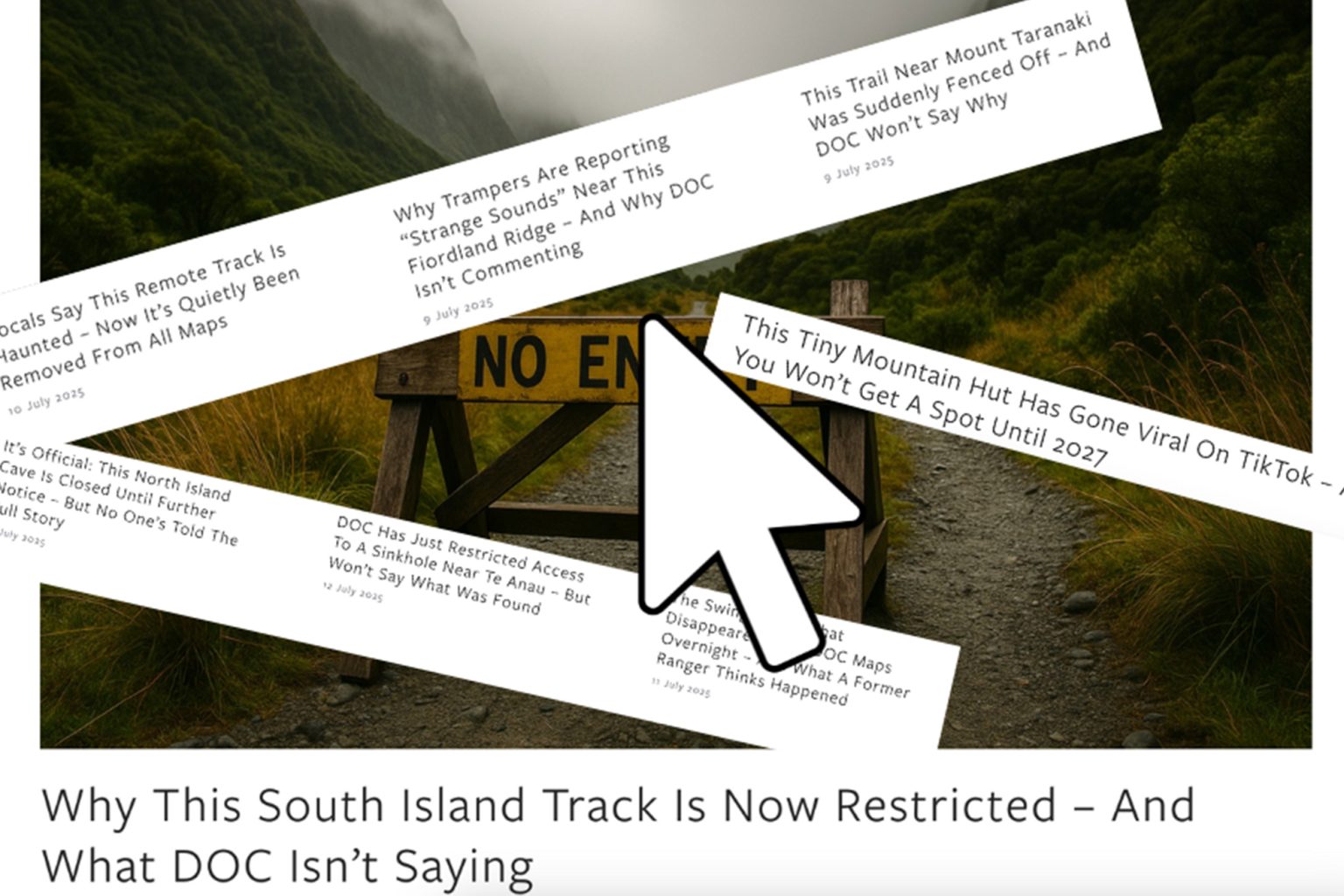
False articles about tracks, huts and other location closures are causing controversy and concern.
After apparently AI-generated articles containing false information about backcountry tramping were published online and shared in social media posts, DOC is warning people to make sure their information comes from legitimate sources.
Morningside.nz contains information about businesses in the Auckland suburb of Morningside. Since early July, however, a ‘news’ tab on the website has published numerous false articles about DOC.
Headlines include ‘DOC shuts down access to this popular river crossing after “unusual activity”’ and ‘Locals say this forest path was cursed decades ago – now DOC has blocked access’. The articles follow similar patterns, mentioning a ‘backcountry walk’ and referring to ‘iwi conflict’ or the discovery of ‘taonga’. Other articles imply there are hidden tracks only known to locals or popular huts that are fully booked and unusable.
Places named are non-existent (such as ‘Waikiriri Crossing’) or incorrect (‘North Burn’ track between Lakes Te Anau and Manapōuri). (There is a North Branch of the Route Burn but it is not in this area.) Some articles claim to cite ‘former rangers’ or ‘locals’, using first names only and no other identifying information. The articles do not have a listed author, and each contains multiple advertisements.
The articles exhibit several hallmarks of AI-generated information: details are vague; no full names are given; and images are smooth, photorealistic illustrations with discrepancies, such as a pine forest surrounding an alpine lake.
“We are aware of a number of articles linked to the Morningside website claiming that DOC-managed locations are closed,” said Andy Roberts, DOC’s visitor safety and standards manager. “We have spoken with the owner of the website and understand they are working to remove these pages.”
Roberts said DOC will always quote a named person in communications with the press, not a vague ‘spokesperson’.
Former owner of the domain and operator of the website Rod Ballenden told RNZ that the site had been hacked and it was difficult to remove the articles. According to the New Zealand Domain Name Commission, the domain ownership was changed on July 2 and is now registered to someone apparently based in Hungary.
Wilderness found articles from morningside.nz being shared with tens of thousands of users on New Zealand-based Facebook groups. At least two of these pages also posted other conspiratorial misinformation, such as suggestions that Māori are not the Indigenous people of New Zealand and that the Paris Climate Agreement is a form of government control.
Comments on these posts seen by Wilderness included the suggestion that the false track ‘closures’ are because DOC is hiding information about mass graves, evidence of pre-Māori settlement in New Zealand or because the conservation estate contains valuable minerals that DOC wishes to profit from.
The false information displayed on the website is an example of how, in this AI era, people use content depicting New Zealand’s outdoors to try to make money from digital searches for information. A previously legitimate website, morningside.nz ranks highly in search results. With high public interest in New Zealand’s outdoors, and with six or more advertisements in each story, it’s possible to generate revenue by publishing information regardless of whether it is true or not.
Roberts emphasised that people should verify the information they read. “To keep people safe and well-informed before they head outdoors, it’s essential people know the DOC website is the source of truth about DOC locations, and any closures or alerts are posted there.”