You don’t have to venture out at night to catch a glimpse of New Zealand’s only remaining native owl
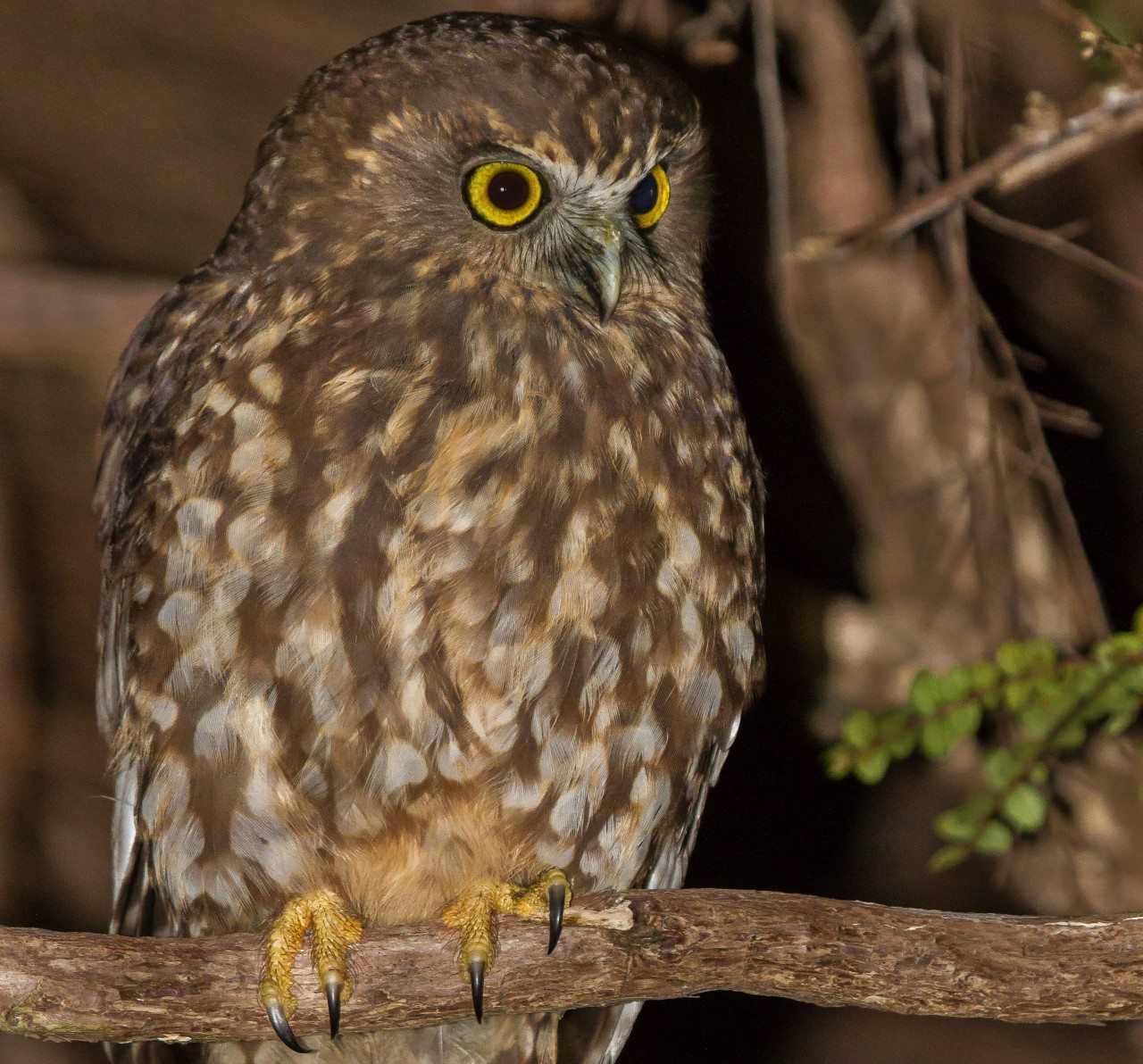
It’s a shame we don’t do more tramping at night. If we did, we’d see the morepork, or ruru, more often. It’s not uncommon, however, to find one roosting during the day on a tree branch in darkly forested areas. However, you’ll only hear the vocal ‘morepork’ call at night. If you hear two that appear to be calling together in a ‘duet’, it is usually rival males duelling.
The morepork is a nocturnal bird, one of only four New Zealand raptors (birds of prey) and the only remaining native owl.
Morepork can be found in both native and plantation forests and are relatively common throughout much of the country, but sparse through the eastern and central South Island. They are relatively small, just 30cm long and weighing around 175g. Their most striking feature is the bright yellow eyes which are set into two facial disks either side of a small sharply hooked bill. The bird’s legs are also yellow and are feathered right down to their feet.
During the spring/summer breeding season, moreporks make their nests in tree cavities and broken logs, or holes in earth banks. The 1-3 eggs are incubated (25 days) by the female and chicks fledge when about seven weeks old. Both adults feed the young.
Moreporks have serrated or comb-like wing feather edges which reduce air turbulence over the wing, leading to silent flight and enabling them to catch and consume a wide variety of small animals, including insects, birds (especially silvereye), and mammals. Indigestible material is ejected through the mouth as a tight, dense pellet.
– Matt Winter is a Marlborough-based nature photographer
An ethical guide to visiting the Muriwai gannet colony
Trending Now
Green Point Hut, Gamack Conservation Area
The possibilities of packrafting
Every Tararua hut reviewed and ranked
The Tararua’s forgotten traverse
Leaning Lodge, Rock and Pillar Conservation Area
Subscribe!
Each issue of Wilderness celebrates Aotearoa’s great outdoors — written and photographed with care, not algorithms.Subscribe and help keep our wild stories alive.