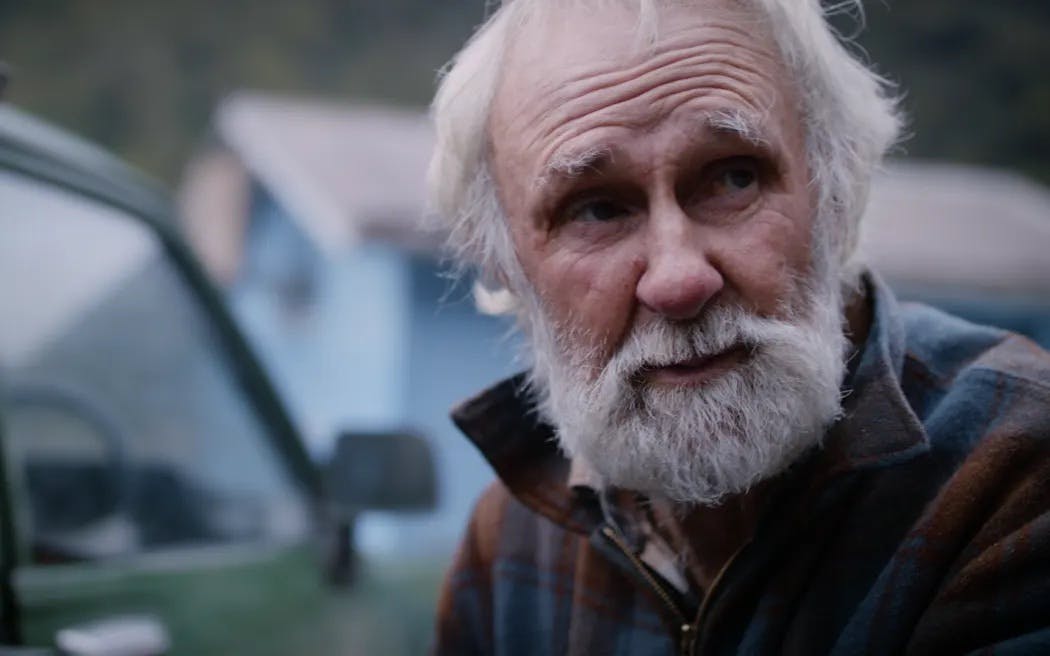
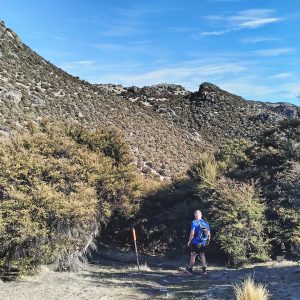
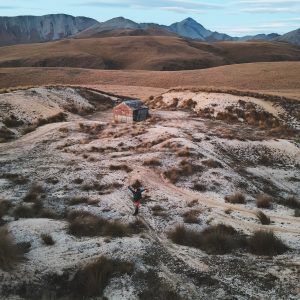
As of Wednesday, search teams have spent more than 750 search hours looking for Roy Arbon, 75, who has been missing since he set out on a walk up Mt Davy to Mt Sewell near Greymouth on 23 July.
Arbon left behind a a handwritten note. “Gone for walk. Mt Davy to Mt Sewell. Back tonight or tomorrow morning,” the note read. After finding the note the following day, a concerned neighbour raised the alarm.
On Monday, the rescue team got a lead after polling on Arbon’s phone pinpointed his last position. It showed that at 2.39pm on 24 July, Arbon was roughly 1km north of Sewell Peak’s repeater and 2km south of Mount Davy. That appears to be the last time his phone was active. On Tuesday, police found Arbon’s bicycle on a nearby trail Rewanui Road.
Arbon was working for the Antarctic division of the Department of Scientific and Industrial Research in 1979 when Air New Zealand Flight 901 crashed into Mt Erebus and assisted with the rescue efforts.
In 1995, Arbon also assisted in recovering the bodies of 14 people who died when a viewing platform collapsed at Cave Creek.
Police continue to ask the public to report any information regarding Roy or his whereabouts via our 105 service, referencing file number 250725/2139. Read more from RNZ.
Anti Crow Hut gets makover, added to booking system
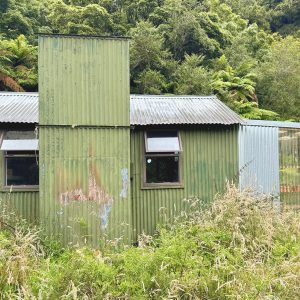
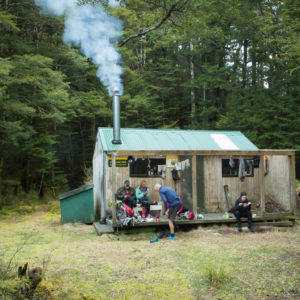
Anti Crow Hut up the Waimakariri River valley was rat-infested and a tree had fallen through one of its walls. But it’s now in perfect condition after a renovation by the Back Country Trust.
“It was a massive job, bigger than anyone first thought, but the result is a dream make-over for Anti Crow Hut which now boasts a log burner, new windows, a new roof, handmade furniture inside, a new deck and new sleeping quarters with space for six to eight people,” said DOC North Canterbury senior ranger Gavin Collis.
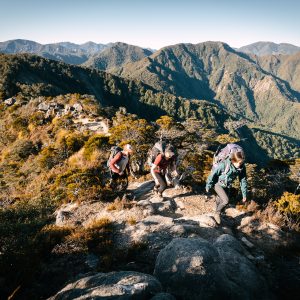
Anti Crow Hut sits in a stunning location and is a two to three hour walk from SH73. View the map, route notes and GPX file here. The hut will be on the DOC booking system from Friday August 1, 2025. Read the full story from Wilderness.
DOC defends plans to charge for parking at three tourist hotspots
DOC is defending plans to charge for parking at three tourist hotspots, saying it’s a common practice around the world and a way for visitors to contribute to the facilities and nature they enjoy. DOC is about to trial paid parking in its car park next to the new Punangairi Visitor Centre in Punakaiki, and at Franz Josef and Aoraki Mt Cook.
DOC senior project manager John Dore says the parking charges do not contravene the National Parks Act. “The Conservation Act 1987 allows for charging fair and reasonable fees for the use of facilities within conservation areas, which includes DOC car parks, backcountry huts, and campsites.“ Charging for car parks was common practice in national parks around the world, Dore said.
Punakaiki café owner Grant Parrett disagrees and says DOC is effectively charging people to visit a National Park. “It’s on State Highway 6, the Coast Road, and people like to stop off there on a long drive and stretch their legs. But if you force them to use the DOC car park you’re effectively charging them an entry fee to the national park.” Read the full story from Stuff.
Track to Te Karaka Stingray Bay ‘won’t be reinstated’
Walking access to a bay next to one of the country’s top tourist destinations won’t be reinstated following extreme weather events in February 2023. Department of Conservation said restoring the track to Te Karaka Stingray Bay next to Mautohe Cathedral Cove has “significant difficulties“, as well as being too costly with risks to visitors.
DOC’s Coromandel operations manager Nick Kelly said it’s a disappointing outcome. “The current steps are gradually being twisted by a slow-slip landslide which over time will require significant maintenance if access is reestablished.” Kelly added that the cliffs surrounding the beach are “highly unstable”, and there are active rockfall areas and limited practical options for mitigation.
Stingray Bay can still be accessed from the sea, but visitors are warned to check the weather, sea and tide conditions. Read the full story from Stuff.
Taranaki Crossing taking shape with hut, track upgrades
Years after being proposed as a massive tourism draw card, the ambitious Taranaki Crossing is months away from falling into place. The overall physical work for the project – including track and hut upgrades – is scheduled to be completed in February next year.
Touted as an alternative to the Tongariro Crossing, the Taranaki Crossing is envisaged as a 19km track through some of the most stunning scenery in Te Papa-Kura-o-Taranaki.
It was initially funded with up to $13.3 million from the Provincial Growth Fund (PGF), announced in September 2018. Additional funding of $3.4m was provided by the Department of Conservation. Since 2018, the costs have gone up and the total PGF contribution increased by $3.1m to $16.4m.
Venture Taranaki continues to actively support the Taranaki Crossing as part of its regional promotion activity, targeting both domestic and international audiences, she said.
“As sections of the crossing come online, we’re leveraging every opportunity to build excitement and awareness of the experience.”
It’s due to be completed in the first quarter of 2027. Read the full story from The Post.
Majority of trampers on the Great Walks are Kiwis
Nearly 60,000 people did a Great Walk last summer, with the majority of them being Kiwi trampers. Department of Conservation data showed that 60% of those trekking the paths between December 2024 and February 2025 were New Zealanders.
Last summer, almost 670,000 bed nights were booked at huts, campsites and Great Walks – an increase of 12% on last year. More than 450,000 bednights, 70,000 of which were in huts, were booked at non-Great Walk campsites over this period.
Aside from the Heaphy Track, Whanganui Journey and Lake Waikaremoana, all Great Walks were at or near capacity over summer. For the 2025/26 season bed night bookings for the nine Great Walks increased overall by 7% compared to the previous year.
DOC’s report showed that landscapes and scenery remain top attractions for international visitors while short walks were still the most popular outdoor activity across the board.
“Over summer, international visitor numbers were back to 93% of pre-Covid figures with more than 50% heading to a national park during their visit, said heritage and visitors director Catherine Wilson. Read the full story from Stuff.