Although the logistical challenge of building an 85km track over a mountain range is significant, those involved in the community project say maintaining the belief that it will be worthwhile is critical.
Self-belief is an important part of any project. But when that project relies on dozens of people donating their time for several years to create something that’s quite literally between a rock and a hard place, then it is absolutely essential.
“If we all knew then what we know now, it wouldn’t have been such an effort,” Wayne Pratt says. “We didn’t know it was going to work out.”
Pratt was one of the first to become involved with the Old Ghost Road after he met American Marion Boatwright, who was building a lodge at the end of the Mōkihinui Gorge and became the driving force behind the trail.
“It was just this map that we’d got and a vision he [Marion] had. Initially we all just chipped in and it got bigger and bigger.”
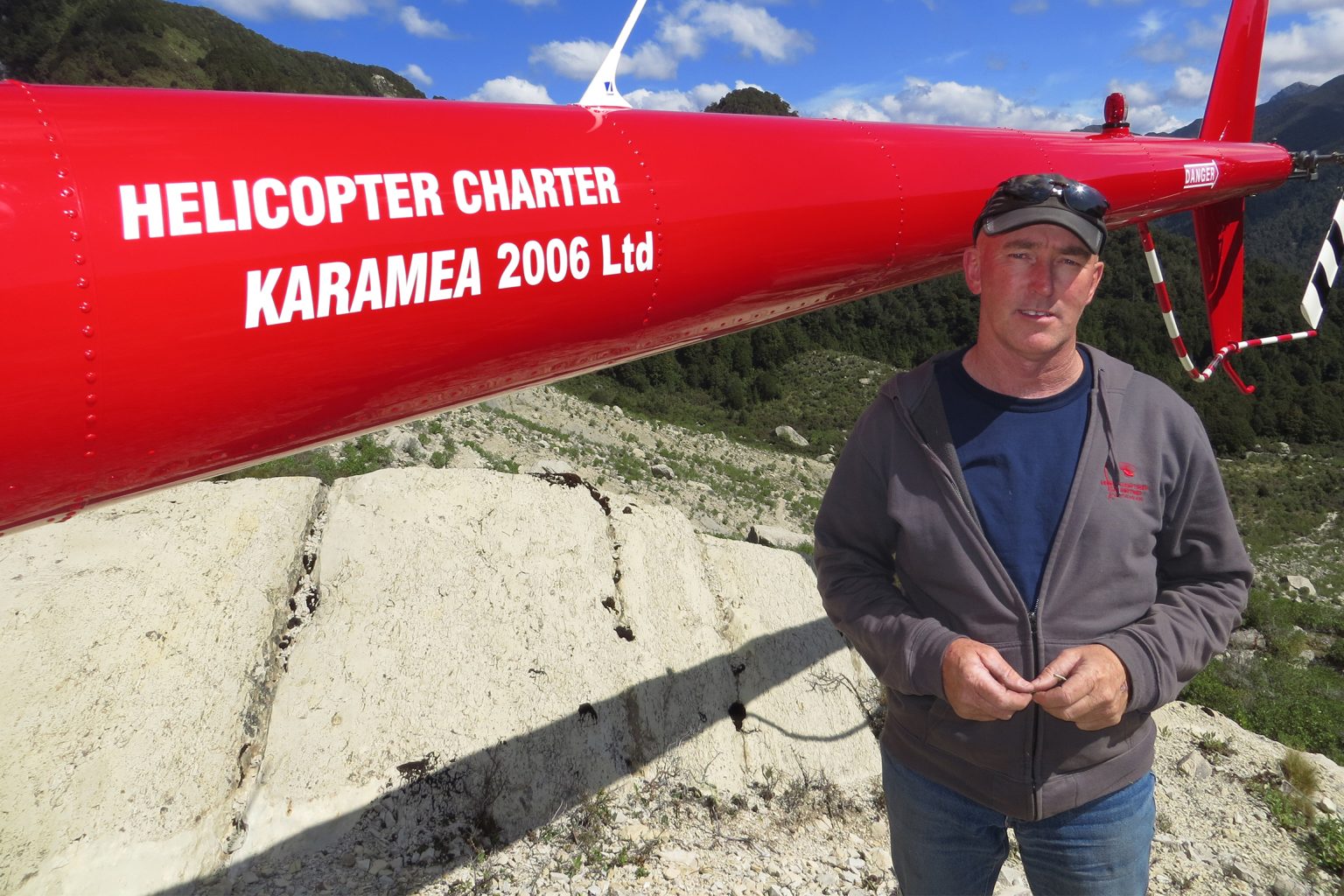
Pratt was working as a helicopter pilot, and his aerial contribution – much of which he did free of charge – was essential for the scoping and construction of the trail. His is part of a volunteer contribution that’s estimated at $1.8m, on top of the $5.8m actually spent on the project.
Reflecting a decade on from the trail’s opening, Pratt says that this immense volunteer contribution relied on the sometimes shaky belief that the Old Ghost Road would be worthwhile in the end; that one day people would turn up to tramp and ride it and pay money for the privilege.
“We had to convince ourselves, as well as everyone else that we tried to involve, that it was going to be a success.”
Pratt had already experienced what a community-built trail could deliver. While based in Southland he’d worked as a helicopter pilot on the construction of the Humpridge Track.
“It was a wonderful thing for Tūātapere,” he says. “The town really needed it. It was very much a rural backwater, a dying town, and … the Humpridge helped. So I knew if this worked, it would also be very beneficial.”
So how do you keep up morale on a project that faces numerous obstacles and takes nearly a decade and millions of dollars to complete?
Pratt says it’s essential to have a leader championing the project. For the Old Ghost Road, that role was filled first by Boatwright and then, when he returned to the US, by Phil Rossiter.
“You’ve got to have someone who really believes in it, and without either of those two it wouldn’t have happened,” Pratt says.
For Rossiter, however, that self-belief was underpinned by a lot of work to ensure it wasn’t empty optimism. His advice for future trail builders is to scope the project rigorously first.
“You need to have looked at it from all angles and be sure that the reasons you’re doing it are good, and for the public good,” Rossiter says. “If you’ve asked yourself the same questions a thousand times and keep coming back to the same answers, then back yourself.
“Luckily the allure, the promise and the belief were enough to keep us going. Looking back now, if I’d had a sense of how magic these trails are for people and the planet, then I probably wouldn’t have questioned myself so often.”
Completing the track was just the beginning of the journey, however. Maintaining an 85km trail through rugged alpine terrain in one of the wettest parts of the motu is arguably an even harder task. Most years, the trail’s proceeds cover costs and external funding is only required when extreme weather events cause significant damage. It’s a job that still relies on volunteers and goodwill, though.
Greg Franks has spent more time on the Old Ghost Road than anyone else. For the last seven years he has led the maintenance of the track, and he volunteers about half of his time.
“It’s the most rewarding job,” Franks says. “It’s a special place to work up there, a real privilege. Everyone feels like they’re on holiday and all the punters that come through thank you for your work. Everyone’s really grateful.”
The trail draws volunteers from all quarters. Canterbury University’s Student Volunteer Army recently pitched in to help clear the track of debris.
“If everyone charged for every minute of their time it wouldn’t be anywhere near the quality that it is,” Franks says. “I’ve done a lot of trails and the standard of this one is superior to pretty much anything I’ve been on – and it only gets better and better.”
His advice for prospective trail builders is also around good leadership.
“I’ve seen other trails that started off with a lot of volunteers and no established leader, so they all bickered. I think it’s important to organise a team leader who actually makes the ultimate decisions.
“But the best thing you can do is start with a grubber and your time and be passionate about it.”