A round-up of news from the wild.
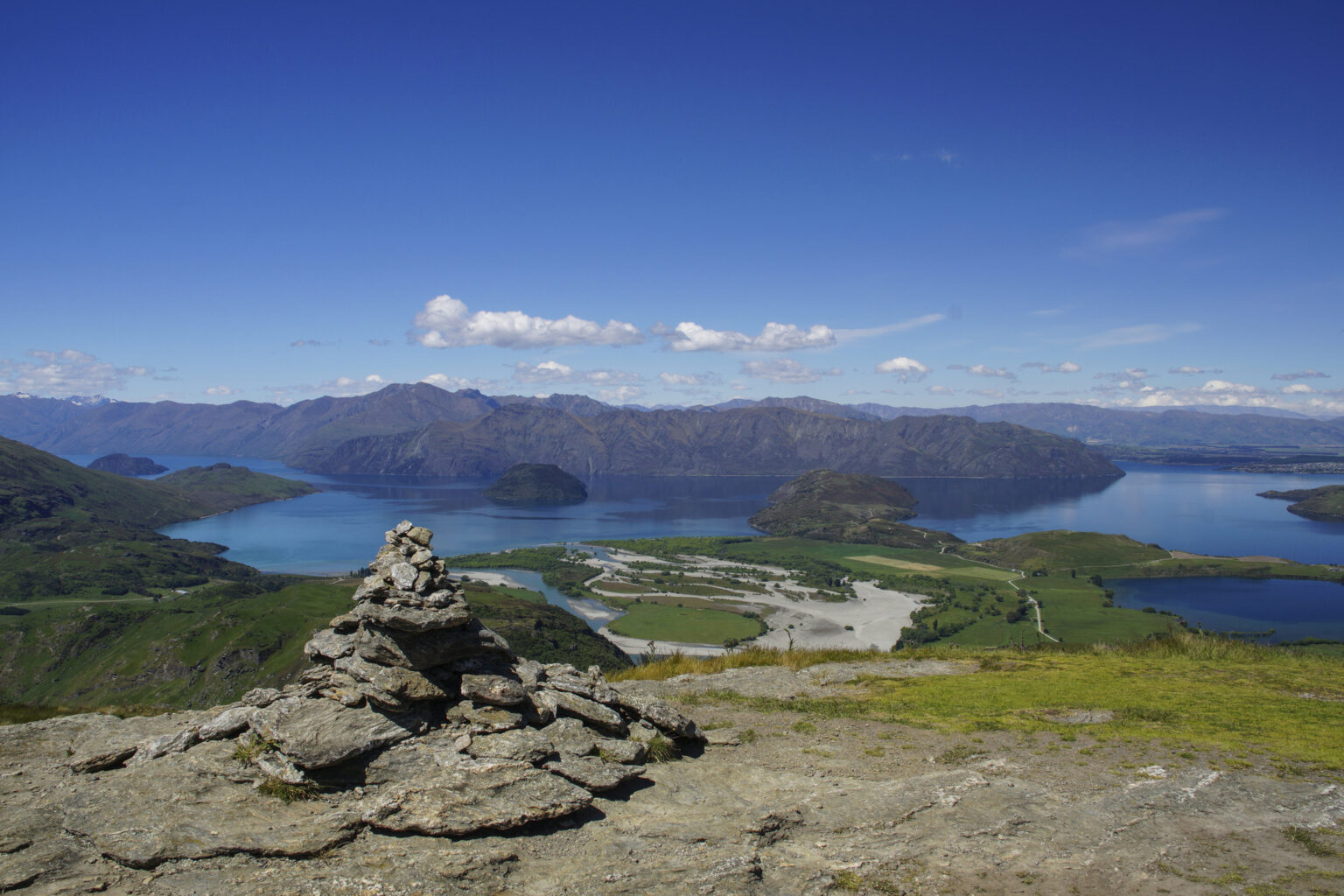
WorkSafe New Zealand is calling for the removal of unsafe rock cairns from conservation land due to safety concerns about falling rocks.
WorkSafe says that improperly built cairns have the potential to collapse, causing injury to park rangers or trampers who are passing by. A nine-month inspection programme will be carried out to assess the structural integrity of all cairns in the backcountry.
“We’re particularly concerned about cairns built with pre-Cambrian period rocks,” said a WorkSafe spokesperson. “These rocks have an abnormally high-density index and are often quite smooth, making them more likely to slide off a stack.”
The spokesperson said cairns assessed as dangerous would be demolished, and the rocks removed from the area so they can’t be used again. From January 1, 2024, a permit will be required for anyone wanting to construct cairns on public land, with all rangers required to undertake a compulsory training programme in safe cairn building.
“It’s a serious issue,” the spokesperson said. “Some cairns are very large and have the potential to cause injury or even death. Even smaller stones that fall from the top of a cairn have the potential to become lodged in shoes or boots, which is also very annoying. We want to keep everyone safe. No one deserves to go home with stones in their shoes.”
Tracks containing cairns will remain open while inspections are carried out, but WorkSafe recommends trampers wear leg protection such as cricket pads.

No joke: “false” comments to be erased
The days of making silly remarks in hut books could be numbered, with a new policy from DOC banning the use of satire, sarcasm or parody. A spokesperson for DOC said there had been multiple recent incidents of people employing various forms of humour in hut books, sometimes at the department’s expense. “It’s sad that some people think it’s funny to punch down on underdogs such as government departments,” the spokesperson said.
The department also took aim at ‘misinformation’ in hut books. In one incident, someone commented that the route to the hut ‘went on forever’, when in fact the route in question most definitely takes a finite amount of time, no matter its length, or how slowly a tramper may walk. “Time doesn’t stand still for anyone, and we don’t yet have the funding to construct a track to the limits of the known universe, so comments like this are not helpful,” said the spokesperson.
In another comment, a hut user wrote the name ‘Elvis Presley’ in the ‘names of group members’ column, and even fabricated quotes from the dead pop star. The DOC spokesperson said using false names in hut books was “a bit irresponsible,” and could raise false hopes that the singer was not only still alive, but holed up in McGregor Bivouac in the Tararuas.
“For a start, Elvis would never fit inside McGregor Bivvy, so that’s just ridiculous. It would be more believable if he was seen in Pinnacles Hut in the Coromandel. And secondly, Elvis was a solo artist, so adding him as a name in the ‘group members’ column is clearly fake news. Also, the remark made about Elvis being found dead on the long-drop is distressing, and completely unsubstantiated.”
DOC has provided a list of ‘approved humour material’, which includes knock-knock jokes, so long as the person in the joke does not provide a false or misleading identity subsequent to their initial introduction. DOC denied it was unable to laugh at itself and provided the following example of an approved joke, adding, “It’s real, and we think it’s funny.”
Knock knock.
Who’s there?
The Department.
The Department who?
The Department of Conservation.
Drawings of ducks wearing silly hats would be allowed under the new rules, but no photoshopped ducks with hats, as people may think this is real, and ducks don’t wear hats.
Wilderness attempted to contact Elvis Presley in the bivvy, but Elvis had left the building.

“How did everyone miss it?” Shock as new mountain range discovered in the South Island
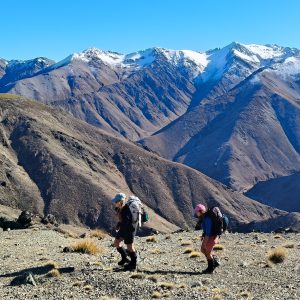
If you thought that every inch of New Zealand had been scoured over, think again. Oliver Dixon, a 44-year-old South Island dairy farmer, was flying his homebuilt plane from his property in Central Otago to Invercargill on Wednesday afternoon when he was forced to make a diversion to avoid a thunderstorm. His new course took him over a mountain range he didn’t recognise, with golden tussock tops rising to craggy summits, deep valleys and coiling rivers. He estimated the range spanned 25km to 30km long, and 15km to 18km across, with the peaks around 1700m high.
After landing in Invercargill, Dixon consulted his maps, but couldn’t find any reference to the range. Confused, he rang Land Information New Zealand (LINZ), to try to find out what he’d flown over.
“They didn’t know what I was talking about,” Dixon told Wilderness.
A spokesperson for LINZ said a team was sent urgently to the area the next day, and confirmed there was no record of the land ever being surveyed in detail. A ground crew walked up one of the rivers and found the remains of an old hut, possibly dating back to the 19th century. Other than that, no sign of human activity was found.
“It’s very strange,” the spokesperson said. “It’s a bit like discovering the lost city of Atlantis, except we didn’t even know it was lost.”
The spokesperson said the mountain range would be added to the conservation estate immediately, and likely opened up for tramping. It is yet-unnamed but has been unofficially dubbed the Dixon Bush. Dixon said he intended to keep flying his plane around the lower part of the South Island to see what else cartographers had missed.
The exact location isn’t being revealed just yet.

Moa good news
The American company behind the plan to use gene editing technology to bring back the dodo and the Tasmanian tiger has announced plans to ‘de-extinct’ the moa.
Denver biotechnology company Behemothic will work in collaboration with New Zealand’s University of Science and Technology with hope of having the first moa in 600 years walking among us by 2030. Scientists will use samples from preserved moa skeletons to sequence the moa genome, then edit stem cells from the DNA of an Australian cassowary to make a moa embryo. This could then be implanted into a surrogate cassowary or emu to gestate.
“This is incredibly exciting,” said a Behemothic spokesperson. “We’ll be helping recreate what the New Zealand bush used to look like, when these amazing creatures were clomping around, doing whatever it is moas do.”
The first moa to be reintroduced to the wild will be headed for Arthur’s Pass National Park, after a ‘welcome home’ ceremony. Further reintroductions are slated for Fiordland and the Waitakere Ranges. The bird will first be paraded on a float through the streets of Auckland, Wellington and Christchurch, and will attend a lunch reception at Government House.
But not everyone is happy with the plan to de-extinct the moa. The owner of the Bealey Hotel near Arthur’s Pass says he should be compensated if visitation to his stuffed moa declines as a result of competition from real moa. “It’s the only moa in the country right now,” the owner said. “Who’s going to come and see my stuffed moa when there’s thousands of actual moas running around like headless chooks? I’ll be the one going extinct!”
Conservation groups meanwhile have raised concerns about a possible imbalance in the ecosystem should the de-extinct moa population grow out of control, while others are worried about the potential of moa to attack small children or steal sandwiches.
The Behemothic spokesperson says a contingency plan to re-extinct’ the moa could be enacted if required.

Offshore drilling licence granted for Milford Sound
Tourists cruising the inky-coloured waters of Milford Sound could soon be greeted by the sight of drilling rigs, after an exploratory licence was granted to a Canadian company Llub Fuel to drill for natural gas. Under the licencing agreement, which will last for a five-year trial period, gas rigs will be permitted up to 500m inside the entrance to Milford Sound, but will be out of sight of the township, and not visible to trampers on the Milford Track.
Gas reserves have been known to exist off the South Island’s West Coast, but until now have never been explored this far south.
Llub Fuel said in a statement, “We’re excited to be launching this project. People from all over the world have always loved exploring New Zealand, so this is really taking exploration to the next level. We can’t wait to see what we find, and to show our people back home another side of natural New Zealand – natural gas.”
The project is expected to deliver up to $25 million to New Zealand’s economy over the next 30 years. A spokesperson for Milford Sound Cruises said its boats would likely stop short of the gas rigs on their regular cruises, but that it was in negotiation with Llub Fuel to allow guided tours of the rigs. “We were initially quite shocked that this got the go-ahead,” the spokesperson told Wilderness. “But it could potentially be a popular side-trip for our customers, and would be sold as a premium product.”
The first gas rig is expected to be erected by August.