Kayaking kinship on the river

October 2020

Read more from

October 2020

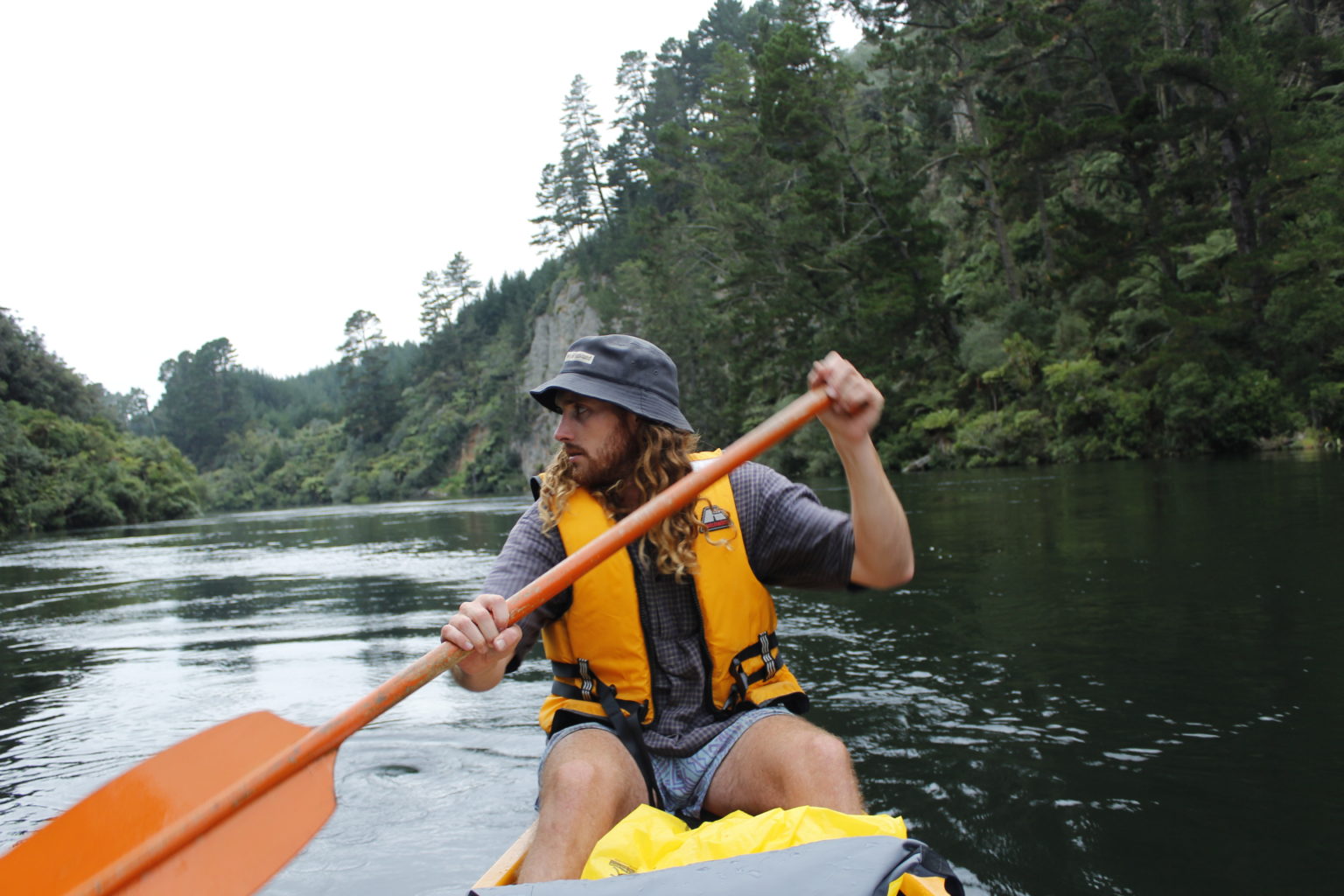
Kayaking the Waikato River cemented Kelly's sense of home. Photo: Dan Kelly

Seven adventurous Kiwis who kayaked the length of the Waikato River have released a book detailing their journey.

At the summit of Mt Ruapehu, seven Kiwis started their journey to the coast.

It was early 2017, and the adventure would see the friends spend a month kayaking the Waikato River on its slow voyage to the west coast.

Though the 425km river can be kayaked in little over a week, expedition member Dan Kelly says the group took its time to meet the locals and get to know their environment.

Unlike the Whanganui River Journey which can be enjoyed obstacle free, the Waikato is a different beast. It has eight hydroelectric dams, mosquito-infested drains and control gates to bypass, as well as the boisterous Huka Falls. And all of this on a “motley mix” of vessels borrowed and begged from friends and family.

“We had to bush bash on several occasions, and we were passing kayaks over fences and over roads, but that kind of grind is what made it so satisfying,” Kelly says.

Accommodation on the journey was as diverse as the characters met along the way, from ‘hobo camping’ in public reserves to crashing at friends’ baches.

The most interestings stays came about from a polite knock on strangers’ doors.

“It was an amazing way to meet people,” Kelly says. “They were always interested in what we were doing and why we would ever do it, but for the most part they were super supportive, and I don’t think anyone we asked turned us away.”

The inquisitive approach led to many cultural and historical lessons for the group.

“None of us had done history at school, so we had a classic blind spot of how modern New Zealand was formed,” Kelly says.

When passing through small towns, they would descend on local libraries and RSAs to get a feel for the area. Speaking to local iwi about their whakapapa was particularly confronting.

“It was quite sad in many ways – it wasn’t just the river’s health that suffered, but the prosperity of Māori who lived there,” Kelly says.

“Learning this history is a takeaway for us, especially after seeing it first hand. That history is still all there, but maybe it’s been forgotten or erased.

There were many things that were just parked on the side of the river and left.”

Water quality was another issue the group wanted to experience, from the pristine clarity of the river’s origins in Tongariro National Park to its murky conclusion at Port Waikato.

Kelly says the trip highlighted the complexity of the water quality issue, and of how many industries play a role in the river’s health.

“We expected the river to be more sick than it was, but it’s such a big body of water and it’s the smaller ones that get really nutrient clogged,” Kelly says.

“I felt like it is something a lot of people are aware of though, and they are plugging away at it in their own corners.”

Aside from water clarity, wildlife proved a reliable indicator of river health.

In the Tongariro River, the group spied whio, whose presence indicates clean water, and in the lower Waikato, they witnessed boil ups of koi carp – an introduced species that damage freshwater ecosystems. Eel and trout were seen frequently, the latter being occasionally enjoyed for dinner.

Kelly says the slow-paced mission was an incredible way to experience the country.

“It was so good not being rushed to get to the next spot and to have the time to have cups of tea with heaps of people,” he says.

“It really cemented our sense of home, and some of the commitment it would take to get New Zealand as we would like it to be.”

The group’s finished book Where The River Runs was self-published after a campaign on PledgeMe.

Matthew Cattin

About the author

Matthew Cattin

More From Wild People

Related Topics

Similar Articles

Chasing vertical

Tom’s extraordinary trip to the tippy-top of Tappy

100 peaks in one summer

Trending Now

Apply for the Shaun Barnett Memorial Scholarship

Harris Saddle and Routeburn Falls Hut, Mount Aspiring National Park

Ruahine cornered

Carrington Hut, Arthur’s Pass National Park

Dobson Loop Track, Tararua Forest Park

Subscribe!
Each issue of Wilderness celebrates Aotearoa’s great outdoors — written and photographed with care, not algorithms.Subscribe and help keep our wild stories alive.

Join Wilderness. You'll see more, do more and live more.

Already a subscriber?  to keep reading. Or…

34 years of inspiring New Zealanders to explore the outdoors. Don’t miss out — subscribe today.

Your subscriber-only benefits:

All this for as little as $6.75/month.

1

free articles left this month.

Already a subscriber? Login Now