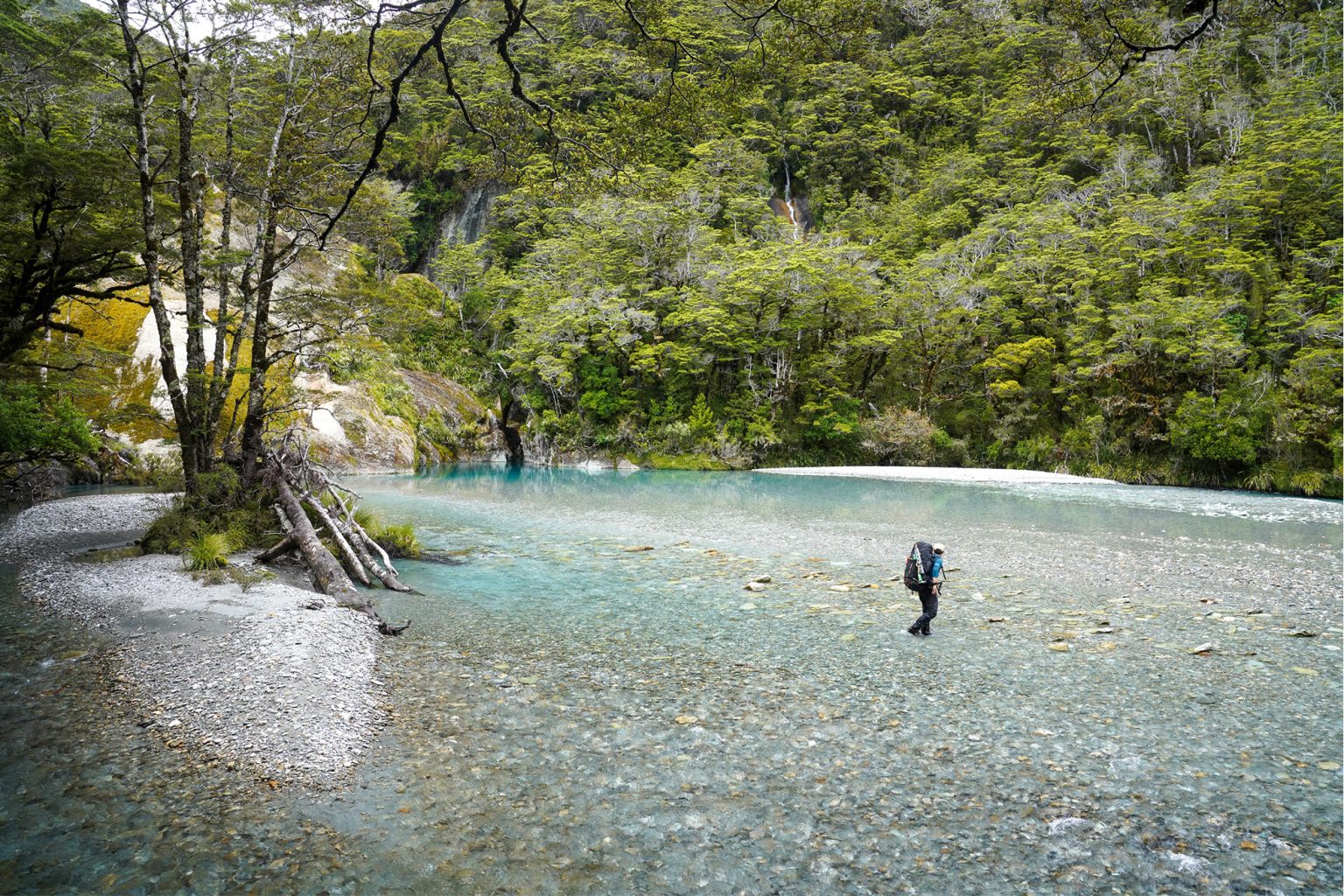
You come to an unbridged river and the car park is on the other side. Before crossing, stop and think: is it safe to cross? How can you tell?
At this time of year the weather is still unsettled and rain or melting snow in the ranges can lead to higher-than-normal river levels. How can we tell whether a river is safe to cross or not, and what should influence our decision to do so?
Speed and depth
Check a river’s speed by throwing a stick into the current. If it moves faster than you can walk, it’s unsafe to cross, even if the river isn’t deep. Deep water that is moving slowly may be okay, but once the water reaches pack height you will start to be lifted off your feet. This loss of contact with the riverbed pushes you into a forward lean, which makes you more likely to lose your footing. Consider the base of your pack the maximum depth to attempt, unless it is safe and you are ready to pack float if necessary.
Speed and depth multiply together to give force. If the water is over knee-deep it becomes hard to walk, and it doesn’t take much for the force of the river to become too much. For beginners, consider knee deep to be the maximum unless the crossing point is a calm and slow-flowing pool. Also remember that it is the depth for the shortest person in the group that counts!
A river safety course that teaches river crossing methods is worthwhile.
River level
Check if the river level is higher than usual – covered grass or vegetation on the banks is a clue. Sticks, logs and debris can be brought down during and after a flood, and strong currents may move stones and rocks, creating a rumbling sound. Debris and moving stones create hazards even if the current isn’t a problem.
Discoloured water indicates a river is in flood or may be dropping after a flood. Crossing a murky river safely is harder because you can’t see the bottom. An unseen hole or foot entrapment may be fatal.
Keeping your feet dry
It is best simply to accept that your feet will get wet. Rock-hopping to keep boots dry is not recommended as it is easy to step on a slippery or unstable rock. You could be seriously injured if you slip, and may get very wet if you fall in.
Your group
Decisions about river crossing should depend on the confidence and skills of the least capable members of the group. If members are anxious, help them to feel confident but don’t pressure them to cross. You may need to assist someone with dodgy knees, ankles or backs, or simply decide it is not safe to cross. Take particular care if you are carrying children over as they can be unpredictable.
Other options
Don’t be tempted to risk your life by undertaking a dangerous river crossing simply to reach your destination. Check the map for a bridge or alternative route. Consider waiting: New Zealand rivers can rise and fall quickly. Explore up or downstream for a safer crossing; there might be an easier spot.
Also consider turning back. Plan for this by having a map, a shelter, warm clothes and communication devices so people know what you are doing.
Only when a river has been deemed safe should you consider where and how to cross.