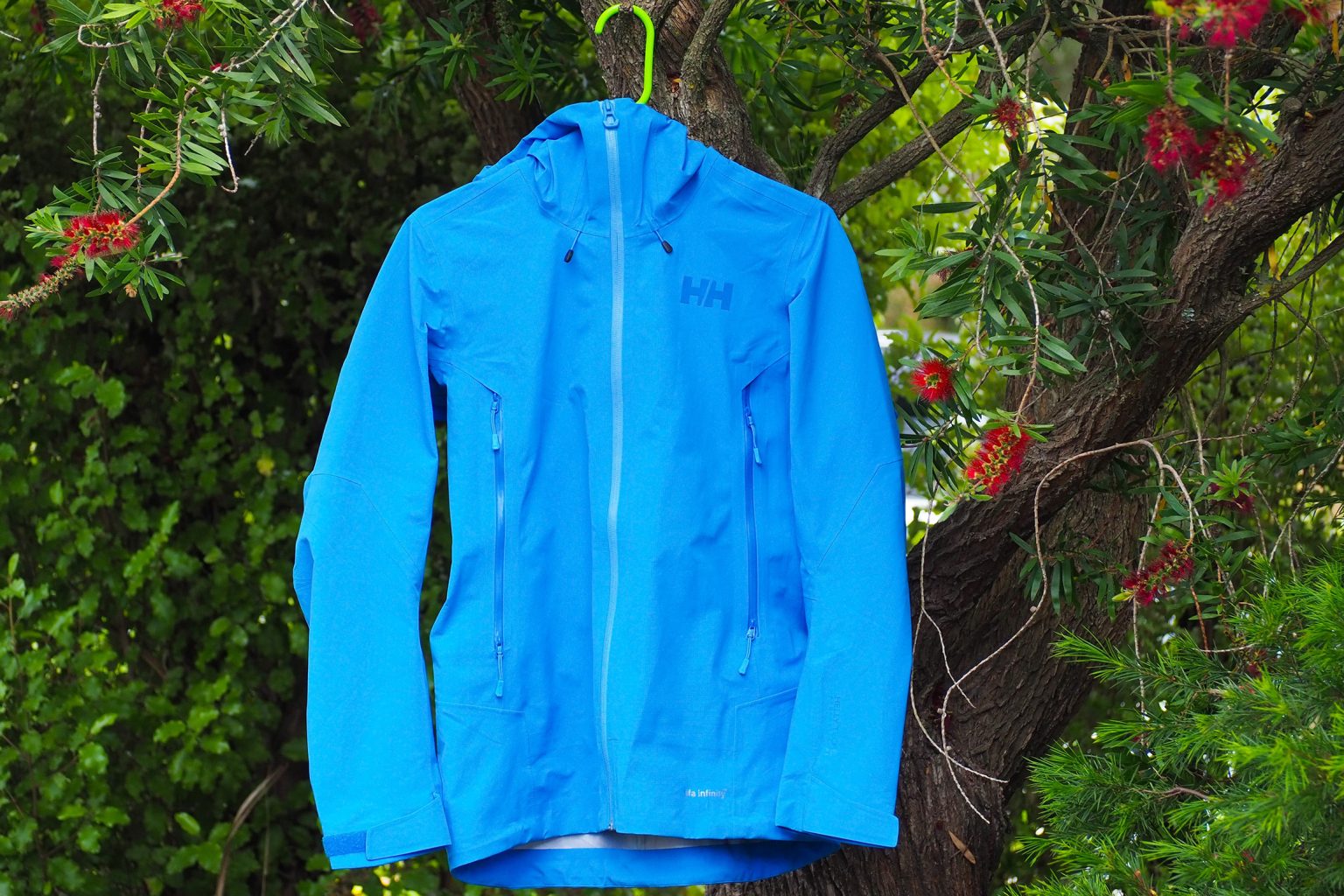
Cleaning your waterproof gear is a simple task and needs to be done regularly if you want your rainwear to perform as expected.
Modern waterproof clothing works by bonding a porous membrane to an outer fabric. The membrane allows perspiration to escape, but does not allow larger water droplets to enter. Outer fabrics are usually treated with a finish called a durable water repellent, or DWR.
Over time, membrane pores get blocked by dirt and sweat, compromising water resistance and breathability. The DWR treatment eventually wears off, too.
For waterproofs to continue to perform their function, they need cleaning and reproofing at least twice a year. If gear is used often, cleaning should be more frequent.

How to wash waterproof clothing
Cleaning and maintaining the fabric of waterproofs is straightforward. It’s a fallacy that they shouldn’t be put in the washing machine. In fact, if done correctly it’s good for the life of the garment. It is important, however, to use the right cleaning product.
Regular laundry detergents remove DWR treatments and leave behind residue that compromises the performance of the materials. Brands like Gear Aid, Nikwax, Grangers and Storm offer water-based liquid detergents that are free of unhealthy per- and poly-fluoroalkyl substances (PFAS) and can be used in a washing machine just like a regular detergent. They will clean waterproof gear without leaving behind residue or damaging the DWR.
Once the waterproof garments have been through a wash cycle, leave them to air dry out of direct sunlight.
How to reproof waterproof clothing
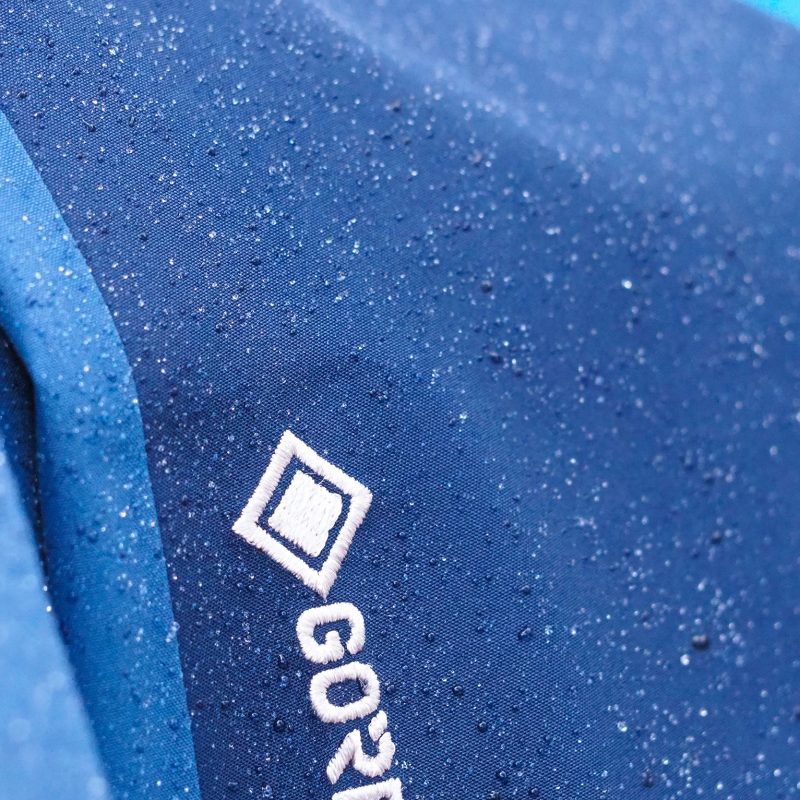
Cleaning waterproofs removes dirt and revitalises breathability and also helps maintain any remaining DWR coating. However, if there’s no DWR left and water is penetrating the outer fabric rather than beading on it, it’s time to reproof. This can be done in two ways.
Spray: The brands that supply cleaning products also have a spray-on DWR that can be applied to the damp garment just after it has been washed.
In-wash application: Wash-in versions of these products can be added during the wash cycle or as a separate cycle in the washing machine. The wash-in process is arguably more thorough.
Waterproofs may not have to be reproofed after every clean, but it’s certainly recommended to clean before reproofing.