


(Listen to Vctoria read her story with a follow-up Q&A about the trip with our editor.)
In the high hills above Central Otago, there’s a moment when the world seems to fall away and time unfolds. The wind scours the golden tussock as shadows from a shifting sky ripple across an undulating sweep of land. In Oteake Conservation Park you can almost hear the ring of shovels, the creak of timber carts and the muffled voices of goldminers chasing fortune on windblown ridges.
We came seeking solitude, stories and the stark beauty of Otago’s high country. On a three-day circuit we traced a roughly 50km loop through old gold workings and past three characterful backcountry huts.
The 67,000ha Oteake Conservation Park is a sprawling, mountainous area incorporating the St Bathans, Ewe, Hawkdun, Ida and St Marys ranges. Gold was found in the 1860s at Guffies Creek and at 1200m on Mt Buster. The claims grew into Buster Diggings, New Zealand’s highest-altitude gold workings. At its peak the area supported a population of more than 700, all scratching a living from quartz gravels.
The diggers are long gone but their legacy is etched into the hills. Bleached tailings snake through gullies, rusted iron and stone foundations tell of once-busy settlements, and the huts stand as quiet memorials to a hardy way of life.
Our journey began with a steep push up the Mt Kyeburn Track from Danseys Pass Road. The track climbs more than 900 vertical metres, zigzagging up a spur. Tussock swayed and tiny white gentians shone in the sun. We turned off before the summit to cross Pt1558, a rounded high point offering sweeping views across the Oteake highlands. From here we descended a gentle ridge through a scoured landscape of diggings and tailings, to reach Brown Hut after five hours.

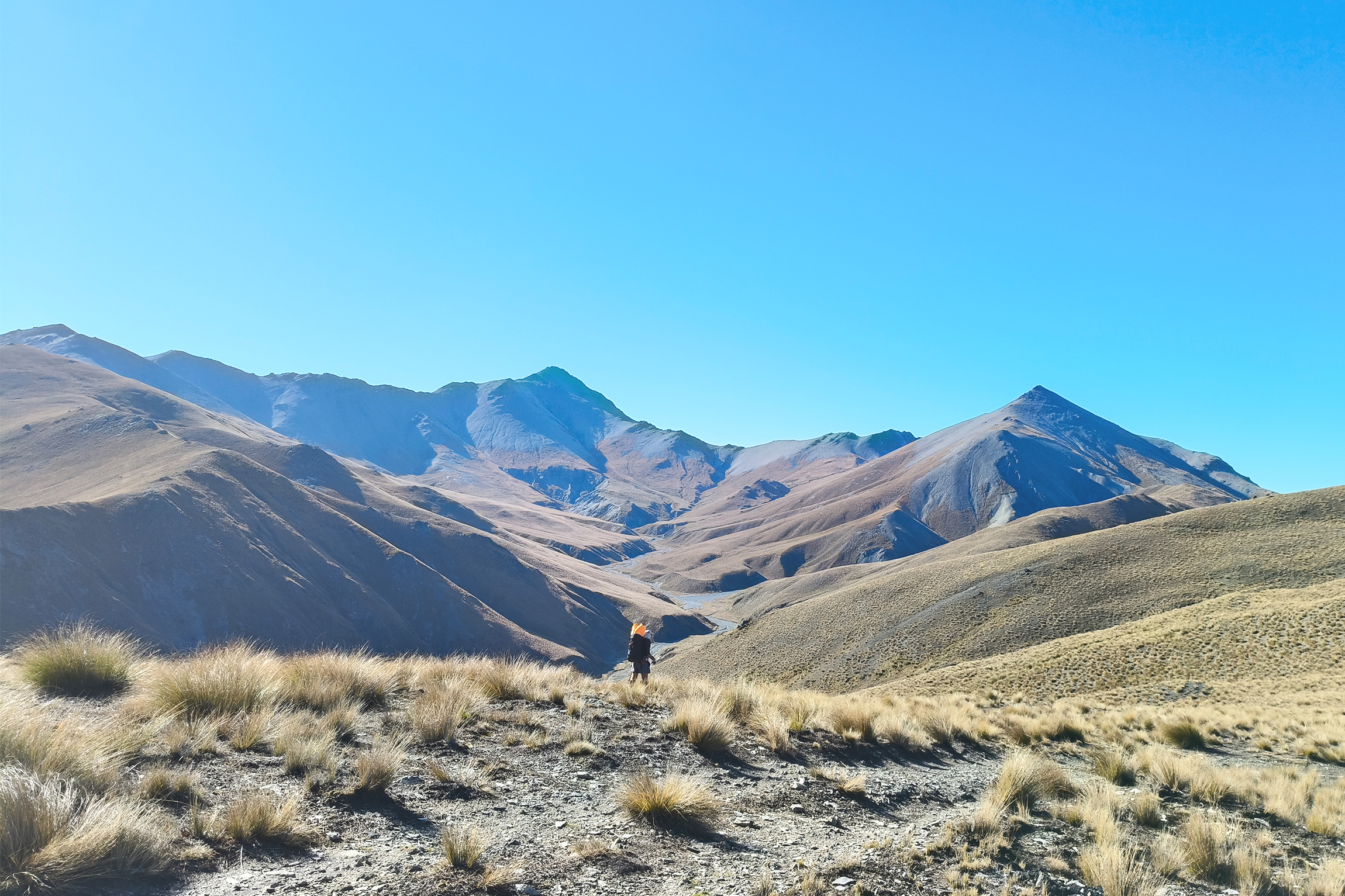
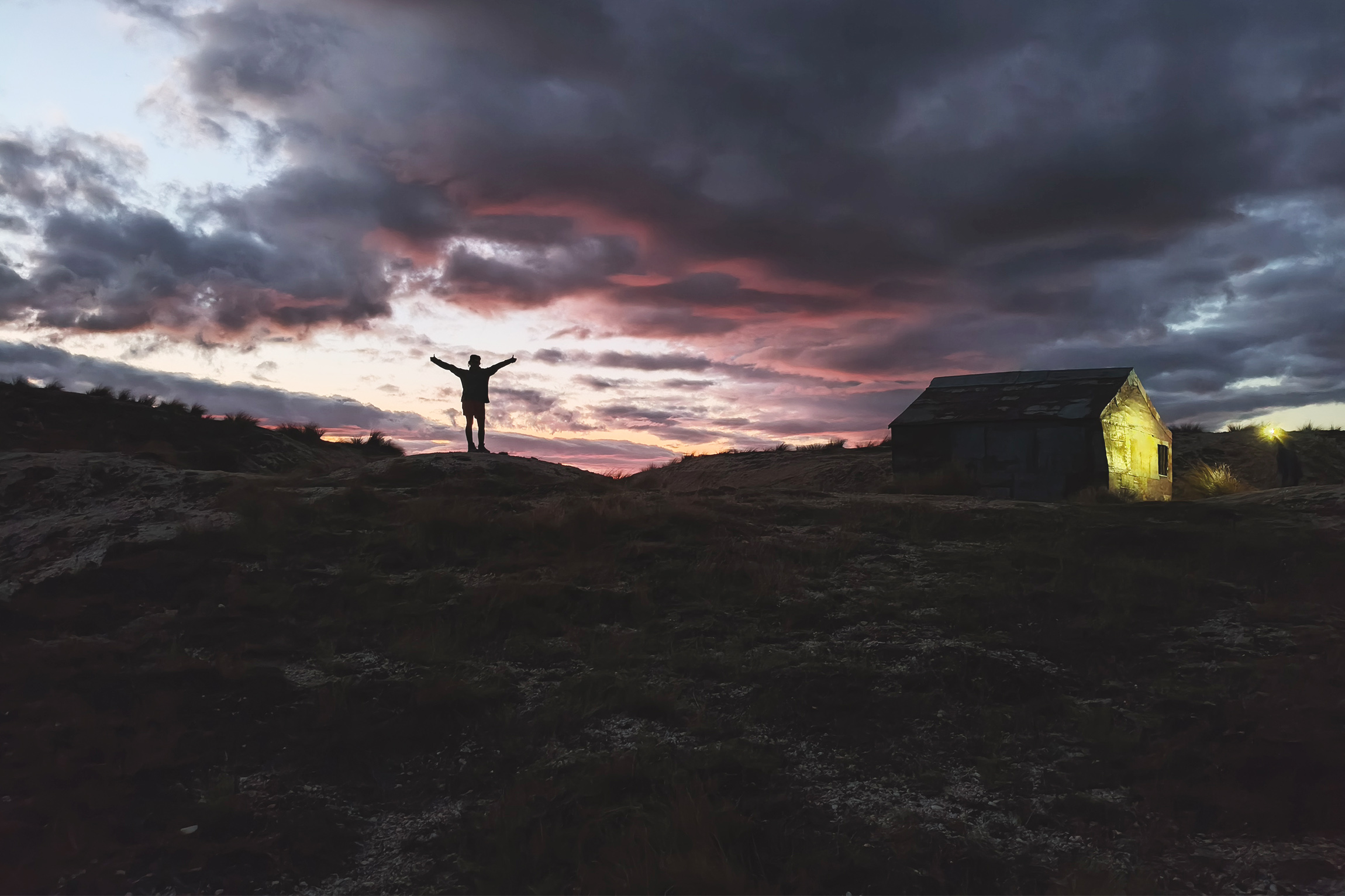
Built by a miner in 1949 from mānuka poles and sheet metal, Brown Hut is rough and ready. There’s no insulation and the wind whistles through the gaps, but it’s rich with atmosphere. Local lore has it that the miner’s wife and daughters lived here for a time, too. You can almost picture smoke curling from a stovepipe, hear the sound of laughter carried on the wind.
The sun dipped below the ranges and the sky changed from orange to deep purple and finally to blackish-blue with winking stars. The temperature plummeted on the frozen plateau and we were grateful for the shelter of the hut. During the night rain started to fall and dripped onto my sleeping bag through holes in the cladding. I begged to share my daughter Emilie’s bunk, which was still dry.
Morning dawned dark and heavy with thick, low cloud masking the ranges. It began to snow, and we frolicked in it briefly before retreating inside for another round of hot drinks. Eventually the clouds swept off over the plateau and the sun was back in force.
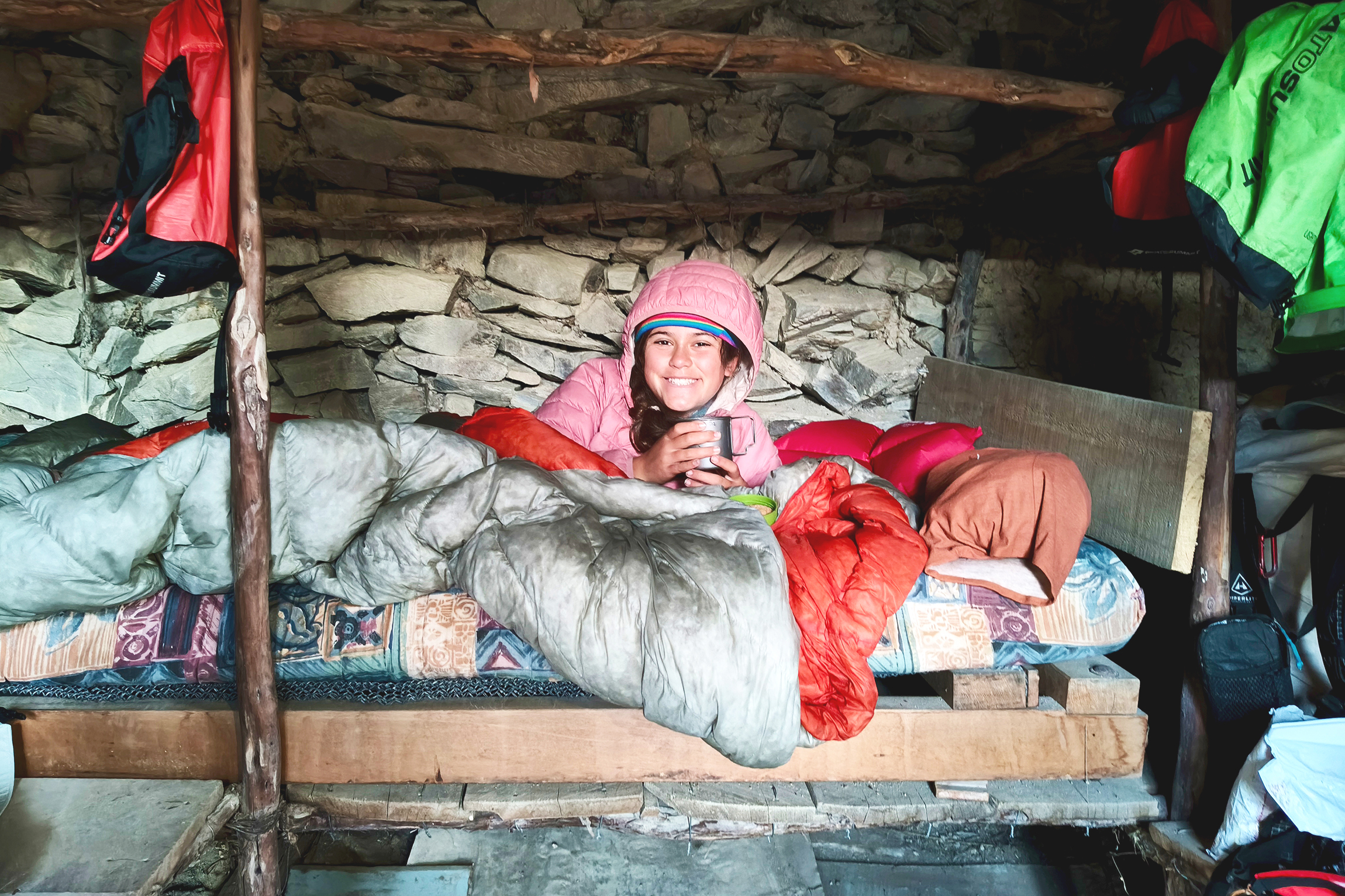
We left the bulk of our gear at Brown Hut and took light packs on a day trip to explore other huts in the area. From Brown Hut we dropped into the cool shade of Brown’s Creek before climbing again onto a spur leading to Green Gully Hut.
Also constructed in the late 1940s by the same miner, Green Gully is a small corrugated-iron and crumbling stone structure nestled below a shelf of tussock and surrounded by old sluicing scars and rusted relics. A collection of tools – shovels, buckets, sluice parts – are propped against the hut wall or hang inside. We spent some time sweeping out the hut and exploring the surroundings, including mounds of tailings and water races carved by hand.
From Green Gully we wandered 3km down a long spur then descended steeply to Tailings Hut on the far side of Guffies Creek. The stream sparkled in the sunlight, winding through a land that once thundered with water and gravel during the sluicing days.
Tailings Hut is another relic of the gold-mining era, though much altered. It is an amalgamation of three huts with different histories. The two bunkrooms were once single-men’s quarters used during the construction of Roxburgh hydro dam; the larger building, constructed in the 1930s by farmers who previously held the occupation licence for the site, is now the kitchen. The 12-bunk hut would be a good base for exploring the area.
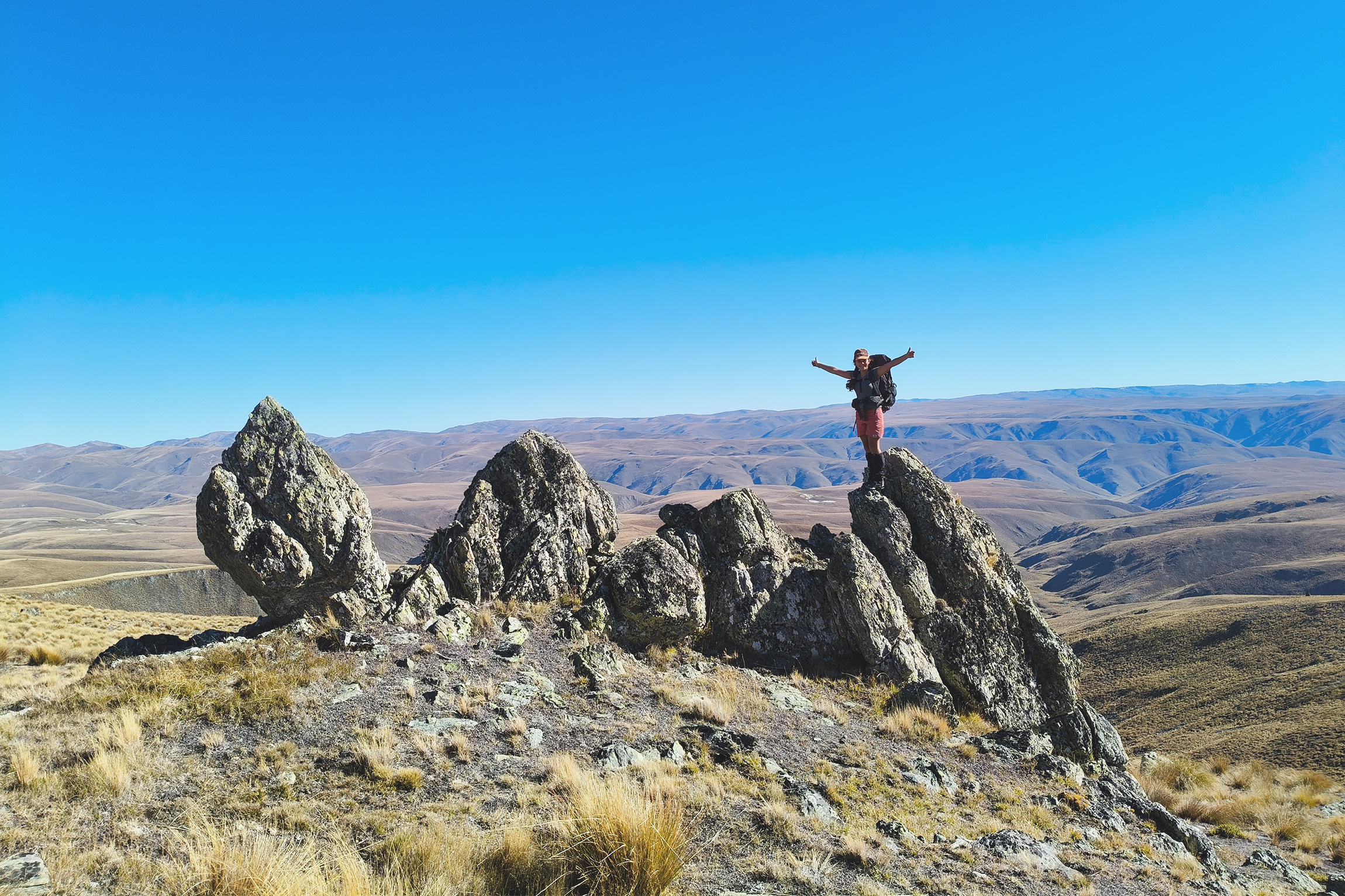
After lunch we continued via a meandering route that hugged the true right of Guffies Creek, startling a group of dirt-bike riders who were somewhat forlornly walking their bikes through the icy creek to rejoin the 4WD track. We stuck to the bank, smug in our dry boots, before climbing 200m up the spur and along the ridge back to Brown Hut. The afternoon light threw long shadows across the tussock and gave the landscape a burnished glow.
Neither of us wanted to spend another cold night in Brown Hut, so after a spur-of-the-moment decision, we set off in the direction of Green Gully Hut, anticipating the warmth of its woodstove and ample supply of firewood. Following the spur above Third Gully down into Brown’s Creek, we pulled our way up the other side through thick clumps of tussock as night fell.
Green Gully Hut loomed out of the darkness, and its stove was a welcome companion that evening as the wind rose outside. By the light from the open fire we made up our beds on the wooden bunks and sank into two small lounge chairs, soaking up the warmth of the flames, waiting for our billy to boil.
The next morning a thick frost transformed the rolling landscape into a wintery blue wonderland, delicate crystals dancing over the tussock. We stomped our feet and blew into our gloves, waiting for the first kiss of the rising sun before we climbed directly up the ridge behind the hut to below Pt1550 then traversed the contour to rejoin the Mt Kyeburn Track. The descent was familiar but no less stirring. Looking back over the wide expanse of Oteake, we could see the folds of the land we had traversed, each ridge and gully with its own story.
As grand as the landscape is, Oteake’s appeal also lies in the park’s unique layering of geology, ecology and history. These highlands are alive with light and shadow, a constantly changing canvas of golden hues, distant ranges and sky. People built huts here by hand and miners braved bitter winters for the chance of gold.
We left tired but grateful, boots dusted with white gravel, minds full of images we won’t forget: a hawk gliding over the ridgeline, the silence of Brown Creek, the spark of a match in a cold hut, the golden swirl of tussock in the wind. This place offers memory, myth and meaning – and all you have to do is walk.



