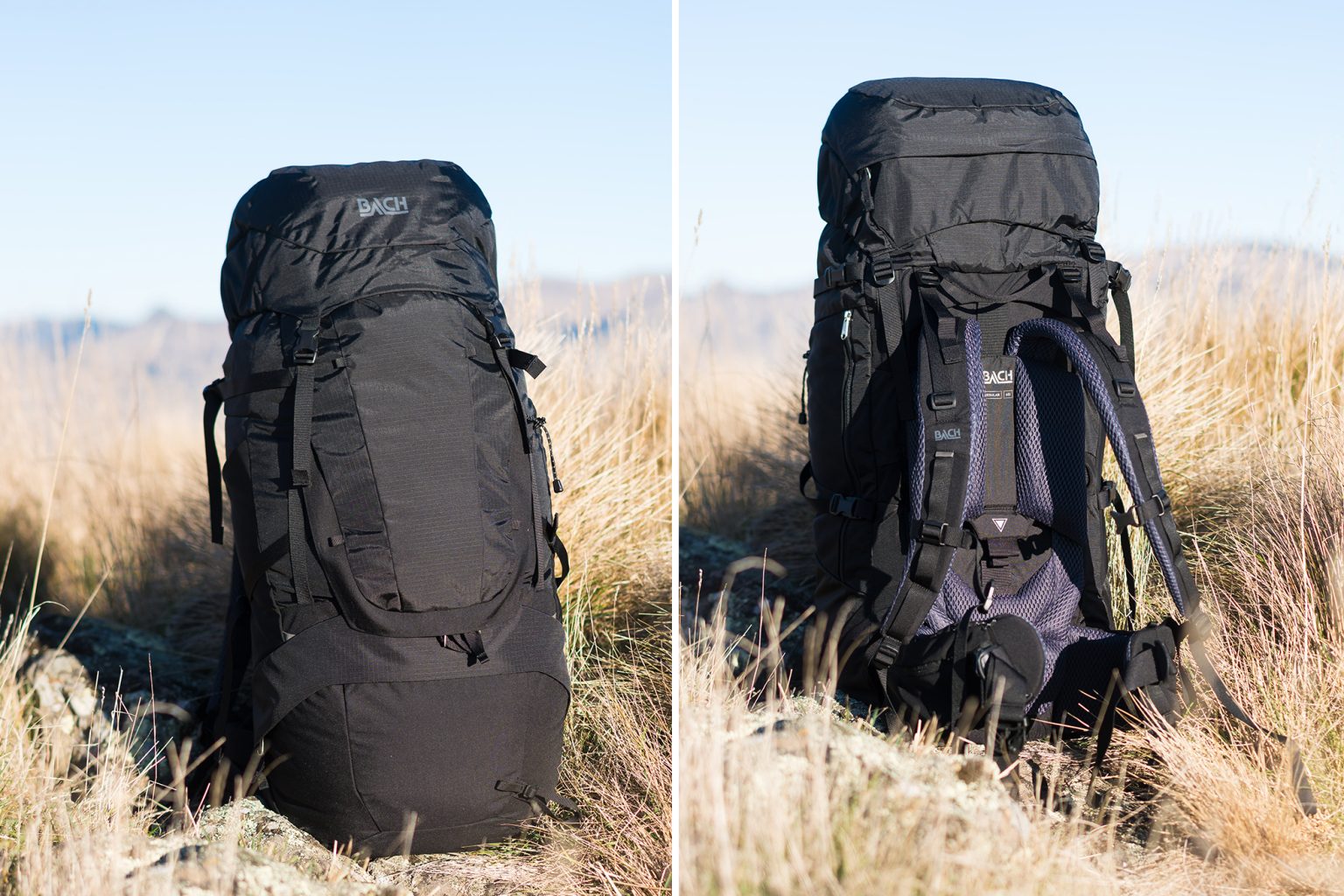
A comfortable, durable pack is essential for fun and safe tramping. It should fit well and move with you. Packs come in different fabrics and styles and can have many features and adjustments. Multi-day tramping packs typically range in size from 45–80 litres.
Lid/closure
The height of a pack lid can usually be adjusted to accommodate different-sized loads. Some lids are removable and they should feature one or more pockets. Some packs have a roll-top closure system, which saves weight and can be more weatherproof but will have no pocket.
Side stretch pockets
These are handy for water bottles, wet clothes or other clothing, but are not usually very robust.
Storm throat
This is a large pre-closure beneath the lid, which usually cinches shut and should be big enough for overflow when the pack is really full. A strap over the top helps compress the load and is also useful for securing a rope or clothing.
Fabrics and waterproofing
Most packs are made from grades of high- and low-denier polyester and nylon. Higher deniers (400–600D) are best for longevity, but specialty fabrics as low as 70D are also available.
Some packs use a canvas/polyester blend that is best for water resistance but heavier and less durable than synthetic equivalents. Ultralight super-durable fabrics such as Dyneema and X-Pac are now common. Most packs are not waterproof, so it’s best to use a pack liner and dry bags to protect gear – even if your pack comes with a cover. The pack’s base should be reinforced and abrasion resistant.
Compression straps
These help make the sack smaller when it’s not full, and can secure loose items such as a tent or walking poles on the outside of the pack. Additional webbing tabs may be used with shock cord for carrying crampons or clothing, and there may be attachment points for carrying an ice axe, ice hammer or walking poles.
Shoulder and sternum straps
The width and spacing of shoulder straps should suit your body shape. Thickly padded straps are not always the most comfortable; thinner, more pliant pads can distribute loads well. Mesh and open-cell foam help breathability.
The sternum strap prevents shoulder straps from slipping off and provides stabilisation.
Hip belt
A hip belt distributes pack weight to your hips and should fit well, sit level with the top of your hips and cinch firmly. Hip belts come in a range of sizes, and some have pockets.
Adjustable harness
Multi-day packs have a fixed or adjustable back-length harness. A fixed harness is lighter, more durable and will come in two or three sizes; an adjustable harness can be fine-tuned to fit. Men’s and women’s models are available.
Frame and compartments
A lightweight internal frame, shaped to fit the wearer’s body, is the most common and best for New Zealand tramping because it is less likely to catch on vegetation.
Many packs have a main sack and a sleeping bag compartment with its own zip opening for easy access. Zips add weight and water ingress points, but are convenient.
Hydration-compatible packs have an inside sleeve for holding a water bladder and a small opening at the base of the lid to feed the hose through.