A waterproof jacket is possibly the most important item in your pack. Here’s how they work.
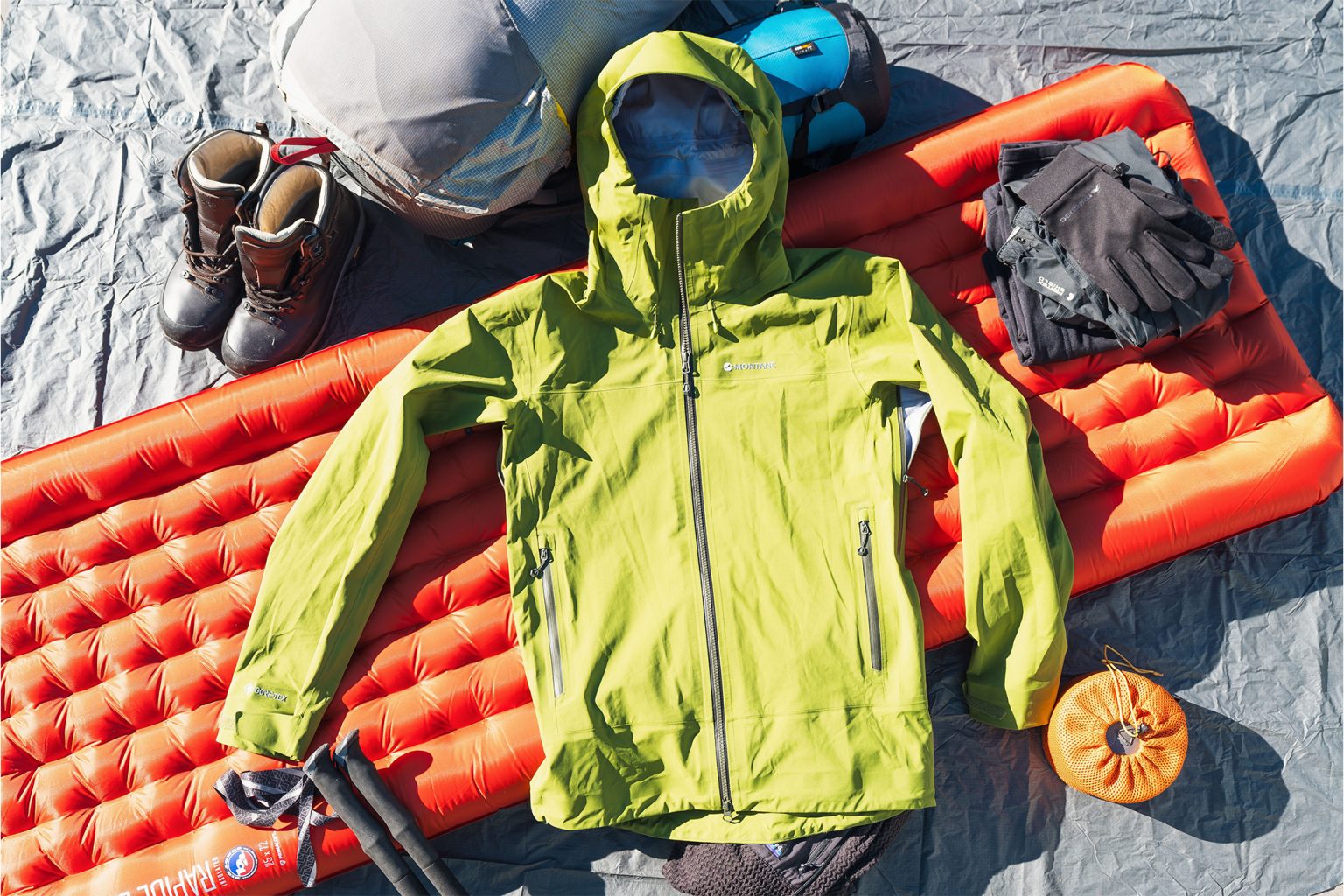
A waterproof breathable shell jacket (aka rain jacket) is arguably the most important clothing carried in your pack. It can serve as rainwear, provide wind protection and be an extra in-camp layer when warmth is needed. Some items come and go seasonally, but a shell jacket is always in my pack.
Fabric durability
Three-layer fabrics are more durable because the waterproof/breathable membrane is protected from abrasion. They will better handle frequent use and rubbing from a heavy pack than 2.5-layer fabrics. The latter is often used for light technical jackets, can be cheaper and is good for day walks or overnighters, and lighter loads.
DWR coating and care
Durable Waterproof Repellent (DWR) is a finish applied to the fabric’s outer layer. It helps prevent the fabric ‘wetting out’, enabling it to breathe at its best, be more comfortable and dry faster after use. DWR finishes will wear out but can be revived with tumble drying after washing, or reapplied with a wash-in product. Clean jackets work best and last longer, so wash it with a technical fabric cleaner
as required.
Breathability
Waterproof breathable membranes have pores that are too small for water droplets (rain) to pass through but large enough to allow water vapour (sweat) to escape. These fabrics breathe best when it is cold and dry outside, and work less reliably when it is warm and wet, particularly if the wearer is sweating heavily. Three-layer fabric breathes better than 2.5-layer, but the latter dries faster.
Hood adjustments
The best hoods have front drawcords to pull the opening close, and one on the back to reduce the volume and help the hood move as you do.
Hood and collar
Crucial for protecting head and neck are a well-designed fixed hood and a tall collar. They’ll keep the wind at bay and prevent water entering the jacket. Some hoods fit over a helmet, but if that feature isn’t needed, a normal hood will be more snug. It should have a slight peak and stiffener to keep the hood away from your face. Some hoods roll up inside the collar, and don’t always provide as much face coverage as a standard hood.
Waterproof ratings
Hydrostatic head (H/H) is the industry standard rating for waterproof fabrics. Consider 2000–5000mm H/H as suitable for light rain, 10,000–15,000mm H/H as the entry point for tramping in New Zealand, and 20,000mm H/H and above for the most reliable waterproof jackets. Highest-rated fabrics are around 28,000mm H/H.
Pit zips
Armpit zips allow rapid dumping of heat when perspiration or outside humidity exceed the waterproof membrane’s ability to breathe, or you need to cool off. Zips should be water resistant or have a zip covering. They’re left off some jackets as a weight saving measure.
Water-resistant zip
Most modern mid- to high-end jackets will have water-resistant zips. Jackets with conventional zips should have a full-length flap or a rear gutter to prevent water ingress.
Pocket positioning
Pockets should be large and offer easy access while wearing a pack. Openings should have water-resistant zips or generous flaps. The most weatherproof jackets have fully seam-sealed waterproof pockets, but some models have pockets designed for ventilation.
Waterproof breathable fabric
Laminated, waterproof and breathable fabrics like Gore-Tex Pro, Paclite or Pertex Shield are industry standards for shell jackets. Some fabrics use a waterproof breathable coating, but laminated fabrics generally have a higher waterproof rating and are more durable. Three-layer and 2.5-layer fabrics are the best choice. Three-layer consists of a durable outer fabric, a waterproof breathable membrane and a fine protective fabric (the inside layer), all sandwiched together. A 2.5-layer jacket has a protective coating (the half-layer) instead of the inner fabric and is lighter.
Adjustable hem
An adjustable hem helps trap warmth, prevents the jacket from riding up and creates a better overpants seal. Dual adjusters are best, but some jackets have just one to save weight.
Fit and length
Shell jackets are cut to fit over other clothing layers. The back of the jacket should be longer than the front for weather protection. The upper arms and shoulders are usually roomy to allow movement. Jackets vary in length, but a generous overlap with overpants gives the best rain protection.
Zip garages
Water-resistant zips should have ‘garages’ at the top to help prevent water entry. The garage for the main zip also prevents it from rubbing on your face.
Cuffs
Cuffs should be easily adjusted with a hook and loop fastener and fit over large gloves.