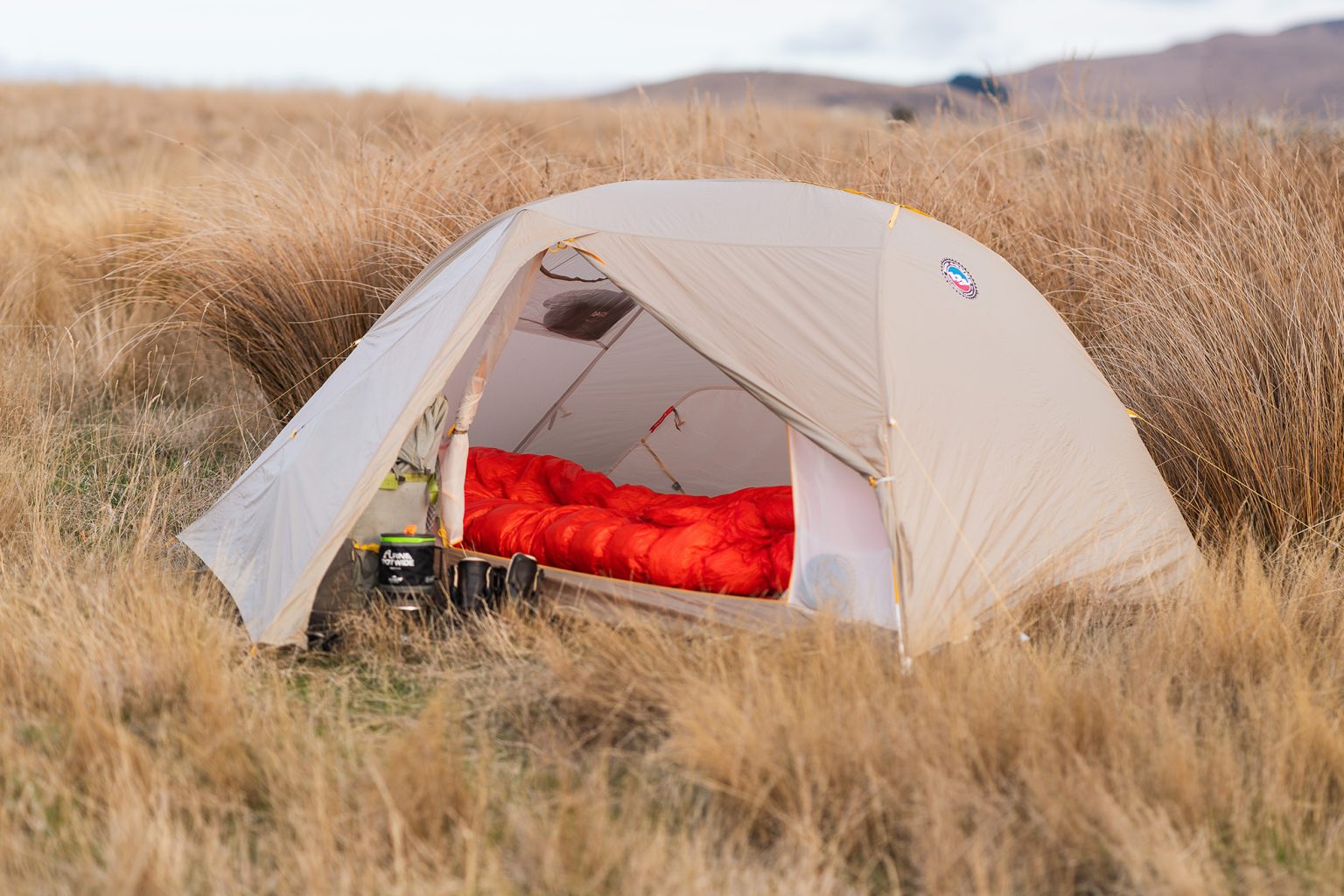
Freestanding three-season tents are versatile, lightweight and compact shelters with ample
ventilation for summer use.
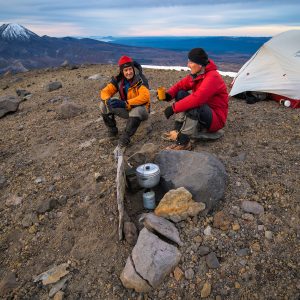
They can be pitched without the fly on dry nights or you can carry the fly alone to save weight. They self-tension and can be pitched without pegs. I’ve pitched mine in an abandoned railway station and a scorpion-infested cabin, but they are equally at home in a bush camp or on the tops.
Tent care
When you break camp, sweep or shake out the floor and remove anything that could cause a puncture. Thoroughly dry the tent after use and remove any dirt from the fabric. Avoid leaving the tent pitched in direct sunlight for days at a time as the fabric is susceptible to UV damage. If this can’t be avoided, cover it with a cheap fly or tarpaulin.
Wind stability
Three-season tents can be vulnerable in high winds because they tend to be steep-sided and have less pole support. Take care when using them in exposed places.
Storage pockets and inner tabs
Mesh storage pockets on the inner allows you to keep items handy and organised. Tabs on the ceiling allow lines to be fixed for airing clothing. Some brands offer an extra ceiling storage panel.
Entrance and vestibule
Typically, there are dual entrances, which make entry and exit easier and ventilation simpler. Having two vestibules also helps with gear organisation, and cooking from inside the tent can be more comfortable. Those who are frequent or long term users – such as thru-hikers or bike packers – will appreciate this style.
Zips
YKK nylon coil zips in no. 3 or no. 5 size are common. No. 3 zips are okay for weight and space savings but may wear out quickly, especially if used in sandy or dusty places or if they go around curves. Zips and their sliders can be replaced. Periodic application of a silicone lubricant will extend a zip’s life.
Storage bag
A waterproof stuff sack is useful when the tent is soaked. Carry a separate dry bag so the inner can be separated from a wet fly.
Pegs
Most of these tents come with light pegs designed for use during moderate weather or on firm ground. If you intend to use the tent on the tops or on variable surfaces, carry longer, sturdier pegs.
Floor strength and footprint
The lightest floors are around 20D with 1200mm H/H waterproofing; the heaviest are up to 70D and 15,000mm H/H. Lighter floors require a ‘footprint’ or groundsheet, except on surfaces free of anything sharp, and are more condensation-prone.
Internal dimensions
Dimensions vary between tents, so pay attention to the total floor area of the inner as well as the height. These tents usually have steep walls, which makes them more spacious.
Poles
High-strength, low-weight aluminium alloy poles are standard, but the very lightest may have carbon poles. Three-season tents usually have one or two pre-configured poles that connect to a ‘hub’. Poles that fold extra short are becoming common and are useful for fitting into small packs. It pays to carry a spare pole sleeve in case of breakage.
Fly fabrics
Tent weights have plummeted with the introduction of lighter fabrics. Nylon between 20–70D is common for tent flys; higher deniers provide better durability. A hydrostatic head (H/H) of 1200mm is sufficient for prolonged rain storms and is about the lowest rating you’ll see for water resistance. More durable tents might have a 5000mm H/H rating.
Guy lines and reflective tabs
Guy lines will be included and some tents have additional guy attachment points for use in windy conditions. Reflective tabs on the fly or guylines help you locate your tent in the dark.
Pitch points
Adjustable pitch points allow the fly to be tensioned during stormy weather, or when the fabric stretches due to moisture.
Mesh inner tent
Most three-season tents have an inner made of a combination of mesh and low denier nylon fabric. Large areas of mesh provide comfort in hot weather, but dust resistance will be lower and insulation less than a full nylon inner.