

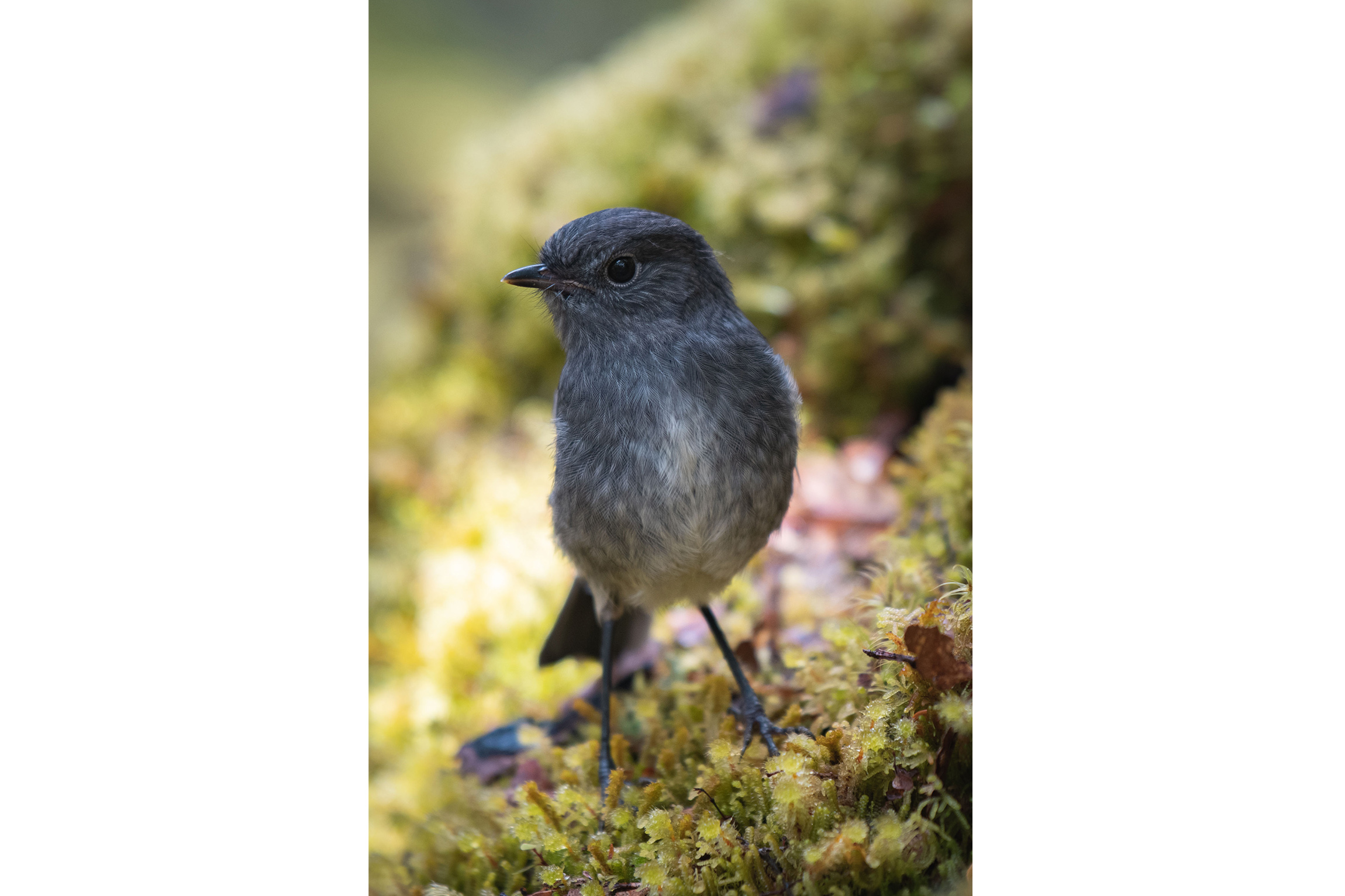
It started as a fierce competition between myself and two childhood mates (also bird nerds). Photographic evidence isn’t required – it’s a high-trust model – but I have enjoyed the added dimension of photographing as many endemic manu as I can.
At the time of writing, I’ve observed 110 species – and before you ask, you bet we have a spreadsheet. Notable sightings include tokoeka Southern brown kiwi, mohua yellowhead, koekoeā long-tailed cuckoos, matuku-hūrepo Australasian bitterns and toroa royal albatross. Many species have been new to me – ‘lifers’, to use a birder term. These include tara iti fairy terns, of which fewer than 40 remain, hoiho yellow-eyed penguin, pūweto spotless crake and the dusky woodswallow – a lone vagrant bird that flew from Australia and set up shop behind Rakiura Four Square. There is just one in New Zealand, the poor bugger.
The greatest gift birding has given me is an appreciation of my local area. I live in Auckland’s Hibiscus Coast, and 15 minutes away, on the tip of the peninsula, is Shakespear Regional Park, a predator-free sanctuary. I grew up visiting this park perhaps once a year, but a love of slow birding now has me visiting several times a month. It’s here that I have learned to look with my ears, not my eyes, to find species I would previously have walked right by. I’ve tuned into the calls of secretive wetland birds: mātātā fernbird, pūweto and moho pererū banded rail, the last an elusive relative of the weka. Pīpīwharauroa, tieke saddleback, hihi stitchbird and kakariki calls have joined my song repertoire, alerting me to opportunities I would once have missed.
I’ve watched the seasons shift, bringing bursts of colour, nesting parents and chicks. On night walks through the park, my search for kiwi has opened my eyes to myriad nocturnal curiosities: tuna and kōura in the streams, funnel-web spiders and pūriri moths in the trees, and always the presence of ruru, hooting in the canopy.
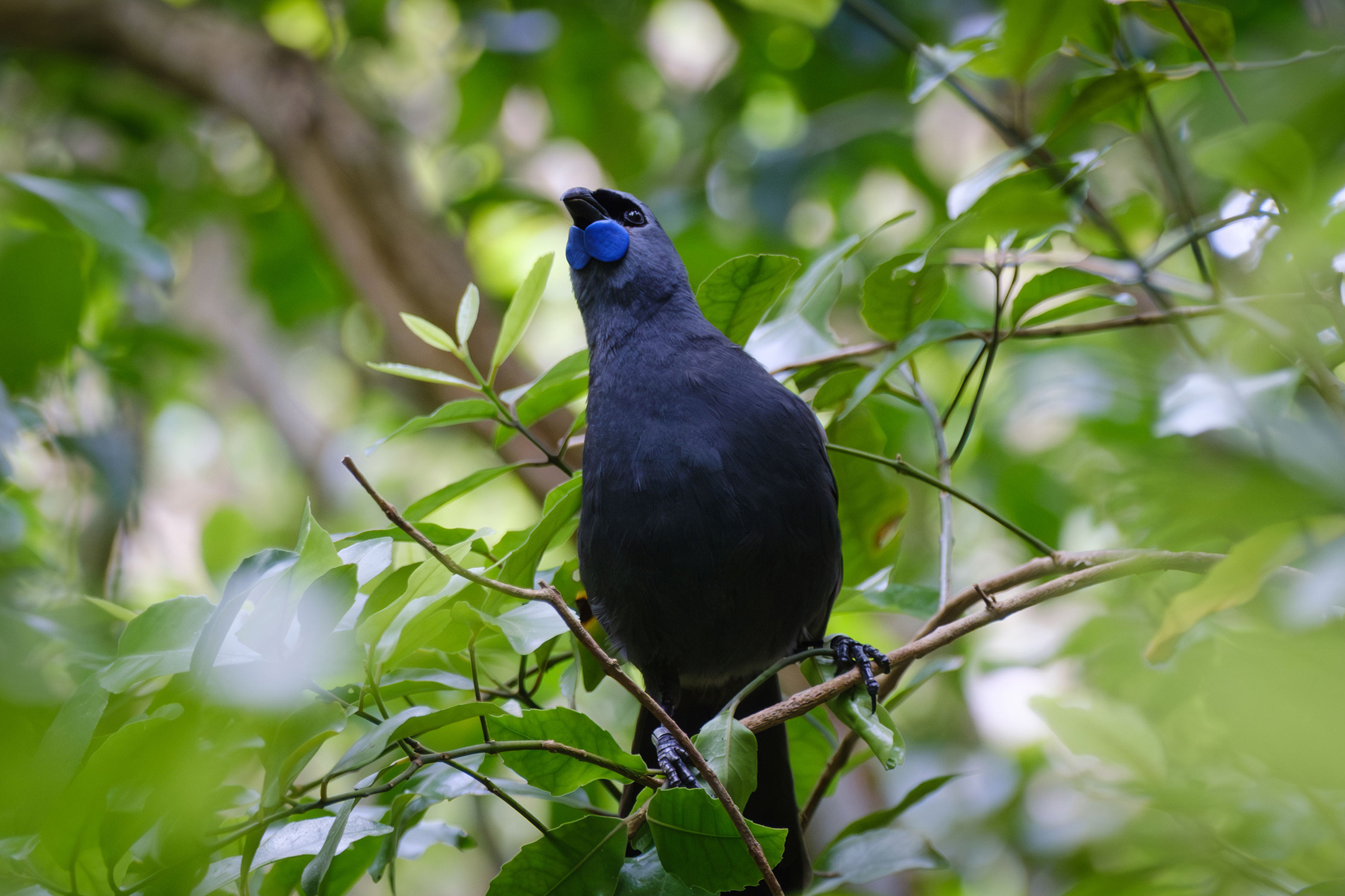
My photography, too, has improved. Where once I was only happy to come away with a sharp, focused image, I’m now satisfied with photographs that tell a story of connection or behaviour – a kōtare leaping from a branch or a kereru mid-feast. And whereas before I was hesitant to embark on solo tramps, now I have no qualms flying solo on a birding photography mission – in many ways it’s better than heading out with company. Alone, I can tread lighter and feel no pressure to ‘get a move on’ when my lens is fixed on a bird. It’s meditative, relaxing, and it forces me to slow down, pause, observe and appreciate.
In winter I went south for a few days of solo birding in Pureora Forest, Tokaanu and Tūrangi. I had lofty ambitions of photographing an array of forest birds in Pureora and whio and matuku-hūrepo further south, but by late afternoon on the day I was empty handed. I was gutted; it was a massive day of walking, scanning and lugging around a heavy lens, and all I had to show for it were photos of flora.
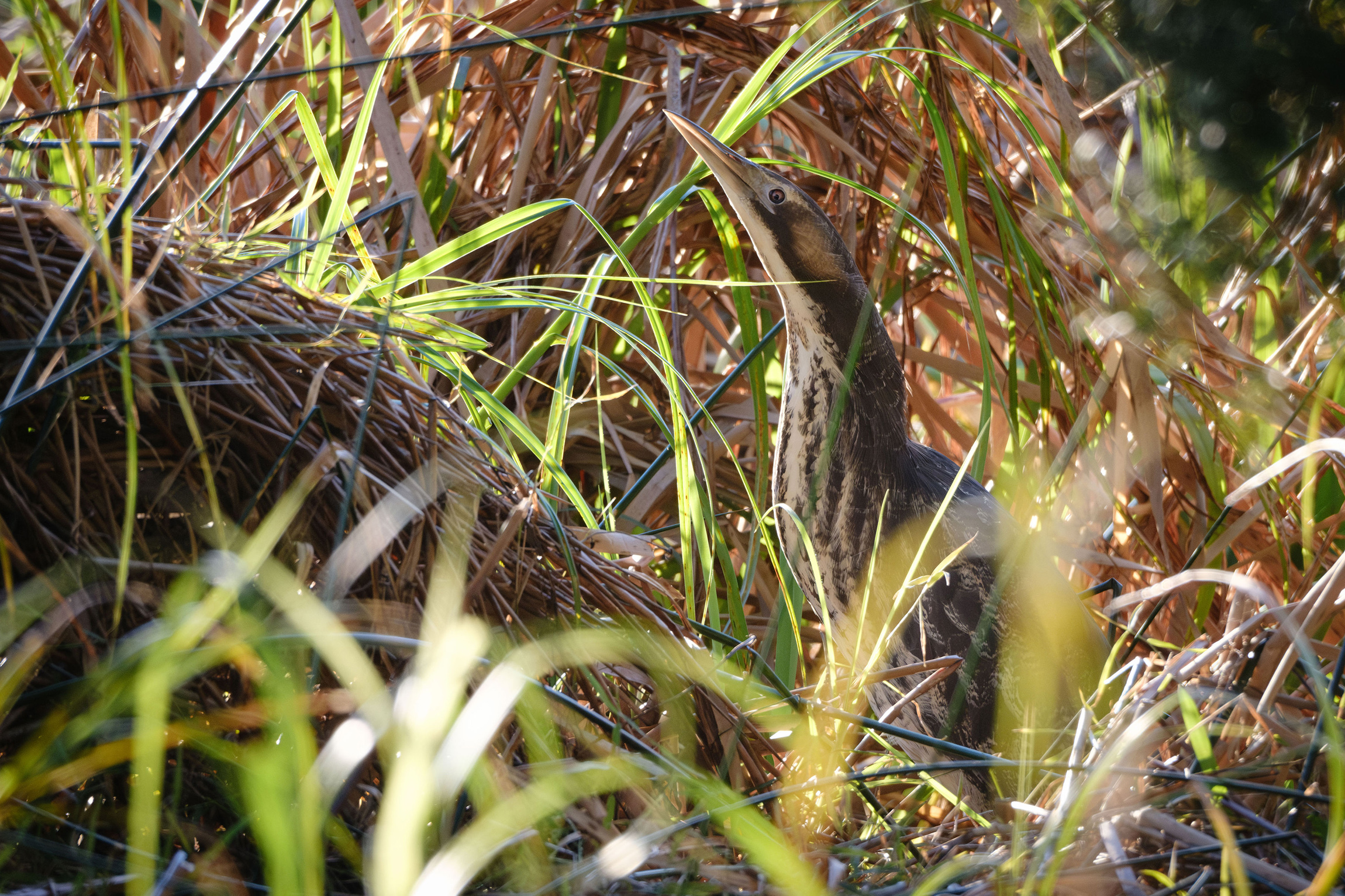
With only an hour until sunset, I decided to try one last time for a matuku-hūrepo – undoubtedly one of Aotearoa’s most difficult birds to find due to its cryptic camouflage, secretive behaviour and rarity. There are thought to be just 250–1000 individuals left in NZ, though accurate counts are challenging as they’re so bloody hard to find.
Traipsing up and down a gravel road, I scanned dense raupō wetland. A large heron-shaped creature suddenly flew overhead and plunged into the brown stalks, perhaps 50m away. With shaking hands I brought my camera to my eye and scanned the area where it landed. Sure enough, down the barrel of the lens was my first matuku-hūrepo, eyeing me suspiciously while imitating a raupō stalk perfectly. If I hadn’t seen it land, never in a million years would I have spotted it. Cheesy as it sounds, the adrenalin rush I felt in that moment was like summiting a peak. Ecstatic, I returned to my motel restaurant for a well-earned dinner and wine by the crackling fire.
To me, this curiosity is what birding is all about – wonder and thrill, too. Though my partner lovingly calls it a fixation, it has given me a far greater appreciation of the natural environment. I slow, I pause, I observe, and ultimately I notice details missed before, whether calls of seasonal migrants or the twinkling eye of a master of camouflage. I admit I’m a tad obsessive, and certainly nerdy, but I’m getting into nature more than ever, connecting with my environment, and ticking off a great number of species. I’ll visit the local ducks when I’m older.
Improving your photography game
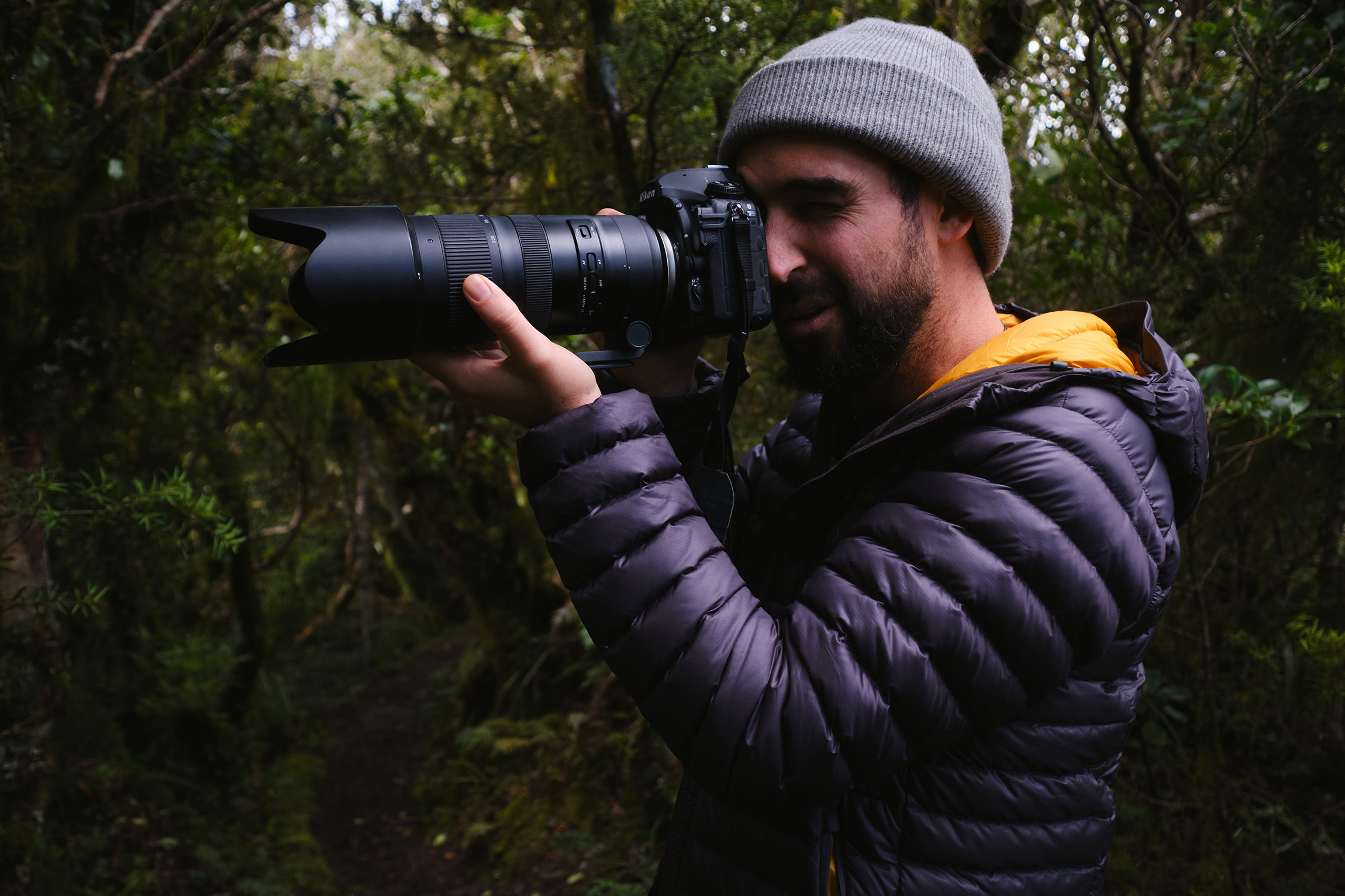
Though I’m still learning and improving with every shoot, several elements have been revelatory in improving my bird photography.
Compositionally, I suggest getting as close as possible to eye level with manu. This avoids unflattering angles and connects the subject with the viewer. Even better is if you’re able to capture a behaviour or relationship in your image; so be patient, wait for a moment and snap away.
Technically, I recommend shooting in shutter priority mode. This means manually inputting the shutter speed and allowing the camera to select the ISO for the best possible exposure. Few of our bird species are as lethargic as a perched kererū, so it can be tough to shoot with a handheld camera in often dark forest conditions.
The rule of thumb for zoom lenses is to shoot a fraction that is one over the distance of your zoom. For example, if you are zoomed to 300mm, your shutter speed should be a minimum of 1/300th of a second. A better rule of thumb, however, is to shoot as quickly as the light allows. Modern editing software can deal with high ISO grain very well, but there is little to be done with motion blur or a lack of sharpness. Shoot often – you’ll improve rapidly.
Tips for birding success
1. Learn the songs
Birds are often first located by their call, and this is especially true of our cryptic miniature manu like the pīwauwau or
tītīpounamu. The 1980 album Birds of New Zealand has most common calls and can be found on Spotify. Otherwise New Zealand Birds Online is great for familiarising yourself with calls. Once you’re tuned in, the bush comes alive. You’ll know when to slow your walk, when to keep moving (blackbirds, thrushes etc), and when you are hearing something uncommon or vagrant.
2. Know your local
The territorial nature of birds can make them predictable. The more you revisit a habitat, the more likely you are to notice patterns in behaviour, the favourite roosting perches of species, or where the shy birds give away their positions at dawn or dusk.
3. Pause
Ever noticed how robins materialise when you stop for lunch? I’m often surprised at how many species make themselves known when I pause with the intention to look and listen. Birding is about slowing down, not smashing out kilometres to get to the hut. Sometimes the best birding can be done in the car park.
4. Get techy
iNaturalist and eBird are two citizen science apps that are changing how budding naturalists log their observations of the natural world. Log in to either and you will be able to see where species have been spotted, down to the minute, and therefore where you are likely to find them in future. Note that our rarer manu may have location data turned off to protect them from disruption in their habitat.
Aotearoa’s best birding spots
Island time
Tiritiri Matangi Island, in Auckland’s Hauraki Gulf, is about as good as it gets. Takahē, kōkako, hihi and little spotted kiwi are some of the birding heavyweights, but you’ve also got tuatara and wētāpunga scrambling about, particularly at night. To land on the island, with its unforgettable dawn chorus and flocks of rare species launching into the air in dozens, is to take a step back in time.
A walk in the park
Tāwharanui has long been a favourite beach for Aucklanders in need of sea and salt, but it’s also a phenomenal birding site thanks to its predator-proof fence. It too boasts kiwi and takahē, but I would argue it pips Tiritiri Matangi in its diversity of habitat. With a decent wetland, you’re likely to see spotless crake, banded rail and bittern if you’re especially lucky, while the sandy shores, rocky coastline and lagoon offer habitat for dotterel, shags, penguins and pāteke. Keep an ear out for the whistles and squawks of kākā and occasionally kookaburra, which frequent the park.
Road trip
If you’re nerdy enough to commit to a birdy road trip, I would recommend Arthur’s Pass. In the lakes and lagoons of the west there is a chance to spot the kōtuku white heron, while closer to Arthur’s Pass Village you’re likely to encounter kea, tītīpounamu and miromiro tomtits. Lake Pearson is a reliable place to find New Zealand’s Bird of the Century, the pūteketeke Australasian crested grebe, and Castle Hill is frequented by kārearea. Hike a short way into the hills and you may chance upon pīwauwau, and though I haven’t had a chance to investigate, I’ve heard there are mohua to be found in select forests.



