Locate your leak
Though it may not have the same ring to it, the old idiom ‘like a needle in a haystack’ could very well be replaced with ‘like a puncture on an inflatable tramping mattress’, and unless you know what you’re doing, a leak can be near impossible to find. While a larger tear will be easy to spot in the field, a microscopic pinhole is difficult – even at home.
To find a leak, inflate the mattress and fold it in half to increase internal air pressure.
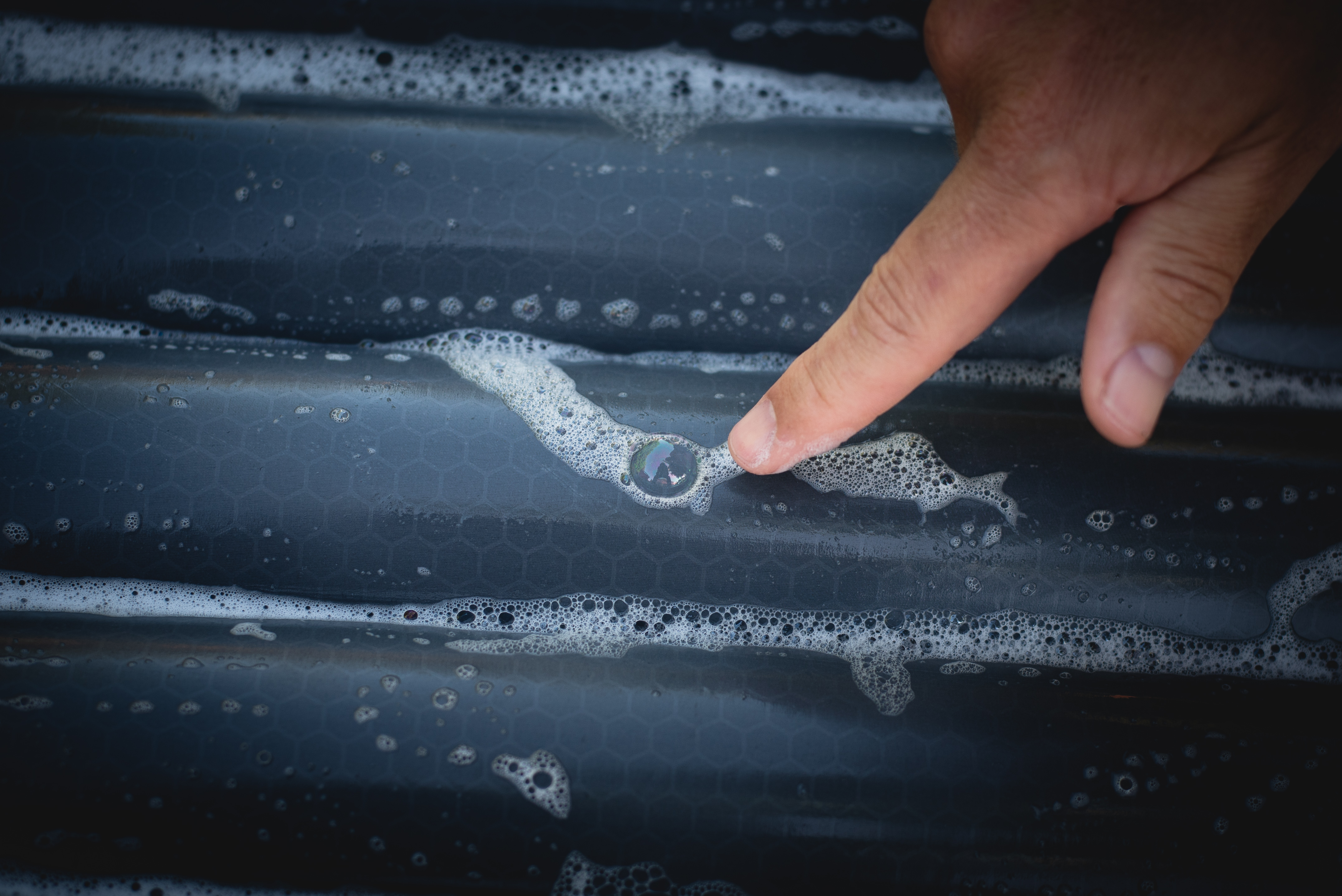
Using a sponge or spray bottle, apply soapy water to the surface of the mattress section by section, watching for bubbles in the solution. Pay close attention to the seams and valve.
If this method proves unsuccessful (and if you’re at home), run a bath, submerge the mattress and watch for bubbles.
Once the puncture is located, mark the hole so you don’t lose it.
Continue soaping the mattress until you’ve identified all leaks, and leave it to dry.
Patch perfect
Once dry, deflate the pad and make sure the area around the hole is clean. Use rubbing alcohol or an alcohol swab if you need to – this will ensure the adhesive patch has maximum contact with the mattress surface.
Once evaporated, you can apply your patch.

Self-adhesive patches are simple to apply – place it over the hole and rub flat from the centre to the edges.
If using a liquid adhesive, apply a small amount directly onto the punctured area, and spread it evenly so that it will cover the area required by the patch.
Allow the adhesive to cure until it is tacky, then apply your repair patch or tape – pre-cut to a 5cm diameter circle if it isn’t already to size.
If the edges of the repair patch peel up, apply a small amount of adhesive underneath the edges and firmly press down on the patch.
It’s best to leave the mattress overnight before sleeping on it, and make sure you test again for leaks before your next adventure.

Don’t hoard it – store it
As with all tramping gear, it’s best to stow your mattress dry, clean and loose.
Clean any dirt, stains or marks with a cloth or rubbing alcohol, and allow the mattress to dry in a warm, dry space out of the sun.
If you use a pump sack to inflate your mattress, you can reduce internal moisture by loosely inflating and deflating the mattress several times or use a hair dryer on cool or low heat.
Store the mattress in a hanging position, if possible, with the valves open.