17 years old: Outside Lotus
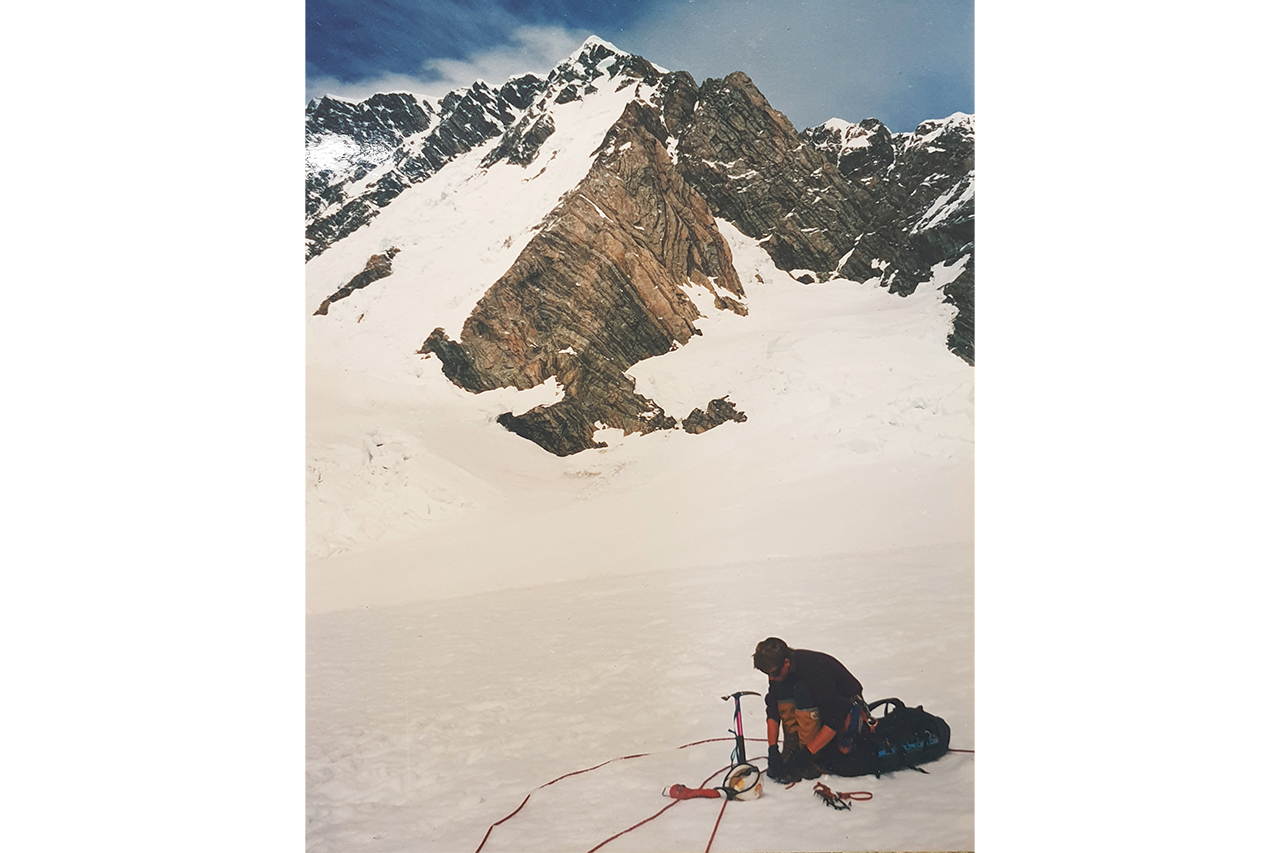
My path through mountain adventures led to a winter peak bagging trip in Nelson Lakes National Park. The following summer Gwilym and I were invited by two older climbers to spend a month at Aoraki/Mt Cook. It was the summer of 1988/89 and Aoraki-based mountaineering was still in its heyday.
I’d been given two special gifts for my birthday and Christmas; a proper mummy-shaped down sleeping bag and a large climbing pack. Back then, it was standard to have a pack in the region of 80-litres. It was used on every trip, whether a weekender or a 10-day journey. Mine was an Outside Lotus, a short-lived brand of New Zealand-made gear. I was so skinny that I couldn’t cinch the waist belt tight. If you were behind me, I’d have appeared as a giant blue canvas blob with two bony legs poking out.
I lugged that pack – full to the brim – from Husky Flat on the Ball Road, up the desolate moraines and white ice of the Tasman Glacier, to Beetham Hut. With a Sony Walkman in the lid, I listened to Dire Straits and Siouxsie and the Banshees during the long trudge.
The older two were much faster and I used to feel sick from the effort of staying with them in the dark on the alpine starts, but we climbed Aiguille Rouge and the West Ridge of Malte Brun back-to-back. I felt like a real climber, soloing along those red greywacke ridges, high in the sky, with Aoraki beckoning on the other side of the valley.
A few days later, I walked back down the Tasman Glacier with a lighter pack and a glow of satisfaction and confidence. I might have felt like a man, but I was still a clumsy 17-year-old careless enough to walk straight into a water-filled hole. Moulins are deep, narrow cavities formed by meltwater on a glacier’s surface. They’re often circular and can vary from less than a metre across to tens-of-metres. I’d fallen into the smaller size, not much wider than me and mercifully my oversized Outside Lotus caught on the edge and saved me from being submerged in the icy water.
26 Years old: Cactus Deepwinter
My climbing friend Gwilym had gone on to start Cactus Climbing, a pack manufacturing business which today is known as Cactus Equipment. My partner Hana and I worked for Cactus between climbing trips and long bicycle journeys exploring New Zealand.
We were a group of misfits: all in our 20s and eschewing the path of university, career and kids in favour of lifestyles that gave us maximum outdoor time and just enough money to get by.
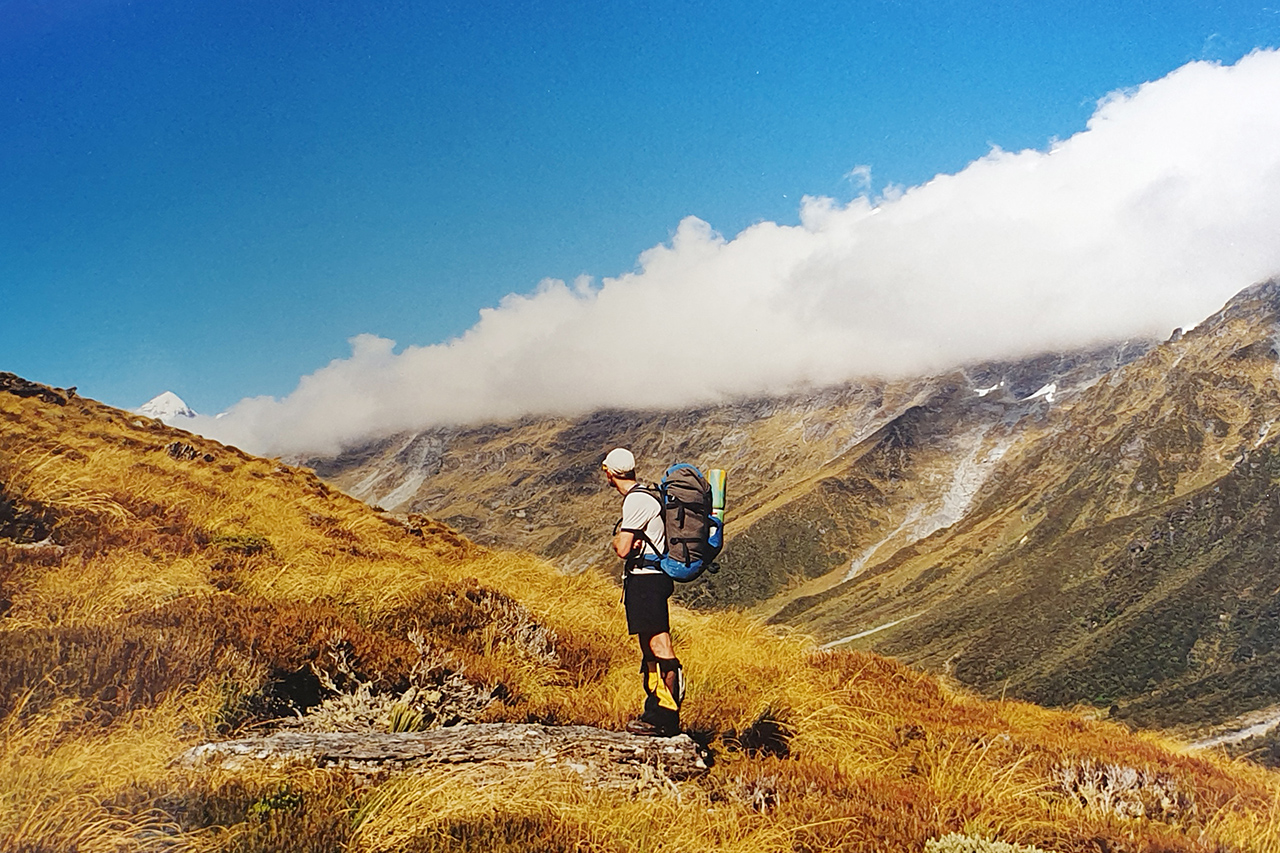
One of the best products to emerge from Cactus was the Deepwinter pack. Roughly 60l with a simple lightweight harness and Cordura fabric, it made the 80l-plus canvas beasts seem like dinosaurs. Admittedly, we couldn’t fit everything in but that just meant you had too much stuff.
It was with a tightly packed Deepwinter that I hitchhiked to Fiordland’s Darran Mountains for the first time in 1997. My lightweight pack proved to be a versatile tool for a life-changing month of adventures there. New Zealand mountains didn’t have to include endless glacier plods and grappling with Weetbix.
44 years old: Exped Lightning 60
I got older and my packs got smaller. My philosophy of ‘maximum outdoor time’ continued through my 30s and into my 40s. The closest I came to a career was nearly 10 years working for the New Zealand Alpine Club as their in-house editor and designer. Many different packs embraced my shoulders during that time and during the latter part of my tenure, they were sometimes filled with photography gear.
I became an author and co-published my first photography book. While looking for another contract with my publisher I pitched the idea of tramping Te Araroa Trail and photographing it for a coffee table book. They agreed and a few months later, I was off down Ninety Mile Beach with three days of food and 8kg of photography kit which I carried all the way to Bluff, arriving 171 days later.
It felt as though this journey was my destiny – or one of them – as if the paths of my life had led to this challenge, where I was doing the thing I was supposed to do. With so many distractions and commitments in our lives, feeling truly ‘in the moment’ can be difficult to achieve, but I indulged it for nearly six months with nothing much to think about other than walking, eating, sleeping and using my craft to capture my surroundings.
My pack became more than a means to carry equipment; it became a companion. A very quiet and sometimes awkward companion perhaps, but one that was reliable and uncomplaining. When you walk for that long, some products are taken through their intended lifecycle, but that Lightning 60 was up to the task. Despite a couple of patches, I still use it.
Back in those carefree days in the mid-1990s, Cactus briefly called itself ‘Cactus Climbing Equipment & Space Exploration’. I always liked that: Cactus made products that enclosed space – or created spaces – in which to put gear. Maybe the second meaning was unintended, but packs also allow us to explore spaces in the great outdoors by providing a means to carry everything needed on our backs, under our own power. Humans have done this in one form or another for thousands of years.
Perhaps that’s why venturing into the wilderness with a pack on your back feels so good.