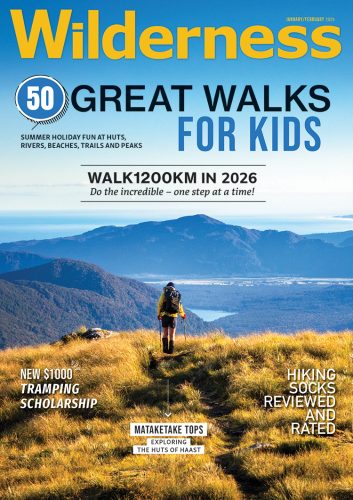
A wrap of the biggest stories and best writing about the outdoors from New Zealand and around the world.
The cash-strapped Department of Conservation will focus on protecting “high-value” conservation areas as it looks for new ways to generate much-needed revenue.
While critics questioned whether the approach could lead to species going extinct, Minister for Conservation Tama Potaka said it was a balanced response reflecting a tight fiscal environment.
“Managing our species is a costly exercise,” he said. “In 2022-23, Te Papa Atawhai (DOC) only managed 3.6% of the 4374 threatened or at-risk native species to the level required to protect their long-term survival.
“We look after a third of the country and get 0.44% of the total budget spending,” he added. “It’s spread very thinly and we can’t do everything for everybody.” DOC itself has to be “deliberate and intentional” about its priorities.
This work would be helped with a new biodiversity planning tool, which “identifies the most threatened species and ecosystems and special places, paired with demonstrable outcomes”. Read the full story from The Press.
Great Walk bookings rise
Bookings opened for the ten Great Walks from 28 May to 6 June, and total bed nights booked are up by 13% on last year. The rise is largely due to a spike in bookings for the Heaphy and Lake Waikaremoana tracks, which are fully open after repairs. Bed nights on the Heaphy were up 146%, and more than double (112%) for Lake Waikaremoana.
DOC Director Heritage and Visitors Cat Wilson says it’s satisfying to see Great Walks bookings up in opening weeks, giving more people a chance to see some spectacular parts of the country.
“There’s still plenty of room on most Great Walks and there will be cancellations over coming months as people firm up their plans. We encourage people to keep checking back and be flexible with dates to secure a booking.”
Overall, the proportion of New Zealanders increased slightly (by 1%) to 78% of bed nights, while international visitors decreased to 22%. International bookings came from 49 different countries. Australia was the largest with 40% of international bookings, followed by USA (22%), UK (8%), Germany (6%) and Canada (5%). Read the full release from DOC.
Bikepacking booming in Australia
Bikepacking — a twist on backpacking — is an overnight, self-sufficient adventure on a bicycle. And Australian Geographic Adventure magazine editor Justin Walker says the popularity of bikepacking is booming.
The Cycling and Walking Australia and New Zealand 2023 national survey found 41.6 per cent of respondents favoured off-road cycling, which includes mountain biking, gravel riding and bikepacking.
Mr Walker said the increase in popularity of bikepacking was because of the accessibility of information through online blogs and journals as well as new bike developments, such as the gravel bike in the early 2000s.
These hybrid models with a road-bike frame but thicker, more durable tyres have “pushed that exploratory nature of cycling because they are more capable of going off the main sealed roads,” Mr Walker said. “That sort of promoted dirt travel. It opened up national park fire trails.”
French bikepacker François Lemancel said he was surprised by the quality of bikepacking in Australia. “I loved the wide, open spaces that we don’t have in Europe, the ease of camping and the atmosphere of the Australian outback,” he said. Read the full story from ABC News.
Major changes coming to ski fields this season
Snow-goers can expect significant changes to ski fields this season, including more chair lifts, more terrain, cheaper passes, and smaller carbon footprints.
Mt Ruapehu’s Whakapapa chief executive Travis Donoghue said “massive” changes were in store. For the first time in more than 20 years, the two Mt Ruapehu ski fields will operate as separate businesses.
“We have formed up and organised to be in a friendly rivalry with Tūroa Ski area,” Donoghue said. This year’s season pass campaign roped in a revenue increase of nearly 70 per cent. And cheaper day passes have been reintroduced. An adult weekday pass will be $59, while a weekend day will be $79.
Around the Queenstown and Wānaka fields, NZ Ski spent $750,000 to upgrade their ski and snowboard rentals. The Remarkables will add a fast, six-seater chair to open up 47ha of lift-accessible terrain. Cardrona has updated its facilities and will add a state-of-the-art robot that tunes your skis.
Ski fields across New Zealand are adapting to climate change by aiming to reduce reliance on diesel, particularly from groomers, buses, and unnecessarily large car queues. Read the full story from the NZ Herald.
Otago marine reserve creation delayed
The creation of six new marine reserves along Otago’s coast, from the Waitaki River to Watsons Beach, near Milton, was announced in October last year with the goal of opening in mid-2024. However, there had been delays, due to the “complexity” of the work at hand DOC regulatory systems performance director Siobhan Quayle said.
“It has taken longer to draft and consult on the six Orders in Council than originally planned due to their complexity, which has extended the process by a few months.” However, she dismissed claims the process had been flawed.
In February, the Otago Rock Lobster Industry Association said there had been “key mapping errors” on fishing grounds that were fundamental to the approval of the network. Ms Quayle has rejected this claim. DOC believes the process was robust and followed the requirements of the Marine Reserves Act.
The process of establishing the marine reserves — described as national parks of the sea — dates back to at least 2014. During consultation in 2020, 90% of more than 4000 submissions showed broad support for protected marine areas. Read the full story from the Otago Daily Times.