

A visitor programme known as Tohu Whenua has been designed to promote significant cultural and historical sites in Aotearoa. It is currently running in three regions: Te Tai Tokerau Northland with nine sites, Te Tai Poutini West Coast with five and Otago with 11. Seven of the Otago landmarks, focussing on goldrush and European settler history, can be reached via some of the New Zealand Cycle Trail Great Rides.
The 152km Otago Central Rail Trail is itself a Tohu Whenua. The trail follows the old railway line from Clyde to Middlemarch. Construction began in 1891 and the line linked Dunedin to towns that had sprung up with the discovery of gold in Otago in the 1860s, including Alexandra, Ōmakau, Ophir and Hyde. Cyclists can explore heritage structures such as bridges, viaducts and tunnels, as well as the historic towns along the way.
Most cyclists begin in Clyde, Central Otago’s first gold mining settlement. The main street is dotted with cottages, stores, churches and hotels from the 1860s.
A further 25km on, Chatto Creek Tavern, a schist and mud-brick hotel built in 1886, is a good lunch spot. Ōmakau is 12km away and there’s nearby Ophir, which was founded in 1863. Ophir was at one time the largest gold mining town in the Manuherikia Valley. It’s home to New Zealand’s oldest post office (1886). Other original buildings include the bakery, jail, bank and courthouse.
Next is Lauder, a further 7km away also with a number of gold-era buildings. Lau-der Railway Station, restored and re-sited close to its original location, has panels detailing the area’s history.
After passing through Poolburn Gorge, considered the most scenic section of the trail, Hayes Engineering Works and Homestead is reached. This is another Tohu Whenua. Many of Ernest Hayes’ inventions are on display, including agricultural machinery and tools, some of which remain in use worldwide today.
A kilometre away, in Ōtūrehua, the T. Gilchrist & Sons General Store still operates. It was established in 1902 and contains a display of canned foods, catalogues, posters and other memorabilia.
Hyde Railway Station displays stories of the railway’s construction, the train journey and Hyde’s early days; and Middlemarch museum, at the trail’s end, has much local history.
Three Tohu Whenua are accessible from Queenstown. The first is the TSS Earnslaw, a 48m twin-screw steamer built in Dunedin in 1912. The boat was equipped with a first-class dining saloon, ladies’ cabin and bar. It transported people and cargo, such as wool, sheep and cattle, to and from the high country stations.
Today, it provides access between Queenstown and Walter Peak Station from where the 186km Around the Mountains Cycle Trail circles the base of the Eyre Mountains, passing through Lumsden, Athol and Garston en route to Kingston.
On the 11km journey between Queenstown and Walter Peak it’s possible to view the engine room where pistons pump, wheels whirl and coal is shovelled through the four fire doors to keep the steam engine chugging.
The Queenstown Trail is a network of over 140km of cycle trails giving access to the other two Tohu Whenua in the area: Arrowtown and Kawarau Suspension Bridge. From Queenstown, the Frankton Track and Kelvin Peninsula Trail go to the Kawarau Falls Bridge where the Twin Rivers Trail is joined. It’s edged by The Remarkables and follows the picturesque Kawarau and Shotover rivers. There are information panels along the route showing the area’s history. Twin Rivers Trail intersects with the Arrow River Bridges Trail, which leads in one direction to Arrowtown and in the other to Kawarau Suspension Bridge, 32.5km from Queenstown and 12km from Arrowtown.
Arrowtown sprang up when gold was found in the Arrow River in 1862. Today it has more than 70 historic sites. An old stone store and several stone huts can be seen in the Chinese Settlement Village, which was home to Chinese miners in the late 1800s. Arrowtown’s main street has commercial buildings, some with original business names. Lakes District Museum is a must-do, as is the jail on Cardigan Street (obtain a key at the museum), where there are stories of gold heists and lawlessness in the late 1800s.
The 1880 Kawarau Suspension Bridge crosses the river as it flows through the narrow, winding Kawarau Gorge. The bridge improved access to the goldfields and replaced difficult river crossings by punts that were inaccessible during floods. Schist towers anchor the bridge, and information panels offer details of its construction. Cyclists can ride over the bridge to join the Gibbston Wine Trail, another 9km of flat riding with a number of enticing wineries.
Between 1862 and the mid-1890s, miners used high-pressure water to release alluvial gold from gravel, leaving behind a landscape now known as the Bannockburn Sluicings, another Tohu Whenua. The sluicings is accessible from the Lake Dunstan Trail. This 55km trail runs between Smiths Way, 16km from Cromwell Heritage Precinct (which comprises a collection of reconstructed stone and wooden buildings from gold-rush days) and Clyde.
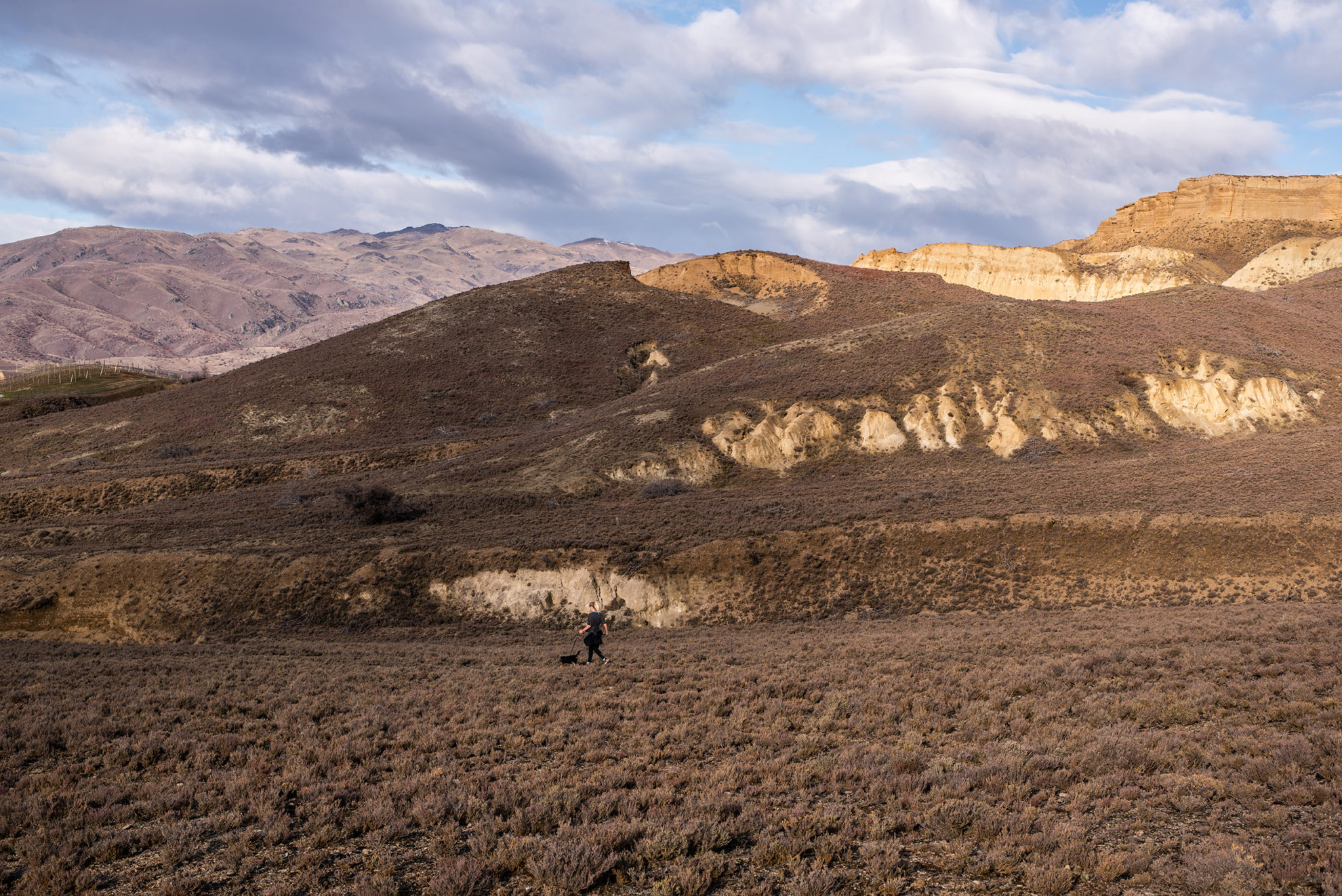
The sluicings are 1.5km off the trail after crossing Bannockburn Bridge, around an hour’s cycling from Cromwell. Here a 3.7km cycling or walking loop track weaves among towering spires, rounded and flat-topped solitary hills and high-cliffed, gully-like channels, which interrupt a tan and golden desert landscape mottled with greyish-purple wild thyme. Tumbled walls and charcoal mark the site of a blacksmith’s shop and forge; and a few pear trees and a mud-brick cottage constructed in 1873, are all that remains of Stewart Town mining settlement. Football field-sized Menzies Dam stands nearby, its clay walls lined with rock.
The 315km Alps 2 Ocean Cycle Trail runs from Aoraki/Mt Cook or, alternatively, Tekapō to another Tohu Whenua: Ōamaru. Settled in 1853, the town provided for gold miners and pastoralists. It is largely centred on the harbour area and Thames Street, built extra wide to enable bullock teams with wagons to turn. It’s also home to grand Victorian-era buildings – banks, hotels, government buildings, and churches – constructed of local limestone. The town is nicknamed ‘Whitestone City’.
34 years of inspiring New Zealanders to explore the outdoors. Don’t miss out — subscribe today.

Questions? Contact us



