A pest-trapping volunteer goes to extensive lengths to improve the Wellington bush for birds and people.
Throughout New Zealand, community predator control groups are backed by volunteer organisers managing logistics such as the supply of traps and baits.
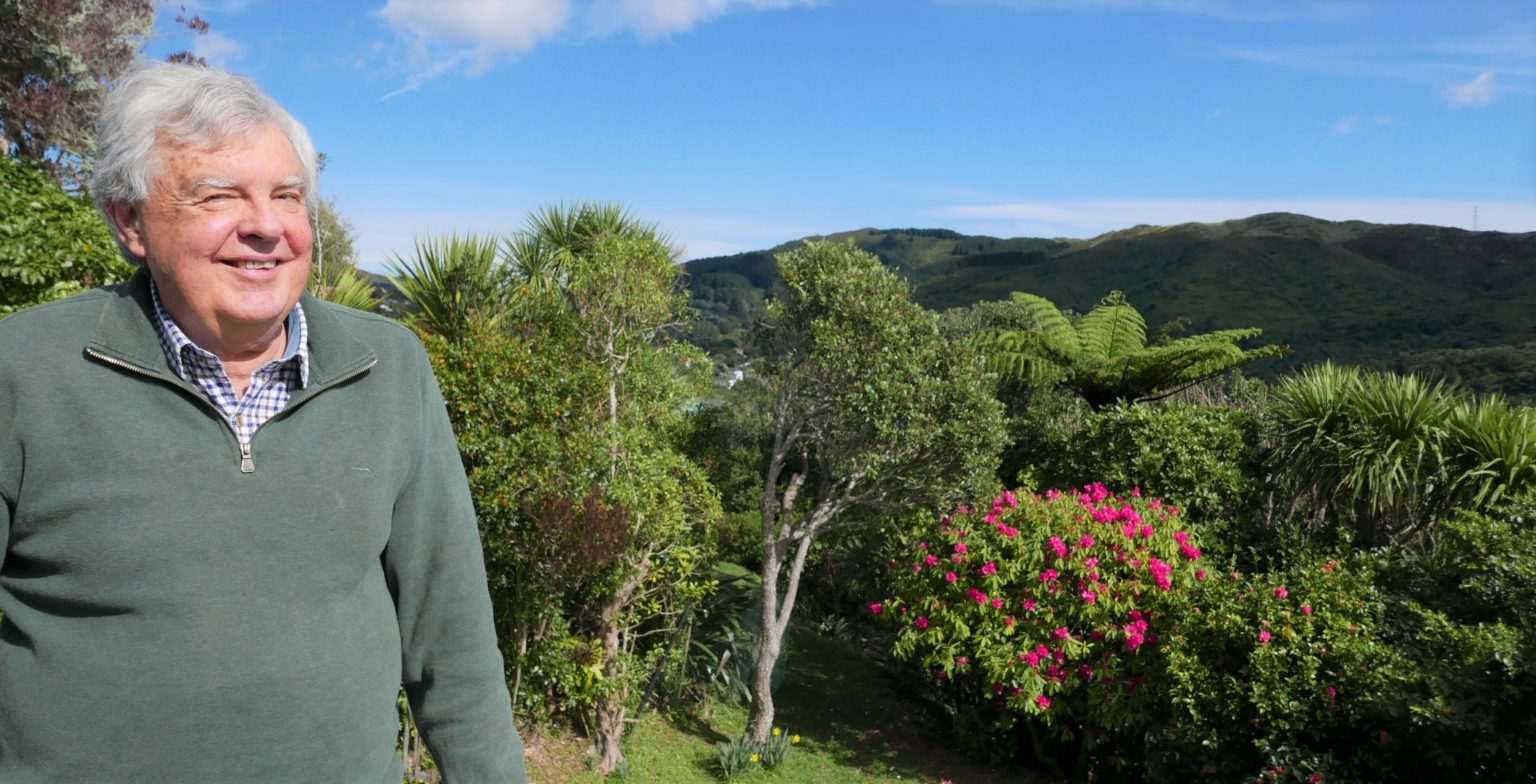
Meet one of them: Wellington’s Jim Tait.
Tait took a drastic approach to improve the health and safety systems for his predator control group. He broke his leg in two places and had to be helicoptered out of Otari-Wilton’s Bush after slipping on a muddy track while checking a trapline. “I just paused to watch two kākā; next thing I was sliding down and heard the bone crack,” he says.
Since then, a volunteer safety plan has been put in place and an emergency ‘grab bag’ located at the reserve’s visitor centre. Tait is now back in action, though he does much more than check traps. He’s involved in three community groups; Otari’s RAMBO (70 traps set in six lines over more than 100ha), Otari Predator Free (traps located at 261 households) and Rodent Free Wadestown (involving 387 households).
The former trade commissioner manages the logistics to enable these groups to function; ensuring bait supplies and replacement traps, council liaison and data collation, plus, he writes newsletters filled with updates, advice and anecdotes from the world of predator control.
Tait has also set up student-run trapping programmes in local schools. He explains the damage wrought by pests, helps set up tracking tunnels to see which animals are around the school, then the students design a detailed trapping proposal for the principal’s approval. They’re getting a surprising number of animals, says Tait.
Liaison with neighbouring community groups is important, there are now some 50 volunteer groups covering backyards and reserves in Wellington, some with support from Predator Free Wellington. Volunteer trappers are often involved in more than one group, he says.
Tait says predator control is always evolving: “Initially, we just aimed to kill rats, stoats and hedgehogs to protect the birds,” he says. “We had no idea how many predators were out there when we started, or what baits were used and what was effective. Data collecting has become more precise and Predator Free Wellington is very scientific, they run out tracking tunnels first, collect data on all catches, find out what works and what doesn’t. They share their knowledge and lessons learned can be applied by all groups.”
But the biggest change is attitude. “People are no longer afraid to say they have rats around their house. They really want to catch them. Neighbours are comparing notes about how many they kill. There’s been a huge shift in public perception, and it’s something everyone can do.”
Jim loves the ‘work’: “I meet a lot of interesting people; I feel I’m doing something useful and it’s good exercise. My doctor is happy – he’s told me I should be walking up to the Skyline three times a week and I don’t like walking without a purpose.”
The thousands of predators now caught has to be making a difference, he says. “In the western suburbs in the last four years, we are seeing a lot more birds and a greater variety.”