Tramping in general, and tramping photography in particular, seem to attract people with a certain mindset. We are lovers of extra elbow room, and a mountain shared can feel like a mountain crowded. This reflects in the way we take photos. Shoving a camera in our tramping partner’s face does not come naturally to many of us, which can leave our photography short-changed on emotion.
Close quarters The obvious way to add emotion to tramping photos is by being closer to people. While not easy, it is a skill worth practising. Just keep in mind that as with wildlife photography, your subject will be more scared of you than the other way around. Having your camera down but ready while talking to people is half the game.
Almost everyone tenses up when looking at a camera. Capture your subject in the off moments when they are laughing, looking away or talking to someone else. Just like with any good magician, misdirection is your best friend. So is camera fatigue, especially with kids. They will only acknowledge the camera for so long before they get on with their day.
At a distance If your skin crawls at the thought of getting too close to your subject, there is still plenty to be captured from afar. While close quarters photography focuses on faces, body language will be your gateway to emotional photos at a distance.
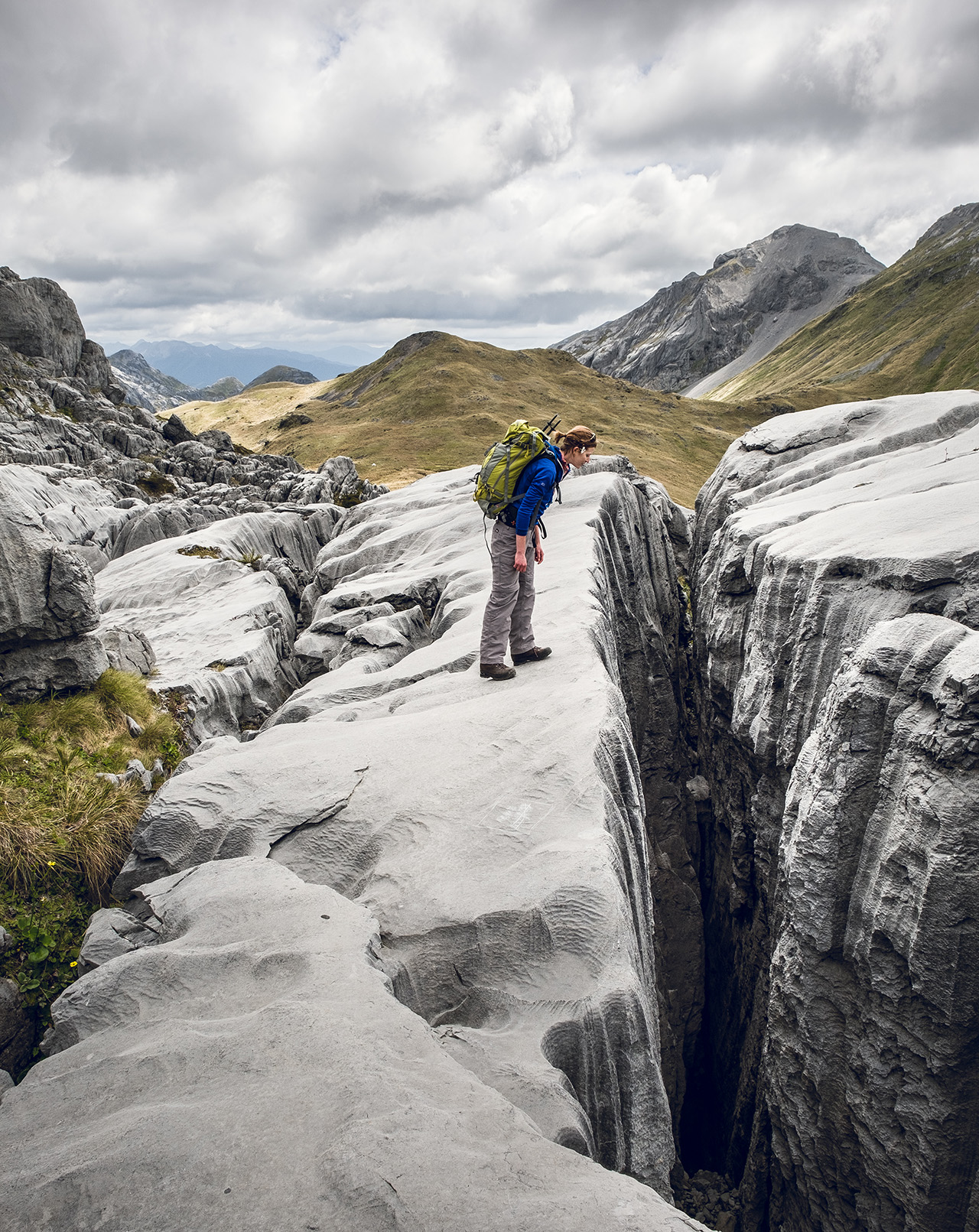
Emotion that finds its way into our posture while tramping is often visceral. Picture an exhausted tramper hunched over on the ground, face resting in her hands. Or someone making camp, leaning into ferocious winds threatening to blow the tent away. Once again, genuine emotion is a split-second expression, there and gone. Be ready!
The Breakdown My normally bold tramping partner showed an unusual amount of restraint when looking into a crack in the landscape. Her timid posture speaks of the perfectly rational fear of compound fractures. I only had a few seconds to capture this moment, placing her right in the middle of the frame. The crack acts as a leading line from the bottom-right corner of the frame, while the sky is roughly aligned with the upper two-thirds horizontal line. I chose not to shoot closer to the ground since I wanted her body to be in front of the bright rock rather than the green background.
Camera settings:
Camera: Fujifilm X-T2
Lens: Fujifilm XF16-55
Settings: 16mm, ISO200, f8, 1/20s
– Dennis is a commercial photographer and teaches photography at www.heroworkshops.com
About the author
Dennis Radermacher
Dennis is an architectural photographer with a long-standing connection to the outdoors. He has been contributing to Wilderness Magazine for more than ten years, combining his interest in tramping with photography. In his spare time, he makes furniture, experiments with 3D printing, and enjoys exploring new places.
The 2026 Wilderness Outdoor Photographer of the Year competition
Dirt bike trial on Tongariro Northern Circuit gets approval
Adventurer and author Dunc Wilson
A majestic coastal walk
Subscribe!
Each issue of Wilderness celebrates Aotearoa’s great outdoors — written and photographed with care, not algorithms.Subscribe and help keep our wild stories alive.